News · · 9 min read
Home Purchases by Foreign Buyers in Spain Fall 13% in the First Half of 2026, According to Notaries: What It Means If You're Selling in Madrid
Foreign buyers bought 62,327 homes in Spain in the first half of 2026, 13% fewer than a year earlier and the steepest fall since 2020, according to figures published by the Consejo General del Notariado (General Council of Notaries) on 15 October. In the Madrid region the drop reaches 19.7%. We go through the figures, who is really buying in Madrid, where prices stand and how to prepare the sale of your flat with your feet on the ground.
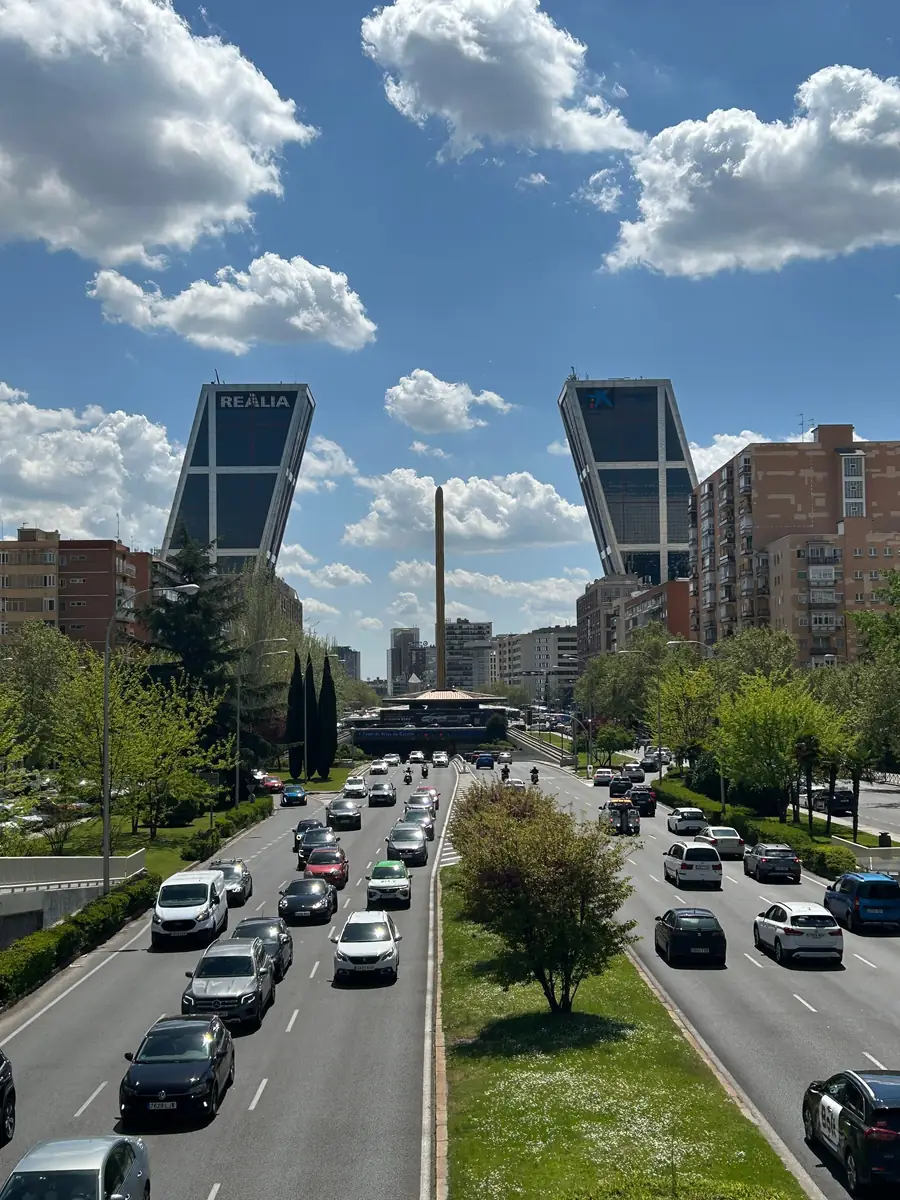
Home buying by foreigners in Spain has slowed sharply. According to the Consejo General del Notariado (General Council of Notaries), which published the data on 15 October 2026, foreign buyers signed 62,327 purchases of open-market homes in the first half of the year, 13% fewer than in the same period of 2025. It is the steepest year-on-year fall since the first half of 2020, and their share of all home sales dropped to 18.3%, from 19.2% a year earlier and 20.3% in 2024.
The Madrid region is among those where the fall is sharpest: 19.7%. If you're about to sell your flat, it's natural to wonder whether this affects you. The short answer: rather less than the headline suggests, because in Madrid the foreign buyer who matters is the one who already lives here, and the vast majority of purchases are made by Spanish buyers. We go through the notaries' data, the latest pulse of the Madrid market and what to do to sell with the buyers who are really buying in mind.
What the notaries have published on the first half of 2026
The Notaries distinguish between two kinds of foreign buyer: the resident, who lives in Spain, and the non-resident, who buys from abroad, often a second home. Both have bought less, but not equally. Residents signed 39,387 purchases, 63.2% of the foreign total and 9.7% fewer than a year earlier. Non-residents stood at 22,940, down 18%, their lowest volume since the first half of 2021.
| Indicator | First half of 2026 | Year-on-year change |
|---|---|---|
| Home purchases by foreign buyers | 62,327 | −13.0% |
| Resident foreigners | 39,387 (63.2%) | −9.7% |
| Non-resident foreigners | 22,940 (36.8%) | −18.0% |
| Foreign buyers' share of all home sales | 18.3% | 19.2% a year earlier |
| Average price paid by foreign buyers | €2,644/m² | +9.4% |
| Average price paid by non-residents | €3,493/m² | +11.8% |
| Average price paid by resident foreigners | €2,102/m² | +9.8% |
| Average price paid by Spanish buyers | €1,971/m² | +8.7% |
Source: Consejo General del Notariado (General Council of Notaries), first-half 2026 data published on 15/10/2026 (reported by Qué!, idealista/news, Forbes and El Debate). Figures refer to sales of open-market (non-subsidised) homes.
By nationality, Moroccan buyers lead for the first time, with 4,960 purchases (8% of the total), ahead of the United Kingdom (4,541), Italy, Romania and Germany. The largest falls are among buyers from Russia (−26.2%), China (−26.1%), the United States (−22%) and the United Kingdom (−21%); only Venezuela (+10.2%) and Colombia (+7.4%) show notable growth.
By region, foreign buying fell almost everywhere. Only Castilla-La Mancha (+4.4%) and Extremadura (+3.3%) rose, and the sharpest falls were in Cantabria (−20.5%), the Canary Islands (−20.3%) and the Madrid region (−19.7%).
Madrid: foreign buying falls, but Madrid's foreign buyer lives here
The Madrid figure stands out, but it's worth looking at who that buyer is. According to the Notaries, resident foreigners signed 3,912 purchases in the Madrid region in the first half, 9.9% of all purchases by resident foreigners in Spain, which puts Madrid in fourth place. By contrast, Madrid accounts for only 1.5% of non-resident purchases, which are spread mainly along the coast: the Comunitat Valenciana (Valencia region) takes 40.3% and Andalusia 25.3%. On top of that, the average price paid by foreign buyers in Madrid rose by 15.4% on a year earlier.
| Region | Purchases by resident foreigners | Share of all resident-foreigner purchases |
|---|---|---|
| Catalonia | 8,516 | 21.6% |
| Comunitat Valenciana (Valencia region) | 8,196 | 20.8% |
| Andalusia | 6,007 | 15.3% |
| Comunidad de Madrid (Madrid region) | 3,912 | 9.9% |
| Madrid region, purchases by non-residents | Not published | 1.5% of all non-resident purchases |
Source: Consejo General del Notariado, first half of 2026 (via El Debate, Forbes and EFE in Infobae, 15 and 17/10/2026). The Notaries have not released the absolute number of non-resident purchases in Madrid.
What this means for selling a flat: in Madrid, the typical foreign buyer isn't looking for a holiday home from another country but already lives and works here. Their purchase looks very much like any Spanish buyer's: they view in person, need to know how much the bank will lend them if they take out a mortgage, and work to the same timescales. The fall in foreign buying is real, but it doesn't change the profile of the person most likely to buy your home.
Who is buying homes in Madrid now
If foreign buyers account for 18.3% of sales, the remaining 81.7% are signed by Spanish buyers. That is the bulk of the market, in Madrid too, and it has slowed in the number of transactions without collapsing. According to the Land Registrars' preliminary data published on 5 October, 5,037 homes were sold in the Madrid region in August, 2.6% fewer than a year earlier, while across Spain home sales rose by 1.3% to 48,674.
| Indicator | Figure | Period | Source |
|---|---|---|---|
| Home sales in the Madrid region | 5,037 (−2.6% year on year) | August 2026 | Registradores (Land Registrars) |
| Home sales in Spain | 48,674 (+1.3%) | August 2026 | Registradores (Land Registrars) |
| Home sales in the Madrid region | 19,274 | Second quarter of 2026 | Registradores (Land Registrars) |
| Home sales registered in Spain | 61,417 (−5.1%) | July 2026 | INE (National Statistics Institute) |
| Home sales registered in the Madrid region | −11.3% year on year | July 2026 | INE (National Statistics Institute) |
| Home sales signed before a notary in Spain | 65,395 (−11.1%) | July 2026 | Notaries |
| Home purchases financed with a mortgage | 56.1% | July 2026 | Notaries |
Sources: Colegio de Registradores (August preliminary data published on 5/10/2026 and the Estadística Registral Inmobiliaria for the second quarter), INE (press release of 25/9/2026) and Consejo General del Notariado (July data published on 30/9/2026). Notaries count deeds when they are signed; the INE and the Land Registrars count entries in the Registro de la Propiedad (Land Registry), which come weeks later. That's why the figures for the same month don't match.
One figure in this table matters especially to sellers: in July, 56.1% of home purchases were financed with a mortgage. More than half of buyers depend on a bank lending them money, whether they are Spanish or resident foreigners. We explain this in «When a Flat Sale Falls Through Over the Mortgage in Spain: Why It Happens and How to Sell to Buyers Who Can Pay».
Prices in Madrid: close to record highs, but with less momentum
Fewer transactions doesn't mean, for now, falling prices. According to idealista, homes for sale in the city of Madrid were advertised in September 2026 at an average of €6,458 per square metre, 2.4% more than a year earlier, though 2.4% below their April record (€6,619). Across the Madrid region, the price was €5,065, 6.9% higher than a year earlier and 1.7% below its June peak.
| Source | Area | Average price | Change | Period |
|---|---|---|---|---|
| idealista (asking prices) | City of Madrid | €6,458/m² | +2.4% year on year | September 2026 |
| idealista (asking prices) | Madrid region | €5,065/m² | +6.9% year on year | September 2026 |
| Land Registrars (registered sales) | Madrid region | €4,477/m² | +1.6% quarter on quarter | Second quarter of 2026 |
| Land Registrars (registered sales) | Spain | €2,487/m² (record high) | +9.2% year on year | Second quarter of 2026 |
| Notaries (deeds signed) | Spain | €2,112/m² | +7.7% year on year | July 2026 |
Sources: idealista (September 2026 price reports and idealista/news, 2/10/2026), Colegio de Registradores (Estadística Registral Inmobiliaria, second quarter of 2026) and Consejo General del Notariado (July 2026, via Alimarket). idealista measures what sellers ask in their adverts; notaries and registrars measure what is actually paid in the deeds.
There are two ways to read this. Prices actually paid in the deeds are still rising, and the registered price for Spain as a whole is at a record high. But in the city of Madrid, asking prices have stalled for a few months since their spring peak. The market still supports high prices, but it no longer forgives an asking price that's out of line. Nobody can guarantee where prices will go, and it's wise to be wary of anyone who promises you otherwise.
The remaining foreign buyers pay more: what's behind the figure
Another figure from the Notaries has drawn attention: non-residents paid an average of €3,493 per square metre, compared with €2,102 for resident foreigners and €1,971 for Spanish buyers. The gap between non-residents and residents reached €1,391, up from €1,210 a year earlier. The highest average prices are paid by buyers from the United States (€3,948), Sweden, Germany, Switzerland and Norway.
It's best not to jump to conclusions. These are national averages that mainly reflect where and what each group buys: non-residents concentrate on high-priced coastal areas. It doesn't mean the same flat in Madrid will sell for more because the buyer is foreign. What's more, in Madrid that buyer is almost always a resident, and resident foreigners pay on average a figure close to that of Spanish buyers. And some of the nationalities that pay the most, such as Americans, are among those that have cut their purchases the most.
The practical conclusion: in Madrid it doesn't make sense to set your price in the hope of a foreign buyer paying above the market, but with the people who are actually buying in your area in mind, using real sales data and a price the buyer's bank valuation can back up.
How to prepare your sale with the real buyers in mind
In a market with fewer transactions but prices still high, preparation makes the difference. This is what we recommend if you're selling in Madrid:
- Set your price using real sales data from your area, not just what neighbouring adverts are asking. An inflated price drags out the sale and can clash with the valuation by the buyer's bank.
- Have your paperwork ready before you advertise: the nota simple (land registry extract showing who the owner is and whether there are any charges, such as a mortgage or an attachment order), the latest IBI receipt (the local council property tax), the certificate from the community of owners confirming you are up to date with payments, and the energy performance certificate.
- Present the home the way someone who is going to live in it would look for it: good photos, a floor plan with measurements, community fees and IBI, orientation and nearby transport.
- Before the viewing, ask how the buyer is going to pay: a written mortgage pre-approval or proof of savings. And in the arras contract (the deposit that reserves the property), agree a clear financing condition.
- If the buyer is a foreign national, they will need an NIE (número de identidad de extranjero, the foreigner's identification number), which Spain's Ministry of the Interior also assigns to people who have economic dealings with Spain; residents usually have one already. Payments should always be made by bank transfer from an identified account.
- Set realistic deadlines in the arras contract, leaving room for the valuation, the bank's offer and the visit to the notary.
None of this depends on foreign buyers coming back. It depends on your home reaching the market with a credible price, the paperwork in order and prior screening that saves you viewings that go nowhere.
How we do it at Llavely
At Llavely, with more than 35 years in the property sector and specialist lawyers, we prepare the sale with the real buyer in mind. The valuation, photos, video, floor plan and virtual tour are all included. We talk to every buyer before showing your home, check their identity and ask how they're going to pay; we carry out the viewings ourselves and you follow them from your private seller portal. If the buyer needs a mortgage, we put them in touch, free of charge, with a mortgage broker. And we check your identity and ownership using the nota simple (land registry extract) or your purchase deed.
Our specialist lawyers are with you from start to finish: they review the nota simple, any charges and debts, calculate the taxes that apply, draft the arras contract and any special clauses where needed, review the deed and go with you in person to the notary. All payments are made by ordinary bank transfer or OMF (orden de movimiento de fondos, the interbank payment used at the notary's office), never in cash. You only pay if you sell, on the day of signing at the notary: 2.5% + VAT of the price, in total, with everything included. For the buyer, buying with Llavely is free.
We can't promise when or for how much you'll sell, because that depends on the market and on your home. What we do is put your home in front of buyers who can actually buy it, at a price based on data. If you'd like to know what your home is worth now, ask for your free valuation: we give you a price range straight away, then we call you (we reply in English by email, message or phone), see the property and fine-tune the price.
Frequently asked questions
How many homes did foreigners buy in Spain in the first half of 2026?
According to the Consejo General del Notariado (General Council of Notaries), 62,327 open-market homes, 13% fewer than in the first half of 2025. It is the steepest year-on-year fall since the first half of 2020. Foreign buyers signed 18.3% of all home sales, compared with 19.2% a year earlier.
How much have home purchases by foreigners fallen in Madrid?
In the Madrid region, home purchases by foreign buyers fell by 19.7% in the first half of 2026, one of the largest falls along with Cantabria and the Canary Islands. Resident foreigners signed 3,912 purchases in the region, and Madrid accounts for only 1.5% of non-resident purchases.
What is the difference between a resident and a non-resident foreign buyer?
A resident is a foreign national who lives in Spain; a non-resident buys from abroad, often a second home. In the first half of 2026, residents made 63.2% of foreign purchases and fell by 9.7%; non-residents made 36.8%, with a fall of 18%.
Why do non-resident foreigners pay more per square metre?
Because they buy in different areas and different kinds of property: they concentrate on the coast, above all in the Valencia region and Andalusia, where they look for high-priced areas. Their average was €3,493 per square metre, compared with €2,102 for resident foreigners and €1,971 for Spanish buyers. It doesn't mean the same home sells for more to a foreigner.
Will house prices in Madrid fall because fewer foreigners are buying?
Nobody can say for sure. The available data show prices that are still high: according to idealista, the city of Madrid stood at €6,458 per square metre in September 2026, 2.4% more than a year earlier, though 2.4% below its April peak. In Madrid, non-resident buyers carry little weight, so the market depends mainly on Spanish and resident buyers.
What does a foreigner need to buy a home in Spain?
As well as their identity document, they need an NIE (número de identidad de extranjero, the foreigner's identification number), which is also assigned to people who have economic dealings with Spain. If they're taking out a mortgage, the bank will assess their ability to repay like any other customer's. Payments must be made by traceable bank means, such as a transfer.
Why don't the figures from the Notaries, the Land Registrars and the INE match?
Because they measure different moments. Notaries count deeds on the day they are signed; the Land Registrars and the INE count entries in the Registro de la Propiedad (Land Registry), which come weeks later. That's why, for example, in July 2026 the Notaries counted 65,395 home sales and the INE 61,417.
Which nationalities buy the most homes in Spain?
In the first half of 2026, for the first time, buyers from Morocco (4,960 purchases) overtook those from the United Kingdom (4,541), followed by Italy, Romania and Germany. Among non-residents, buyers from the Netherlands, Germany, the United Kingdom and Poland stand out.
Sources
- Home purchases by foreigners fell 13.0% year on year, Centro de Información Estadística del Notariado (Notaries' statistics centre) (Consejo General del Notariado, 15 October 2026)
- Home purchases by foreigners fall 13% and stand at 18.3% of the total (Qué!, 15 October 2026)
- Foreigners cut their home purchases in Spain in the middle of a price rally (idealista/news, 15 October 2026)
- Home purchases by foreigners fall 13% in the first half, according to notaries (Forbes España, 15 October 2026)
- A turnaround in foreign home buying: Moroccans overtake the British and the largest fall since the pandemic (El Debate, 15 October 2026)
- Foreign home buying slams on the brakes: where is it concentrated and which nationalities buy? (EFE in Infobae, 17 October 2026)
- Home sales and mortgages pick up in August, according to the Land Registrars (idealista/news, 5 October 2026)
- Home buying rebounds 1.3% in August after months of falls, according to the Land Registrars (EFE in Infobae, 5 October 2026)
- Estadística Registral Inmobiliaria (Land Registry property statistics), second quarter of 2026 (Colegio de Registradores, August 2026)
- Statistics on Transfers of Property Rights, July 2026, press release (INE, National Statistics Institute, 25 September 2026)
- Home sales fall 5.1% year on year in July, according to the INE (Brainsre.news, 25 September 2026)
- Home sales record seven consecutive months of decline in July, data from the Consejo General del Notariado (General Council of Notaries) (Alimarket, 30 September 2026)
- Where house prices in Madrid stand in September 2026: figures and the most expensive neighbourhoods (idealista/news, 2 October 2026)
- Asking price trends for homes for sale in the Madrid region, September 2026 (idealista, price report)
- Asking price trends for homes for sale in the city of Madrid, September 2026 (idealista, price report)
- Documentation for foreign nationals: the Número de Identidad de Extranjero (NIE) (Spanish Ministry of the Interior)