News · · 14 min read
Small landlords and Spain's new housing decrees (2026): why many are thinking of selling and what changes for tenants and owners
Three in ten members of the landlords' association ASVAL say they plan to take their flats off the rental market after the October housing decrees. We go through exactly what the new rules say, who Spain's small landlords are, what the market data shows and what to bear in mind before you decide.
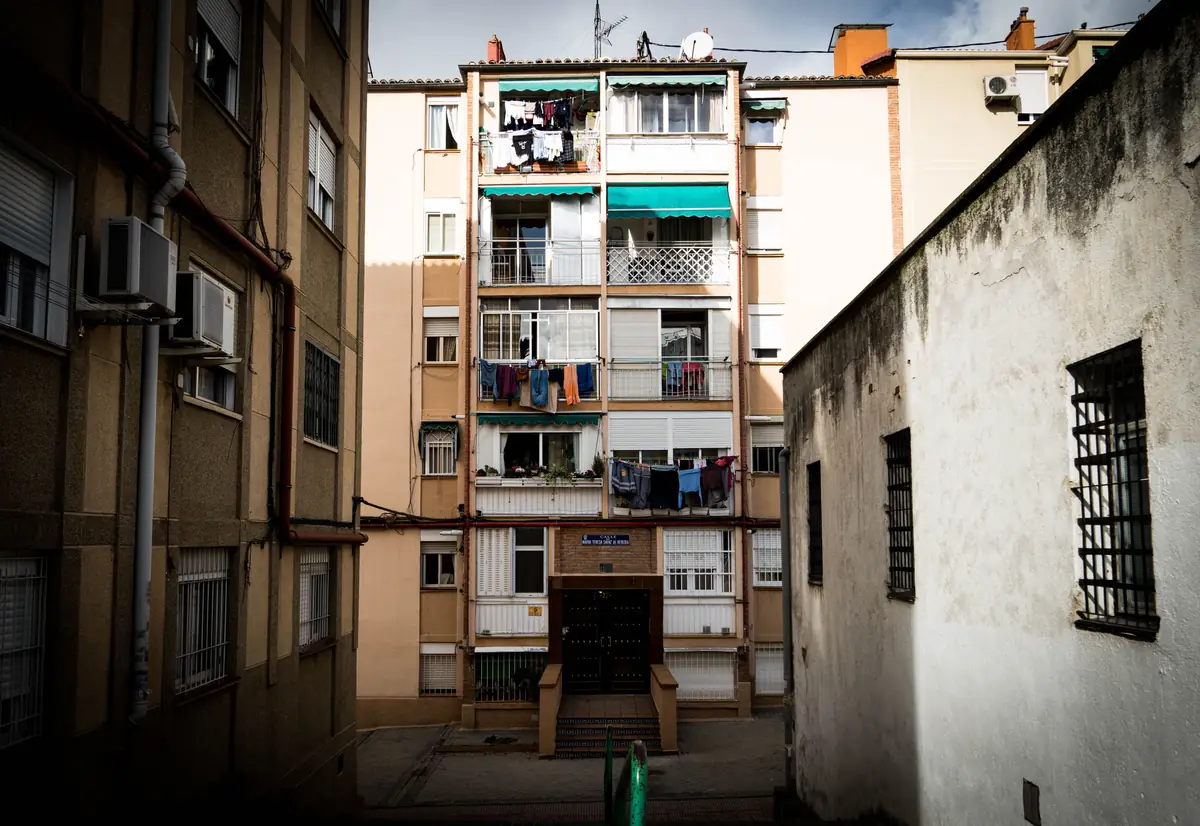
October 2026 is turning out to be the busiest month for Spain's rental market since the Housing Law (Ley de Vivienda) was passed. In barely ten days, the Government approved two decree-laws, Congress rejected them, a general election was called for 29 November and the Council of Ministers approved the measures again, this time as two new decrees that the Diputación Permanente (the standing committee of Parliament) will have to validate. One of them has been in force since 8 October.
Amid all this back and forth, some private owners, the so-called pequeños caseros (small landlords), are thinking about giving up letting. According to elEconomista on 12 October, 30% of the members of the Asociación de Propietarios de Vivienda en Alquiler (ASVAL, the association of residential landlords) say they plan to take their homes off the rental market, either to sell them or to use them for something else. In this article we expand on that news with the content of the decrees, the market data and what it all means for those who let and for those looking for a home.
What landlords are saying
ASVAL's president, Helena Beunza, told elEconomista that the association has received "countless emails" from worried owners since the measures were announced. She does not expect a mass exit but a gradual fall in supply: many landlords will wait for the current contract to end and then decide whether to renew, sell or keep the home for their own or their family's use. Beunza stresses that what weighs most is legal certainty, and warns that winning back the trust of private owners "is going to take a lot".
From the brokerage side, the CEO of Century 21 Spain, Ricardo Sousa, said in the same report that some of the homes now coming up for sale in its offices are flats that until now were let.
The rental market is very reactive.
Ricardo Sousa, CEO of Century 21 Spain, in elEconomista
Not all the data points the same way, at least for now. María Matos, head of research at Fotocasa, noted that there is not yet a significant rise in homes for sale on the portal. What they have detected is a different move: room-rental listings have risen by 8.5% since 1 October. In other words, for the moment the visible reaction is more a change in how people let than a wave of sales, although it is too early to draw conclusions.
Who Spain's small landlords are
In Spain, rental housing is mainly in the hands of private individuals. A report by the Ministry of Consumer Affairs (Ministerio de Consumo) prepared with the CSIC (Spain's National Research Council) using 2023 tax data counts 2.57 million homes let by individuals, up from 1.9 million in 2016. 4.9% of the population declares income from letting a home.
The same study distinguishes between those who let a single home and those who let two or more. Of the homes let by individuals, 52.8% belong to people with two or more flats let; the rest belong to landlords with just one. Adding individuals with several flats, companies and public bodies together, 61% of rental housing is in the hands of those who let more than one home. On the other hand, according to Fotocasa, 82% of property owners in Spain own a single home.
| City | Homes of landlords with several flats | Homes of landlords with a single flat |
|---|---|---|
| Las Palmas de Gran Canaria | 64.9% | 35.1% |
| Santa Cruz de Tenerife | 64.6% | 35.4% |
| Palma | 63.1% | 36.9% |
| Barcelona | 60.8% | 39.2% |
| Madrid | 56.4% | 43.6% |
Source: Ministerio de Consumo and CSIC, 2023 Household Panel (only homes let by individuals).
For this kind of owner, rent is usually a top-up to their income or savings for retirement. Prolonged non-payment, unexpected building work or being unable to get the home back when they need it weigh far more heavily than in a portfolio of hundreds of flats. That is why changes to contract length and to the conditions for recovering the home affect them in particular.
How we got here
- 29 September: the Council of Ministers approves two housing decree-laws, one with measures on rentals, seasonal lets and tax, and another on contract length.
- 2 October: the full Congress rejects both decrees with votes against from PP, Vox, Junts and UPN, so they are repealed.
- 5 October: the Prime Minister calls a general election for 29 November. With Parliament (the Cortes) dissolved, validating decrees passes to the Diputación Permanente.
- 6 October: the Council of Ministers approves two new decrees, Royal Decree-law 28/2026 (Real Decreto-ley 28/2026), on contract stability, and Royal Decree-law 29/2026, on measures for the social function of housing. They are published in the BOE (Spain's Official State Gazette) on 7 October.
- 8 October: Royal Decree-law 29/2026 comes into force.
- 15 November: Royal Decree-law 28/2026 would come into force, provided the Diputación Permanente validates it beforehand.
The Diputación Permanente has 69 members, so each decree needs 35 votes. According to published counts, the measures decree has enough support, while the one on automatic extensions depends on the PNV, which has announced it will vote against. If a decree is not validated, it is repealed, as happened on 2 October.
The stability decree: contracts that renew themselves
Royal Decree-law 28/2026 amends article 10 of the Ley de Arrendamientos Urbanos (LAU, Spain's Urban Tenancies Act). It is the measure that worries private owners most, because it changes what happens when the minimum term of five years ends, or seven if the landlord is a company. If validated, it will apply to contracts expiring from 15 November 2026.
- Automatic extensions: when the minimum term ends, the contract renews for successive periods of five years, or seven if the owner is a company, unless one of the parties gives notice that they do not wish to renew.
- Notice: the owner must give six months' notice instead of the current four. The tenant still gives two months' notice.
- Compensation: if the owner does not renew, they must pay the tenant the higher of these two amounts: twelve months' rent calculated using the highest value of the state reference index for that home, or one month's rent for each year the tenant has lived there.
- Cases with no compensation: the owner, as an individual, needs the home for themselves, for relatives up to the second degree or for their ex-spouse following a separation or divorce ruling, provided they move in within three months; the tenant has not lived there for more than six of the last twelve months; the tenant has another suitable home in the same municipality; a new contract is signed; or the tenant turns down a formal offer of a new five- or seven-year contract.
- Special extensions: up to one more year for vulnerable households with a social services report, mandatory for large landlords (grandes tenedores), and annual extensions of up to three years in stressed areas (zonas tensionadas).
- Transition: notices of non-renewal sent before the decree was published keep their effect and do not give rise to compensation.
The measures decree: what is already in force
Royal Decree-law 29/2026 has applied since 8 October, although it also needs to be validated by the Diputación Permanente to remain in force. These are its main measures on renting:
- Extraordinary extension: contracts for a main residence ending before 31 December 2028 can be extended by yearly periods for up to two more years, at the request of a tenant who is up to date with payments.
- Cap on rent updates: until 31 December 2027, if there is no agreement, the annual increase cannot exceed 2%. If the rent is already above the reference index, it cannot be raised.
- Seasonal lets: these require a genuine, provable reason for being away from one's main home, a length of more than 31 days and, as a general rule, no more than twelve months. Chaining more than two contracts with the same tenant turns the first one into a main-residence contract.
- Rooms: the total rent for the rooms in a flat cannot exceed the rent for the whole home.
- Costs: the owner cannot pass on to the tenant the agency and contract-drafting fees or the IBI (property tax).
- Evictions: evictions of vulnerable households with no alternative housing are suspended until 31 December 2030, with measures aimed mainly at large landlords and funds. According to Legálitas' analysis, the suspension does not apply to owners with two homes or fewer.
- Purchases by large landlords: until 2030, purchases below 70% of market value by large landlords and by buyers of debt portfolios are restricted.
The tax changes affecting landlords and tenants
A large part of the decree concerns tax. For owners wondering whether it is worth carrying on letting, selling or leaving the flat empty, these are the measures that count most:
- New IRPF (personal income tax) reduction for letting: for contracts signed from 2 December 2026, a scale of up to 100% that rewards lowering the rent, renewing with the same tenant or aligning with the reference index. If the initial rent goes up compared with the previous one, the reduction goes down. Contracts signed up to 1 December keep the previous percentages.
- Empty flats: from 2027, the deemed income charged in IRPF for an empty home moves to a progressive scale of 1.1% to 3% of the cadastral value (valor catastral, the official land registry value).
- IBI: town halls will be able to apply surcharges of up to 150% on empty and tourist homes, provided they approve a by-law.
- Sales to the public sector: a new exemption from capital gains tax when a home is sold to a public body for social or affordable housing.
- Tenants: the state deduction of 10% of rent returns for those with a taxable base below €33,007.20, with a maximum base of €11,630 a year, meaning a deduction of up to €1,163.
- Holiday lets: 10% VAT (IVA) on rentals of 30 nights or fewer from 1 December 2026.
The Government argues that the package gives tenants stability, curbs increases and rewards those who let at moderate prices. Landlords' associations and much of the sector maintain that uncertainty and the difficulty of recovering the home will reduce supply even further. Both sides agree that the underlying problem is the lack of available housing.
What the market data shows
The supply of long-term rentals has been falling for years. According to idealista, long-term rental listings went from 902,664 in 2018 to 510,091 in 2025, 44% fewer. The Comunidad de Madrid (Madrid region) lost more than half of its supply, 54%, and Barcelona 83%. Meanwhile, relative demand has multiplied fivefold and average rent has risen by more than 45% since 2018.
| Area | Listings in 2018 | Listings in 2025 | Change |
|---|---|---|---|
| Spain | 902,664 | 510,091 | -44% |
| Comunidad de Madrid | 252,442 | 115,031 | -54% |
| Madrid (city) | 202,484 | 84,926 | -58% |
| Catalonia | approx. 175,000 | 50,412 | -71% |
| Barcelona (city) | 113,853 | 19,723 | -83% |
Source: idealista, long-term rental listings (excluding seasonal lets and rooms), reported by Artículo 14 on 7 October 2026. These are listings, not physical homes.
On prices, idealista's latest report shows a market starting to slow. In September 2026 rent cost an average of €15.1 per square metre, 5.6% more than a year earlier but 0.4% less than in June: the first quarterly fall since the third quarter of 2021. The Comunidad de Madrid remains the most expensive region, at €21.6 per square metre.
| Provincial capital | Price (€/m² per month) | Annual change |
|---|---|---|
| Madrid | 23.4 | +4.8% |
| Barcelona | 20.1 | -0.8% |
| Palma | 19.6 | +7.3% |
| San Sebastián | 18.4 | -2.5% |
| Málaga | 16.5 | +3.9% |
Source: idealista, September 2026 price report.
When it comes to the immediate reaction to the decrees, caution is advisable. In the days after they were announced, figures of thousands of listings disappearing within a few hours circulated on social media and could not be verified. The most solid figure comes from the Observatorio del Alquiler (Rental Observatory), which estimates 4,290 fewer rental homes across Spain between 28 and 30 September, 4% below trend, and 808 fewer in the Comunidad de Madrid. The observatory itself warns that the whole drop cannot yet be attributed to the new rules and points out that more than 120,000 rental homes have left the market since 2023.
Selling or carrying on letting: what weighs in the decision
Every case is different and depends on each owner's personal and tax situation. Even so, there are several points worth reviewing before deciding:
- If the flat has a tenant, selling it does not end the contract: the buyer takes over the contract and the tenant keeps their rights. A flat with a tenant usually sells more slowly and at a discount compared with an empty one.
- How long the contract has left and when it expires: under the new decree, if it is validated, the notice period for non-renewal becomes six months and compensation may be payable.
- The tax on the sale: the capital gain is taxed under IRPF and, on top of that, you pay the plusvalía municipal (municipal capital gains tax). You need to compare that cost with what the rent brings in after tax.
- Leaving it empty has a growing cost: the deemed income charged under IRPF goes up from 2027 and some town halls will be able to apply IBI surcharges.
- The risk of non-payment and damage: this is what worries small landlords most, and it drops considerably when you know the tenant well before signing.
- Political uncertainty: the stability decree may not be validated and, after the 29 November election, the framework may change again. Making an irreversible decision in a hurry is rarely a good idea.
And for those looking for a flat to rent
For tenants who already have a contract, the decree in force brings clear advantages: the option to ask for up to two years' extension if the contract ends before 2029, a 2% cap on increases until the end of 2027, the 10% IRPF deduction for low and middle incomes, and a ban on passing on the IBI or agency fees to them.
For those looking for a flat, however, the picture is tougher. If some owners take their homes off the market or wait to see what happens, competition for each listing will remain very high. In that context, having your documents ready and a clear profile, with income, employment situation and references, makes the difference in getting an owner to trust you.
What we do at Llavely
Llavely was created precisely to reduce mistrust between owners and tenants. It is renting the other way round: tenants create their verified profile once (we check their identity and income and, if anything doesn’t add up, a member of our team reviews it) and it is owners and agencies who choose whom to invite to view their property, with checked information from the start. For a small landlord, knowing the person who is going to live in their home well is the best protection against non-payment; for the tenant, it is the way to stand out in a market with little supply. It is already open in the provinces of Madrid and Barcelona, free for tenants, landlords and agencies: if you are looking for a flat, create your profile for free; if you are letting yours, list your property for free. In the rest of Spain there is a waiting list: sign up with your areas and we will email you when we open there.
And if, after weighing it up, you decide to sell and your home is in the Comunidad de Madrid, you can do it with us for 2.5% + VAT, all included, which you only pay if you sell, on the day of signing at the notary: specialised lawyers with more than 35 years' experience who go with you in person to the notary, photos, video, floor plan and virtual tour, and we handle the viewings ourselves, with screened and verified buyers: we talk to each one before showing your home. If you are thinking about it, ask for your free valuation: we call you within 24 hours, see the home and give you the price.
Frequently asked questions
Are the new housing decrees in force?
Royal Decree-law 29/2026, with the 2% cap on increases, the extraordinary extension of up to two years and the new rules on seasonal lets and rooms, has been in force since 8 October 2026. Royal Decree-law 28/2026, the one on automatic extensions, would come into force on 15 November. Both need to be validated by the Diputación Permanente; if they are not, they are repealed.
What is the Diputación Permanente and why is it deciding now?
It is the body that takes on some of Congress's functions when Parliament (the Cortes) is dissolved, as is the case after the election was called for 29 November 2026. It has 69 members, so each decree needs 35 votes to be validated.
Will my rental contract automatically renew for another five years?
Only if Royal Decree-law 28/2026 is validated and your contract expires after 15 November 2026. In that case, when the minimum term ends it would renew for five years, or seven if the owner is a company, unless one of the parties gives the required notice that they do not wish to renew.
How much can my rent go up this year?
Until 31 December 2027, if the parties do not agree otherwise, the annual update cannot exceed 2%. If the rent is already above the price reference index, it cannot be raised. If the parties agree something else, what was agreed applies within the legal limits.
What compensation does the owner have to pay if they do not renew?
Under Royal Decree-law 28/2026, if it is validated, the higher of two amounts: twelve months' rent based on the highest value of the reference index for that home, or one month's rent per year lived there. Among other cases, there is no compensation if the owner, as an individual, needs the home for themselves or a close relative and moves in within three months.
If I sell my let flat, does the contract end?
No. The buyer takes over the contract and the tenant keeps their rights until it ends, under article 14 of the Ley de Arrendamientos Urbanos. That is why selling with a tenant usually takes longer and achieves a lower price than selling the home empty.
Is it true that rental flats are being sold off en masse?
There are signs, but no conclusive data yet. 30% of ASVAL members say they plan to take their homes off the rental market, and some agencies are seeing previously let flats come up for sale. Fotocasa, on the other hand, does not yet see a significant rise in homes for sale, although it does see an 8.5% increase in room listings since 1 October.
Can I claim tax relief on my rent as a tenant?
Yes, if your taxable base is below €33,007.20: the decree brings back a state deduction of 10% of the rent you pay, with a maximum base of €11,630 a year, which means up to €1,163. There are additional requirements, such as not having another home within 50 kilometres.
What happens if I leave my flat empty instead of letting it?
From 2027, the deemed income charged under IRPF for an empty home moves to a scale of 1.1% to 3% of the cadastral value. In addition, town halls that approve it will be able to charge a surcharge of up to 150% on the IBI of empty homes.
Sources
- Los pequeños caseros arrancan una oleada de ventas de pisos en alquiler por el miedo a los decretos – Small landlords start a wave of rental-flat sales over fear of the decrees (elEconomista, 12 October 2026)
- Real Decreto-ley 28/2026, de 6 de octubre – Royal Decree-law 28/2026 of 6 October on the stability of main-residence tenancy contracts (BOE)
- Real Decreto-ley 29/2026, de 6 de octubre – Royal Decree-law 29/2026 of 6 October, consolidated text (BOE)
- Estabilidad de los contratos de arrendamiento de vivienda habitual – Stability of main-residence tenancy contracts (Derecho Local, October 2026)
- More protection and a wider supply of affordable housing under the new Royal Decree-law (Legálitas, October 2026)
- Royal Decree-Laws 28/2026 and 29/2026 published in the Spanish Official State Gazette (Squire Patton Boggs, October 2026)
- A majority of MPs in Congress vote down the two housing decrees (idealista, 2 October 2026)
- What the Diputación Permanente is and what happens to the housing decrees (Maldita, 7 October 2026)
- What we know about rental listings disappearing after the decrees (Maldita, 5 October 2026)
- Rent prices rise 5.6% year on year in September but fall in the last quarter (idealista, 1 October 2026)
- Rental supply plunges 44% since 2018: almost 393,000 fewer listings (Artículo 14, 7 October 2026)
- 61% of rental homes are owned by private multi-property landlords and companies (Forbes España, 23 April 2026)
- 82% of property owners in Spain own just one home, according to Fotocasa (Forbes España, 10 July 2025)
- Ley 29/1994, de Arrendamientos Urbanos – Urban Tenancies Act 29/1994, consolidated text (BOE)