News · · 11 min read
Spain's housing market in 2026: fewer sales, record prices and a supply that isn't keeping up
Home sales in Spain are losing momentum in 2026 while prices keep rising at double-digit rates. Using data from the INE (Spain's National Statistics Institute), notaries, land registrars and the Banco de España (Bank of Spain), we look at what is happening across Spain and, in particular, in Madrid.
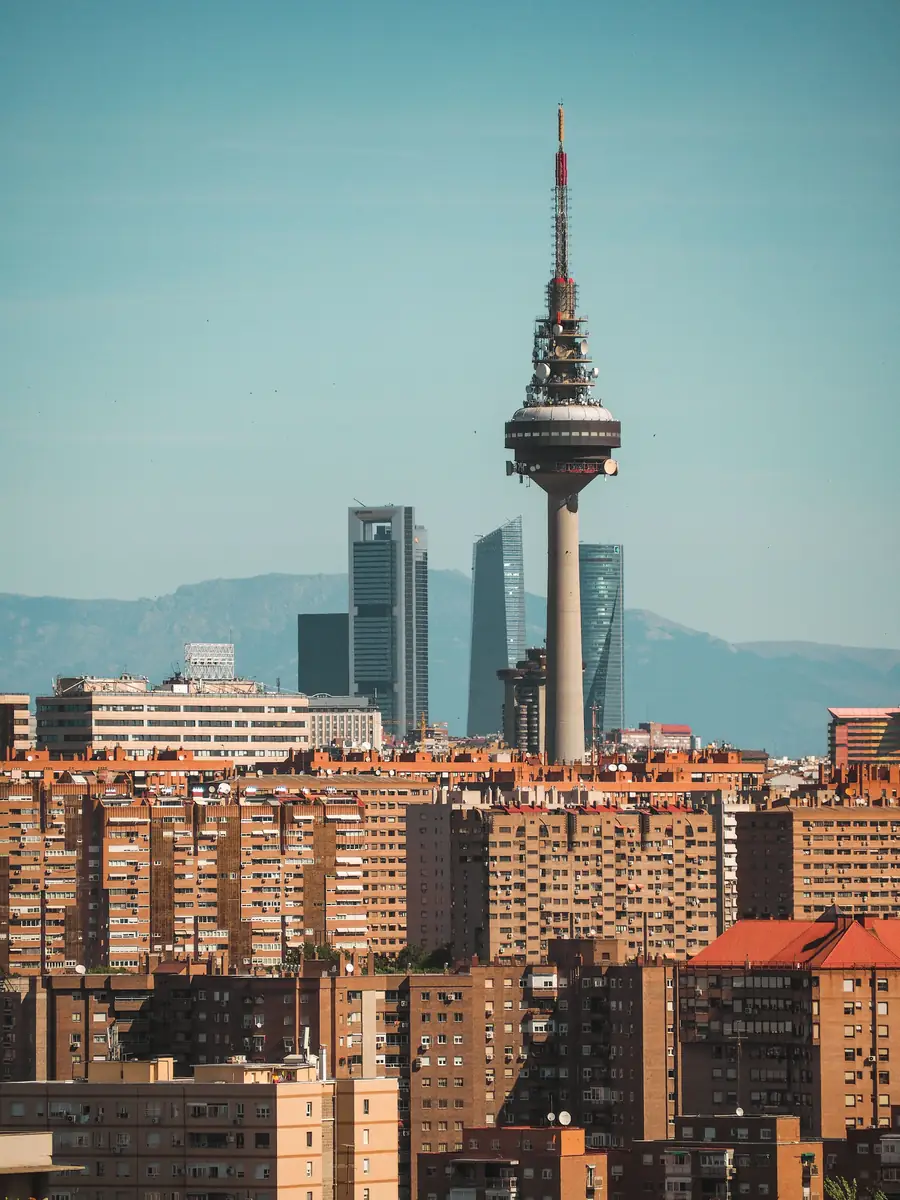
In 2026 the Spanish residential market is in a situation that would have seemed contradictory only a few years ago: fewer homes are being sold, but each one costs considerably more. The official statistics published between August and September show a slowdown in the number of transactions and, at the same time, a rise in prices that shows no clear signs of running out of steam.
Behind this apparent paradox lies an underlying problem that every institution points to: housing supply is not growing as fast as demand. On top of that, the interest rate cycle has turned, with the Euribor (the benchmark rate for most Spanish mortgages) back above 3%, making financing more expensive just as prices are at their peak.
Sales are falling: the INE figures
According to the INE's Property Rights Transfer Statistics (Estadística de Transmisiones de Derechos de la Propiedad), published on 25 September, 61,417 home sales were entered in the land registers in July 2026. That is a 5.1% drop compared with July 2025, although it is 3.6% higher than in June. So far this year, the cumulative number of transactions is 3.0% below the same period of the previous year.
The July figure confirms that the slight uptick in June, when sales grew 1.6% year on year, was a one-off. The personal finance website HelpMyCash attributed it to buyers bringing their decision forward in anticipation of interest rate rises, rather than to a genuine recovery in demand.
By type of property, resale homes still make up the bulk of the market: 48,128 transactions in July, 78.4% of the total, with an annual fall of 6.1%. New-build homes accounted for 13,289 sales (21.6%) and held up better, with a decline of just 1.4%. Vivienda protegida (state-subsidised housing), which represents only 6.2% of sales, plummeted by 14.4%.
| Indicator (July 2026) | Transactions | Share | Annual change |
|---|---|---|---|
| Total home sales | 61,417 | 100% | -5.1% |
| Resale homes | 48,128 | 78.4% | -6.1% |
| New-build homes | 13,289 | 21.6% | -1.4% |
| Open-market homes | 57,607 | 93.8% | -4.4% |
| State-subsidised homes | 3,810 | 6.2% | -14.4% |
Source: INE, Property Rights Transfer Statistics, July 2026 (published on 25 September 2026).
The regional picture is very uneven. Galicia (+10.8%) and Castilla y León (+9.7%) grew strongly in July, while Asturias (-15.2%), the Balearic Islands (-14.3%) and the Basque Country (-12.4%) recorded the largest falls. The Comunidad de Madrid did not escape the trend: its sales dropped 11.3% year on year, one of the steepest declines in the country.
Notaries and land registrars confirm the cooling
The market's other two major sources point in the same direction. The Consejo General del Notariado (General Council of Notaries) counted 67,529 home sales in June 2026, 4% fewer than a year earlier, according to data released at the end of August. Sales of flats fell by 5.6%, while detached and semi-detached houses grew by a modest 0.8%.
Meanwhile, the Colegio de Registradores (Association of Land Registrars), in its Real Estate Registry Statistics (Estadística Registral Inmobiliaria) for the second quarter, recorded 167,934 home sales between April and June. That is 5.7% fewer than in the previous quarter and 2.3% fewer than a year earlier. Even so, over the last twelve months transactions total 698,684, 1.0% more than in the preceding period, which shows that volume remains high by historical standards even though it has lost momentum.
In the Comunidad de Madrid, the land registrars recorded 19,274 sales in the second quarter, 2.6% fewer than in the first.
Prices: double-digit rises and records
While transactions are falling, prices keep rising. The INE's House Price Index (Índice de Precios de Vivienda, IPV), published on 7 September, recorded an annual rise of 12.2% in the second quarter of 2026. That is a slight easing compared with previous quarters, but still a very high pace. Quarter on quarter, prices rose by 3.4%.
Resale homes became more expensive than new builds: 12.9% versus 7.4% a year. Every autonomous region recorded positive rates. Ceuta (15.2%), Asturias (15.0%) and Castilla y León (14.8%) led the increases, while Navarre (9.5%), the Basque Country (10.0%) and Catalonia (10.1%) were the most moderate. The Comunidad de Madrid stood at 12.9%, above the national average.
Notaries also report record highs: the average price of homes sold before a notary in June reached €2,114 per square metre, an all-time record and 8.8% more than a year earlier. For flats, the price per square metre reached €2,529, an annual rise of 13.8%. According to the notary data reported by idealista, Madrid was one of the areas with the sharpest increases, at 19.5% year on year.
The land registrars, using a different methodology, put the national average price at €2,487 per square metre in the second quarter. The Comunidad de Madrid is the most expensive region in Spain, at €4,477 per square metre. And the appraised value reported in the Comunidad de Madrid's statistical bulletin, based on data from the Ministry of Housing, reached €4,048 per square metre in the region in the first quarter of 2026, 16.4% more than a year earlier, compared with a national average of €2,315.7 (+13.9%).
| Source and period | Spain | Comunidad de Madrid |
|---|---|---|
| INE, IPV, annual change (Q2 2026) | +12.2% | +12.9% |
| Land Registrars, average price (Q2 2026) | €2,487/m² | €4,477/m² |
| Appraised value, open-market homes (Q1 2026) | €2,315.7/m² (+13.9%) | €4,048/m² (+16.4%) |
| Notaries, average price (June 2026) | €2,114/m² (+8.8%) | +19.5% annual |
Sources: INE (IPV Q2 2026), Colegio de Registradores (ERI Q2 2026), Comunidad de Madrid appraised value bulletin with data from the Ministerio de Vivienda y Agenda Urbana (Ministry of Housing and Urban Agenda) (Q1 2026), Consejo General del Notariado via idealista (June 2026). Each source uses a different methodology and their figures are not directly comparable.
New build versus resale
New-build housing is scarce: barely one in five sales registered in July was a new build. That scarcity partly explains why its price is growing more slowly in the IPV, as much of the demand shifts to existing homes, which are rising more steeply. In the second quarter, according to the land registrars, 34,919 new homes were sold, 11.5% fewer than in the first quarter, compared with 133,015 resale homes, which fell more gently by 4.0%.
In price per square metre, the land registrars put new builds at €2,636 and resale homes at €2,448, although the latter rose more during the quarter (3.5%, compared with a 0.7% fall for new builds).
Foreign buyers: a record share
One of the most striking features of 2026 is the growing weight of foreign buyers. According to the land registrars, they bought 15.98% of the homes sold in the second quarter, up from 13.92% in the first, equivalent to around 26,800 transactions. British buyers (6.99% of purchases by foreigners), Dutch (6.94%) and Germans (6.11%) top the list, followed by Moroccans and Romanians.
This demand is concentrated mainly on the Mediterranean coast and the islands. In Madrid its weight is smaller than in the Balearic Islands, Alicante or Málaga, but it adds to the overall pressure on a limited housing stock.
Cash or mortgage
Financing is still key, although a very significant share of purchases is made without a loan. According to the notaries, 36,249 mortgage loans to buy a home were signed in June 2026, meaning that 53.7% of home sales were financed with a mortgage. In other words, close to half of all transactions were completed without a mortgage, including cash purchases by investors, foreign buyers and households selling one home to buy another.
The average size of those loans was €188,785, 7.3% more than a year earlier, and the amount financed averaged 72.3% of the purchase price. With the Euribor rising, those who depend on a mortgage have less room for manoeuvre today than those buying with their own savings.
The root of the problem: not enough supply
All the indicators point to the same structural cause. The Banco de España, in its 2025 Annual Report presented in June 2026, raised its estimate of the accumulated shortfall between 2021 and 2025 to around 750,000 homes. In 2025 alone, around 240,000 households were formed, while some 92,000 homes were completed, 9% fewer than in 2024. It is the fifth year in a row in which household formation has outpaced construction.
The central bank warns that the gap could widen because of strong migration flows and land restrictions. More than half of the shortfall (52.5%) is concentrated in six provinces, including Madrid, Barcelona, Valencia and Málaga. For a young tenant in Madrid, buying a home requires more than ten years of gross salary, compared with a national average of 6.8 years.
What to expect for the rest of the year
The outlook for the last quarter of 2026 combines three forces: prices at record highs, more expensive financing after the ECB's interest rate rise in September, and a supply that is not expanding at the pace needed. The most likely outcome, in the light of the data, is that transactions continue to ease while prices grow at a somewhat slower pace, though without sudden changes as long as the imbalance between supply and demand persists.
For anyone wanting to buy or sell in Madrid, the practical takeaway is twofold. Buyers should prepare their financing carefully and compare prices per square metre using reliable data. Sellers have a favourable market in terms of price, but with fewer buyers in a position to close quickly, so setting a realistic price remains decisive.
At Llavely we follow these statistics closely so that buyers and sellers in Madrid can make decisions based on the data. This article is for information only: each individual case should be reviewed with a professional.
Frequently asked questions
How many homes are being sold in Spain in 2026?
According to the INE, 61,417 home sales were registered in July 2026, 5.1% fewer than a year earlier, and the year-to-date total is 3.0% below 2025. The land registrars count 698,684 transactions in the twelve months to June, a figure that is still high by historical standards.
How much have house prices risen in 2026?
The INE's House Price Index rose 12.2% year on year in the second quarter of 2026, with a 12.9% increase for resale homes and 7.4% for new builds. Notaries put the average price in June at €2,114 per square metre, an all-time record.
What is the market like in the Comunidad de Madrid?
Madrid combines fewer transactions with higher prices. Sales fell 11.3% year on year in July according to the INE, while the regional IPV rose 12.9% in the second quarter and the land registrars put the price per square metre at €4,477, the most expensive in Spain.
Why are sales falling if prices keep rising?
Because demand is meeting a very limited supply and financing has become more expensive. There are fewer buyers able to pay current prices, but those who can are still competing for few homes, which keeps prices rising.
What percentage of buyers are foreigners?
According to the Colegio de Registradores, foreigners bought 15.98% of the homes sold in the second quarter of 2026, up from 13.92% in the first quarter. British, Dutch and German buyers are the nationalities with the most purchases.
How many homes are bought without a mortgage?
Notaries report that in June 2026, 53.7% of home sales were financed with a mortgage loan. So close to half were completed without a mortgage, whether with savings, with money from selling another home or through other forms of financing.
Is it better to buy a new-build or a resale home?
It depends on your budget and location. New builds are scarce (around 21.6% of July's sales) and in 2026 their prices have risen less than resale homes, but they are taxed with VAT (IVA) and AJD (stamp duty) instead of ITP (property transfer tax). Resale homes offer more choice and established locations, although they often need renovation.
How many homes is Spain short of?
The Banco de España estimates an accumulated shortfall of around 750,000 homes between 2021 and 2025. In 2025 around 240,000 households were formed and some 92,000 homes were completed, and more than half of the shortfall is concentrated in six provinces, including Madrid.
Will house prices fall in the short term?
None of the official data published points to imminent falls: every region shows annual rises in the IPV. What can be seen is a slight easing in the pace of growth and fewer transactions, against a backdrop of rising interest rates.
Sources
- Estadística de Transmisiones de Derechos de la Propiedad (Property Rights Transfer Statistics), July 2026 (INE, 25/09/2026)
- Índice de Precios de Vivienda (House Price Index), second quarter 2026 (INE, 07/09/2026)
- Estadística Registral Inmobiliaria (Real Estate Registry Statistics), Q2 2026 (Colegio de Registradores, 2026)
- Home sales fall again in June with prices at record highs (idealista, 27/08/2026, in Spanish)
- Boletín de valor tasado de la vivienda (Housing appraised value bulletin) (Comunidad de Madrid, 2026)
- The Banco de España raises the number of missing homes to 750,000 (elDiario.es, 18/06/2026, in Spanish)
- June was a mirage: home purchases fell again in July (HelpMyCash, 25/09/2026, in Spanish)