Renting · · 20 min read
Damp, mould and heating in a rented flat in Spain this winter: who pays and what to do (Madrid and Barcelona)
If the damp comes from a leak, a pipe, the façade or the ground, your landlord fixes it (or the community of owners, through your landlord); condensation caused by poor ventilation and small repairs are down to you. Ask for the repair in writing with a quote: your landlord has 15 calendar days to reply and, if they do not, you can have it done yourself and deduct it from the rent. A wall-mounted gas boiler is serviced every 2 years and the gas installation inspected every 5.
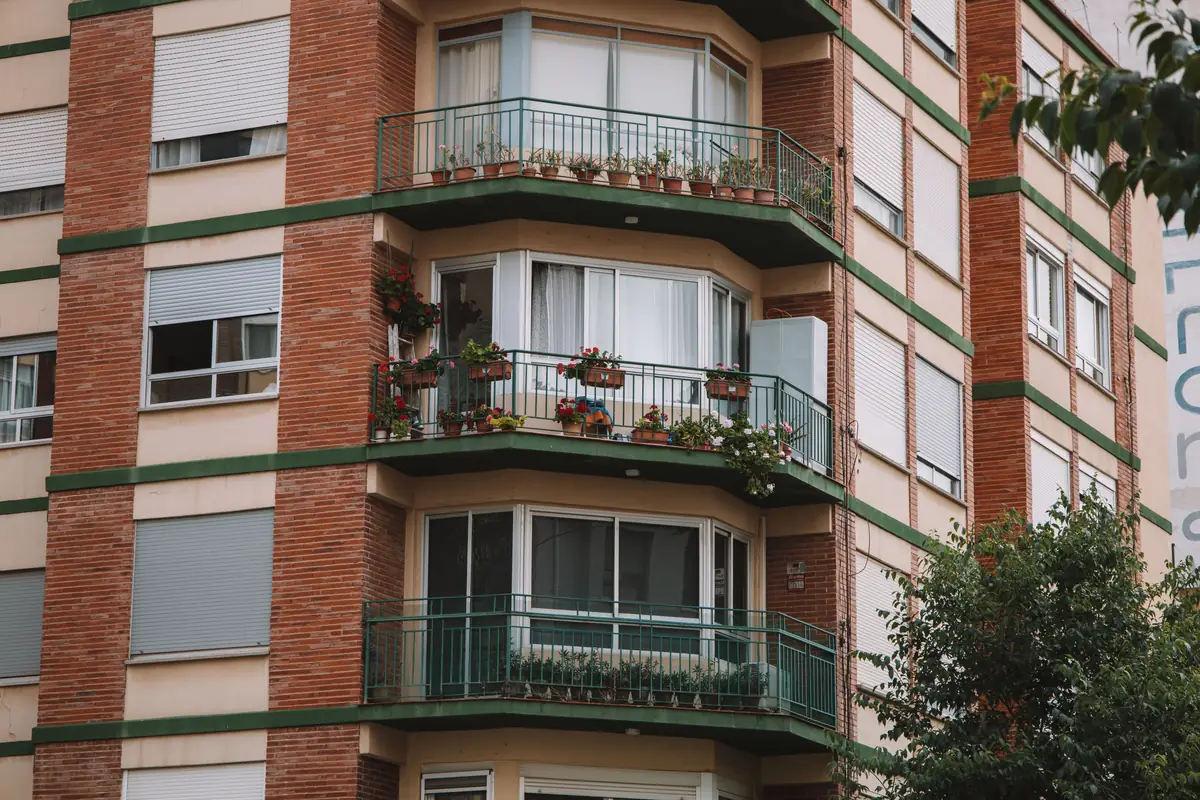
The cold brings the same questions to many rented flats: a black patch spreading in the corner of the bedroom, windows streaming with water in the morning, a wall flaking at floor level or a boiler that keeps cutting out. And behind each one, the usual doubt: do I fix this myself, or is it my landlord’s job?
The answer depends above all on where the water comes from. In this guide, based on the rules as checked on 20 November 2026, we explain how to tell condensation from a leak, who pays for what, how to ask for a repair and what to do if it does not happen, which checks the boiler needs, what happens with central heating and what help is available. The general split of repairs and bills is in “Repairs, utilities and rubbish tax in a rented flat in Spain in 2026…”, and noise in “Noise and problems with neighbours in a rented flat in Spain in 2026…”.
The essentials in one minute
- Your landlord must carry out, without raising the rent, the repairs needed to keep the home habitable (LAU, art. 21.1). You pay for small repairs caused by everyday wear (art. 21.4) and for anything you damage.
- Condensation: usually comes from how the home is used (little ventilation, laundry drying indoors) and is fixed with habits. If it is caused by a defect in the flat, it is the landlord’s job.
- Leaks and rising damp: they come from the building. Your landlord repairs them or, if the source is a common element, the community of owners, which does not need a vote of the owners’ meeting for necessary conservation works (Horizontal Property Act, art. 10.1.a).
- If the damage affects habitability, safety or health, ask for the repair in writing with a quote: your landlord has 15 calendar days to reply; if they do not, or refuse without good reason, you can have it done and deduct it from the rent (art. 21.5).
- Wall-mounted gas boiler up to 70 kW: service every 2 years by a licensed company (RITE). Mains gas installation: inspection every 5 years, charged on the bill and never paid in cash.
- Central heating: no national rule sets hours or a minimum temperature for homes; the community of owners decides.
Who pays: the rule in article 21 of the LAU
Article 21.1 of the LAU requires the landlord to carry out, without raising the rent, “all repairs needed to keep the home in a habitable condition”, except for damage attributable to the tenant. And article 21.4 says: “Small repairs required by wear from ordinary use of the home shall be borne by the tenant.”
Applied to damp: water coming in through the façade, a dripping downpipe or a wall soaking up moisture from the ground are conservation problems that have nothing to do with how you live. Mould that appears because the flat is never aired or the vents are blocked depends on use. Heating works the same way: a boiler that fails through age is the landlord’s cost; bleeding radiators or changing the thermostat batteries is yours. The law gives no list: if in doubt, the contract decides and, ultimately, a judge.
Condensation, leaks or rising damp: how to tell them apart
Condensation forms when everyday water vapour (cooking, showering, drying clothes, breathing) meets cold surfaces in poorly ventilated rooms. According to the Basque Government’s guide for tenants, small dark spots of mould appear where walls meet the ceiling and floor and behind furniture and curtains; it does not need to rain, cold is enough. A leak is water coming in from outside or from an installation: according to OCU (Spain’s main consumer organisation), rain stains grow when it rains and pipe leaks leave stains with defined edges. Rising damp, or capillarity, comes up from the ground, lifts the paint on the lower part of walls and leaves saltpetre.
| Sign | Condensation (use) | Leak or pipe | Rising damp (building) |
|---|---|---|---|
| Where it appears | Corners at the ceiling or floor, behind furniture, by windows, in bathrooms and kitchens | Near the roof, the façade, a downpipe or the bathroom of the flat above | Lower part of the walls, from the floor up |
| When it gets worse | With cold, even without rain; misted windows in the morning | After rain or when the installation is used | Fairly constant |
| What the stain looks like | Black spots of mould, no clear edges | Defined edges or a stain that grows with rain | Lifting paint, saltpetre |
| Foil test (taped to the wall for two days) | Droplets on the side you can see | Water on the side against the wall | Of little help: you need a professional |
| Who fixes it | You, with ventilation; the landlord, if there is a defect in the flat | The landlord; the community or the neighbour, depending on the source | The landlord or the community |
Guidance based on criteria from OCU (19-2-2026) and the Basque Government. Not a substitute for a professional diagnosis: there may be several causes at once.
Note that condensation is not always the occupant’s fault. OCU explains that poor insulation, little ventilation and high indoor temperatures tend to go together, and that fixing just one can move the problem elsewhere. If the extractor fan does not work, the windows do not close or earlier building work blocked the vents, the underlying fix is the landlord’s. If there is a dispute, a written report from a building professional is what settles it best.
If it is condensation: what you can do
- Air every room daily. According to OCU, “ten minutes with the windows open is enough”; IDAE recommends doing it before switching the heating on in the morning.
- Ventilate while cooking and after showering, cover pans and never block the kitchen and bathroom vents.
- Avoid drying wet laundry indoors; if there is no alternative, do it in a ventilated room with the door closed.
- Heat steadily: the Basque Government suggests 18 to 19 °C, raising it to 20 or 21 °C, rather than jumping from 16 to 21 °C.
- Avoid portable heaters without a flue (butane, kerosene, paraffin): they produce water vapour.
- To clean mould, OCU suggests five parts water to one part bleach. If it comes straight back in the same place, the problem is not just habits.
Take dated photos before cleaning. If after a few weeks of good ventilation the mould keeps coming back, you will have evidence that the cause lies in the flat.
If it is a leak or rising damp: who fixes it
- Source inside the flat you rent (a pipe in the wall, a badly sealed window): your landlord repairs it (LAU, art. 21.1).
- Source in another flat, such as a leak from the bathroom above: its owner is liable, because each owner must keep their flat and installations in good condition and compensate for damage caused through neglect (Horizontal Property Act, art. 9.1.b).
- Source in a common element (roof, façade, main downpipes): the work falls to the community. Works needed to preserve the building are mandatory and “shall not require the prior agreement of the owners’ meeting” (art. 10.1.a).
Your point of contact is always your landlord, who is the member of the community. You can also alert the property administrator if the damage could spread, but always tell your landlord in writing. If someone needs to enter your home to repair something in the building, the law requires access to be allowed (art. 9.1.c and d), so agree a day and time.
How to report it and what the deadlines are
The LAU requires the tenant to give notice “as soon as possible” of any necessary repair and to let the landlord check it (art. 21.3). For damage affecting habitability, safety or health, such as serious damp or a boiler that stops working in mid-winter, article 21.5 adds a procedure:
- Write to your landlord by a method that proves receipt, such as a burofax (a certified letter service) or an email with acknowledgement.
- Describe the problem, since when you have noticed it and where it is, with dated photos and, if you have one, a professional’s report.
- Attach a reasonable quote from a company or tradesperson.
- Your landlord has “fifteen calendar days from receipt of the request” to accept the quote, propose another repair or carry it out themselves.
- If they do not reply or refuse without good reason, you can have the work done and deduct the cost from the following rent payments. The cost must be reasonable and documented: keep the quote, the invoice and proof of payment.
If the damage could get worse within hours, article 21.3 lets you carry out repairs “that are urgent to avoid imminent damage or serious inconvenience”, telling your landlord first, and claim the cost afterwards. Turn off the stopcock if there is a leak and call your home insurer if you have one: according to OCU, 38% of home insurance claims are water-related. And if the inventory at the start of the tenancy recorded the state of walls, ceilings and boiler with photos, it will be easier to prove the damp appeared later; we explain this in “Key handover and inventory at the start of a rental in Spain in 2026…”.
If your landlord does not repair: rent reduction, suspension or termination
Do not stop paying the rent on your own initiative: you would risk eviction for non-payment. What the law does provide is this:
- Deduct the cost of the repair, if you have followed the procedure in article 21.5.
- Pay less during the works: you must allow conservation works that cannot wait, but if they last more than twenty days the rent falls in proportion to the part of the home you cannot use (art. 21.2).
- Suspend the contract or withdraw: if the works make the home uninhabitable, you can suspend the contract until they finish, without paying rent, or withdraw without compensation (art. 26).
- Ask a court to enforce the contract or terminate it (art. 27.1, which refers to article 1124 of the Civil Code). The law expressly lists the landlord’s failure to carry out the repairs in article 21 as grounds for the tenant to terminate (art. 27.3.a).
Any other reduction must be agreed. If you would rather leave, you can withdraw once you have been there six months, giving 30 days’ notice; we explain how in “Leaving a rented flat before the contract ends in Spain in 2026…”.
Table: problem, who pays and what to do
| Problem | Who normally pays | What to do |
|---|---|---|
| Mould from lack of ventilation | Tenant (use) | Ventilate, avoid drying laundry indoors, clean and keep an eye on it |
| Condensation from a defect in the flat (broken extractor, blocked vents) | Landlord | Report in writing with photos |
| Leak through the roof, façade or a main downpipe | Community, through the landlord | Tell your landlord and, if urgent, the administrator |
| Leak from the flat above | The owner of that flat | Tell the neighbour and your landlord |
| Rising damp in a ground-floor flat | Landlord or community, depending on the source | Ask for a professional to inspect it |
| Boiler breakdown without misuse | Landlord | Report it straight away; if urgent, repair it after giving notice and claim the cost |
| Boiler service (RITE) | Whatever the contract says | Check the date of the last service |
| Gas inspection every 5 years | The gas account holder, on their bill | Wait for the distributor’s letter; never pay in cash |
| Bleeding radiators, thermostat batteries | Tenant (small repairs) | Do it at the start of winter |
| Central heating breakdown | Community | Tell your landlord and the administrator |
Guidance based on the general criteria of the LAU (arts. 21, 26 and 27) and the Horizontal Property Act (arts. 9 and 10) as of 20 November 2026. If the contract lawfully allocates a cost differently, the contract prevails.
The individual boiler: service, inspection and who pays
There are two checks that are often confused. The first is maintenance under the RITE (Royal Decree 1027/2007), which requires the owner or user to ensure “maintenance of the thermal installation by a licensed maintenance company” (art. 25). Its preventive maintenance table (IT 3.3) sets, for homes: wall-mounted gas boiler up to 70 kW, every 2 years; gas water heater up to 24.4 kW, every 5 years; water heater above 24.4 and up to 70 kW, every 2 years; and installations above 70 kW, monthly.
The second is the inspection of the mains gas installation (Royal Decree 919/2006). According to the Community of Madrid, it is mandatory every five years; the distributor gives individual written notice three months in advance, and you have 45 days to choose a licensed installer instead. If the distributor does it, it costs about 40 euros in 2026 for installations under 70 kW and is charged on the next bill: it is never paid in cash. Be wary of visits without a prior letter and of notices in the entrance hall.
Who pays in a rental? The LAU does not say. The gas regulation places the obligation on the owner of the installation or, failing that, the user (art. 7), and the Community of Madrid says that domestic installations under 70 kW do not need a maintenance contract and that the price is set freely and paid by the user. The safest option is for the tenancy agreement to say who arranges and pays for each check. If the service finds a fault not caused by misuse, repairing it is the landlord’s job. When you move in, ask for the latest certificate so you know when the next one is due.
The boiler is also a safety matter. The Community of Madrid points out that carbon monoxide has no smell and can be fatal, and that more than 90% of hospital admissions from these accidents are due to inhaling it. Keep vents clear, check the flame is blue, not yellow, and if you smell gas, turn off the main valve, open the windows and do not make flames or touch switches. If in doubt, call your distributor’s emergency number, which is on your bill.
The community’s central heating
If the building has central heating, the boiler is a common element and its maintenance and breakdowns are the community’s responsibility. The community decides the hours and temperature: no national rule sets them for residential buildings. The RITE’s 21 °C limit (IT 3.8) applies to administrative, commercial and public buildings, not homes.
What has changed is how the cost is shared. Royal Decree 736/2020 requires each home’s consumption to be measured or estimated with meters or heat cost allocators, where technically feasible and cost-effective. According to the Community of Madrid, between 25% and 40% is shared as a fixed cost and between 60% and 75% according to consumption, and devices that cannot be read remotely must be adapted before 1 January 2027, unless it is not cost-effective. Who pays the bill between landlord and tenant depends on the contract. If the heating does not heat properly, note the days and temperatures and tell your landlord in writing: if a radiator in your flat fails, they repair it; if it is the main installation, the community does.
Mould and health: what the WHO says
In 2009 the World Health Organization published guidelines on dampness and mould in indoor air. According to the review behind them, damp and mould are associated with more respiratory symptoms, allergies and asthma, and their central recommendation is to prevent or minimise persistent damp and microbial growth in buildings. If you live with young children, older people or someone with asthma, say so in your letter: it reinforces that the damage affects health. If you have symptoms, see your doctor.
Keeping warm without a huge bill
- According to IDAE, “a temperature of 21 °C with suitable clothing is enough”; it recommends switching the heating off at night and turning it down to 15 °C if you go out for a few hours.
- Each degree lower saves around 7% on heating and cooling, and thermostatic valves or programmable thermostats save between 8% and 13%.
- Close blinds at night, do not cover radiators and bleed them once a year, at the start of winter.
Social electricity and heating discounts (bono social)
The bono social eléctrico is a discount on electricity bills for vulnerable consumers. According to the Ministry for the Ecological Transition, you need the PVPC (the regulated tariff) with a reference supplier, up to 10 kW of contracted power, in your main home, and you must meet one condition: income below the threshold, large family, minimum pension or the Minimum Living Income (Ingreso Mínimo Vital). The threshold for a person living alone is 12,600 euros a year; two adults with one child, 19,320, and with two children, 23,520, with higher thresholds in situations such as disability or single-parent families.
The standard discount is 35% (vulnerable) and 50% (severely vulnerable), but until 31 December 2026 it is 42.5% and 57.5%. It is requested by the electricity account holder: if the account is still in the landlord’s name, you can ask for the change of holder at the same time as the discount. Anyone who is a beneficiary on 31 December receives the following year, without applying, the bono social térmico payment; it is managed and paid by the regional governments and the amount depends on the climate zone and the degree of vulnerability.
If you are a landlord: insulation and renovation grants
Damp that keeps returning is a repair that keeps coming back and a tenant who loses patience. Before painting over it, get a diagnosis and tackle the cause; OCU warns that interior insulation only makes sense afterwards. When the work affects the building, it is approved and paid for by the community. And if your tenant sends you a quote, remember you have 15 calendar days to accept it, propose another repair or carry it out yourself.
Grants exist, each with its own deadline. In the city of Madrid, the City Council’s Plan Rehabilita 2026, with 50 million euros, funded conservation, energy efficiency, health, safety and accessibility works for communities of owners and owners of detached houses, among others; its deadline was 30 September 2026, so it is worth watching for a new call. In Barcelona, the City Council announced in April 2026 10 million euros in two calls to improve building envelopes, replace windows or replace fossil-fuel heating: up to 6,000 euros per applicant, with minimum works of 1,000 euros, and the owner, the usufructuary or the tenant can apply if it is their main home. The first call ended in June and the second was due to open afterwards: check the council’s website to see whether it is open.
How we do it at Llavely
At Llavely, renting works the other way round. If you are looking for a flat, you do not write to anyone: you create your verified profile once (our team checks your identity and income, and the documents are deleted afterwards) and it is landlords and agencies who invite you to view their home. That way you can view calmly and look at what this article explains: the corners of the ceilings, behind the furniture, the windows, the boiler and its last service.
If you have a flat to let, you list it for free and see verified candidates ranked by affinity, and you choose whom to invite. When you agree, the contract is signed electronically and includes the inventory, where it is worth recording the condition of walls, ceilings and boiler. Llavely does not carry out repairs or handle payments: the rent and deposit go directly to the landlord. Rentals are open and free in the provinces of Madrid and Barcelona. If you are looking for a flat, create your free profile; if you have a home, list it for free. And if you are thinking of selling it in the Community of Madrid, you can also do that with us for 2.5% + VAT, all included, and request your free valuation.
Frequently asked questions
Who pays for damp in a rented flat in Spain?
It depends on the source. If it comes from a leak, a pipe, the façade or the ground, the landlord pays (LAU, art. 21.1), or the community of owners if the source is a common element. If it is condensation from lack of ventilation, it depends on use and the tenant deals with it, unless it is caused by a defect in the flat.
How can I tell condensation from a leak?
Condensation appears with cold weather even without rain, in corners and behind furniture, as black spots with no clear edges. A leak grows with rain or when an installation is used and leaves stains with defined edges. Tape aluminium foil to the wall for two days: droplets on the outside point to condensation; water on the side against the wall, to a leak.
How long does the landlord have to fix damp?
If the damage affects habitability, safety or health and you ask for the repair in writing with a reasonable quote, they have 15 calendar days from receipt to accept it, propose another repair or carry it out. If they do not reply or refuse without good reason, you can have it done and deduct it from the rent (LAU, art. 21.5).
Can I stop paying rent if there is mould?
Not on your own initiative: you risk eviction. The law lets you deduct the repair through the article 21.5 procedure, pay less if works last more than twenty days (art. 21.2), suspend the contract if the works make the home uninhabitable (art. 26) or ask a court to enforce or terminate the contract (art. 27).
Who pays for the boiler service in a rented flat?
The LAU does not say. The RITE requires the owner or user to have it maintained by a licensed company; in a home, a wall-mounted gas boiler up to 70 kW is serviced every 2 years. The safest option is for the contract to say. If the service finds a fault not caused by misuse, the repair is the landlord’s.
How often is the gas inspection and how much does it cost?
Every five years. The distributor sends a letter three months in advance. According to the Community of Madrid, if it carries out the inspection it costs about 40 euros in 2026 for installations under 70 kW and is charged on the bill: never in cash.
Can the community run the central heating for only a few hours?
Yes. No national rule sets hours or a minimum temperature for residential buildings: the community of owners decides. The RITE’s 21 °C limit is for administrative, commercial and public buildings. A breakdown of the main installation is repaired by the community.
Can a tenant apply for the bono social eléctrico?
Yes, if they meet the requirements and are the electricity account holder, on the PVPC with a reference supplier in their main home. If the account is in the landlord’s name, they can request the change of holder at the same time. Anyone who has it on 31 December receives the following year, without applying, the bono social térmico payment.
Sources
- Law 29/1994 of 24 November on Urban Leases, consolidated text: articles 21, 26 and 27 (BOE, last amended 13 November 2026)
- Law 49/1960 of 21 July on Horizontal Property, consolidated text: articles 9 and 10 (BOE, last amended 3 October 2026)
- Royal Decree 1027/2007, Regulation on Thermal Installations in Buildings (RITE), consolidated text: article 25, IT 3.3 and IT 3.8 (BOE, last updated 2 August 2022)
- Royal Decree 919/2006, Technical Regulation on the distribution and use of gaseous fuels, consolidated text: article 7 (BOE, last amended 3 September 2025)
- Fraud in gas inspections and checks (Community of Madrid, Consumer Affairs, updated 2 June 2026)
- Safety campaign on domestic gas boilers, press release (Community of Madrid, 3 November 2025)
- Central heating: individual metering of installations and consumption (Community of Madrid, updated 3 November 2026)
- Recommendations for saving energy at home (IDAE, accessed 20 November 2026)
- Bono social: frequently asked questions (Ministry for the Ecological Transition and the Demographic Challenge, accessed 20 November 2026)
- Bono social térmico: requirements (Ministry for the Ecological Transition and the Demographic Challenge, accessed 20 November 2026)
- WHO guidelines for indoor air quality: dampness and mould, 2009 (Pan American Health Organization / WHO)
- Condensation damp, guide for tenants (Basque Government, 17 April 2018)
- Extract of the Decree of 28 May 2026 approving the Plan Rehabilita Madrid 2026 grant call (BOCM no. 129, 2 June 2026)
- The City Council opens applications for the Plan Rehabilita 2026 grants, with 50 million euros (Madrid City Council, 2 June 2026)
- 10 million euros in grants for the renovation and energy improvement of homes (Barcelona City Council, 15 April 2026)
- Damp at home: how to get rid of it (OCU, 19 February 2026)