Renting · · 23 min read
Noise and problems with neighbours in a rented flat in Spain in 2026: what you can do and what your landlord has to do (Madrid and Barcelona)
Your landlord is not liable for the noise a neighbour makes, but you can act: ask the president of the community of owners in writing to demand that it stops, call the local police (092 in Madrid, 112 in Barcelona) and file a complaint with the city council. At night, the limit in a bedroom is 25 dB(A) in both cities. If the noise comes from the flat itself, claim from your landlord; if the person causing it is a tenant, their landlord can terminate the contract.
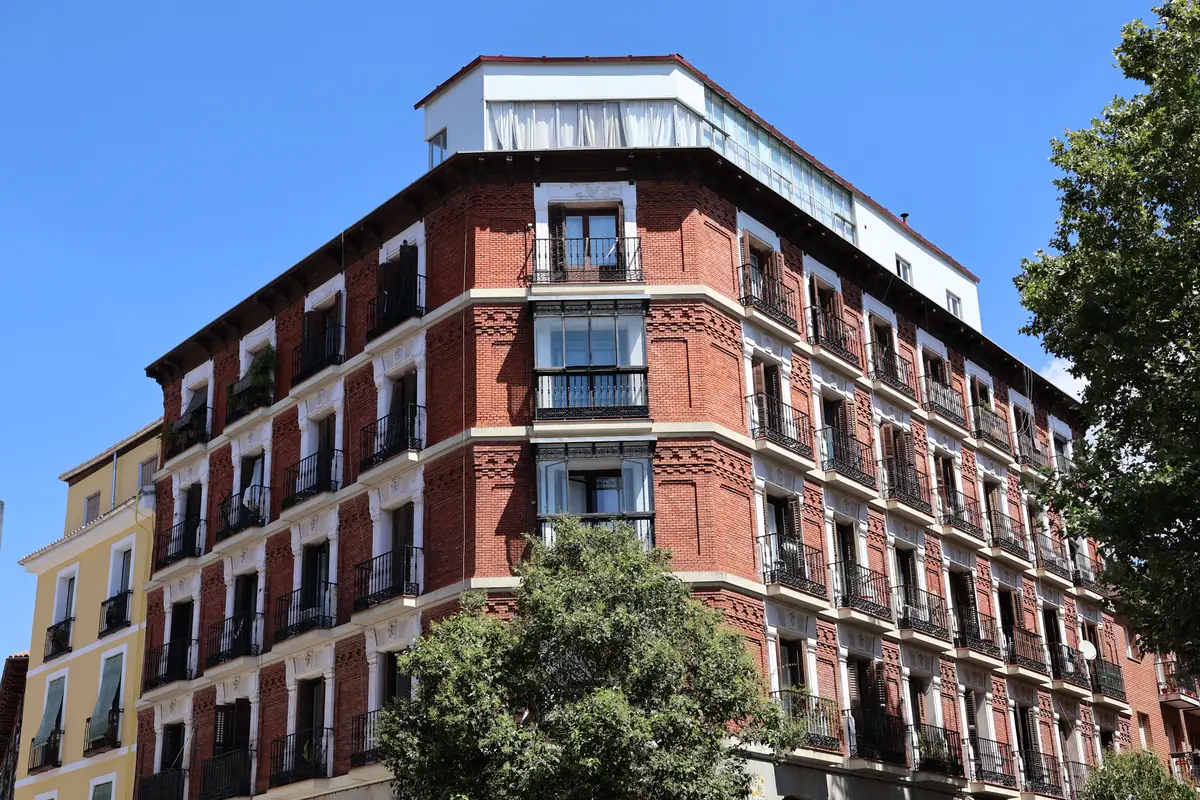
Few things wear you down like not being able to sleep in your own home: parties in the flat upstairs, the dog that barks when its owners go out, the bar on the ground floor or the lift that booms through the bedroom wall. When you rent, there is also a question that owners never have to ask: is this mine to sort out, or is it the landlord’s job?
The short answer is that it depends on where the noise comes from. In this guide, using the rules in force as of 19 November 2026, we explain who is responsible in each case, what the community of owners can do, how to report noise in Madrid and Barcelona, what hours and limits their bylaws set, how to document it without getting into trouble and what happens to the contract and the deposit if you decide to leave. We do not repeat what we have covered in detail elsewhere: your general rights are in «Tenant rights in Spain in 2026…»; repairs, in «Repairs, utilities and rubbish tax in a rented flat in Spain in 2026…»; clauses that are not valid, in «Rental contract clauses that are not valid in Spain in 2026…»; and leaving early, in «Leaving a rented flat before the contract ends in Spain in 2026…».
The essentials in one minute
- If a neighbour makes the noise, your landlord does not have to answer for it: the Civil Code says the landlord is not liable for a «disturbance of mere fact» caused by a third party, and gives you a direct claim against whoever is causing it.
- The community of owners does have a strong tool: article 7.2 of the Horizontal Property Act. The president, at the request of any owner or occupant, can demand that the activity stops and, with the owners’ meeting’s authorisation, take it to court. The judgment can ban use of the home for up to three years or, if the person causing the nuisance is a tenant, end their contract and order their eviction.
- If the person causing the nuisance rents, their landlord can terminate the contract for «nuisance activities» (article 27.2.e of the LAU). If they do not leave, it has to go to court and be proved.
- For noise happening right now, call the local police: 092 in Madrid and 112 in Barcelona, where the Guardia Urbana (city police) is reached on that number. For ongoing noise, file a written complaint with the city council.
- At night (23:00 to 07:00), the noise reaching a bedroom must not exceed 25 dB(A) in either Madrid or Barcelona. In Madrid, a very serious offence can cost up to €3,000.
- If the noise comes from the flat itself or the building (insulation, installations, a commercial unit), claim from your landlord in writing. Do not stop paying the rent: non-payment is grounds for eviction.
- Keep a noise diary, find witnesses and ask the police for a report. Record only what can be heard in your home, without capturing other people’s conversations, and do not post it on social media.
Who is responsible for what: you, the neighbour, the community and the landlord
It pays to be clear about who does what, so you do not complain to the wrong person. The Civil Code requires the landlord to keep you in quiet use of the home for the whole contract:
To keep the tenant in peaceful enjoyment of the lease for the whole term of the contract.
Spanish Civil Code, article 1554.3 (our translation)
But that obligation has a clear limit. Under article 1560 of the same code, the landlord «is not obliged to answer for a disturbance of mere fact that a third party causes in the use of the property», and the tenant has a direct claim against whoever causes it. In other words: if the neighbour upstairs makes the noise, the neighbour is responsible, and you are the one who can act against them, without going through the landlord. The landlord is responsible when they cause the nuisance themselves (for example, with works or by entering the home without your permission) or when it comes from a problem in the flat that they have to repair.
Even so, telling the landlord helps: they are a member of the community, vote at owners’ meetings and can ask the president to act. As an «occupant», you can ask too, but you do not vote. Write to them explaining the problem and what you have done: it builds support and leaves a record.
Step one: talk to the neighbour, and do it well
Many noise problems are solved with a conversation: the neighbour who runs the washing machine at eleven at night may simply not realise. Some tips:
- Choose a good moment, not in the middle of the party. If you feel awkward, leave a polite note in their letterbox.
- Be specific: what noise, which days, what times and how it affects you («on Tuesdays and Thursdays, from 23:30 to 01:00, I can hear music in my bedroom»).
- Suggest easy fixes: felt pads on chair legs, a rug, turning the volume down after 23:00, a heads-up before a party.
- In Madrid, the Policía Municipal (local police) offers mediation in neighbour disputes: according to its 2026 service charter, it handles every mediation request within a maximum of 7 calendar days.
Step two: the community of owners and article 7.2 of the Horizontal Property Act
When talking is not enough, the most powerful tool is the community of owners. Article 7.2 of the Horizontal Property Act forbids the owner and the occupant of a flat from carrying out activities that are banned by the community’s statutes, that damage the building, or that are a nuisance, unhealthy, harmful, dangerous or unlawful. Persistent, loud noise, especially at night, can count as a «nuisance activity».
The procedure has fixed steps, and knowing them saves time:
- The president of the community, on their own initiative or at the request of any owner or occupant (you included), requires the person causing the nuisance to stop immediately, warning them that legal action will follow otherwise.
- If nothing changes, the president calls an owners’ meeting to authorise a lawsuit.
- With that authorisation, they file an «acción de cesación» (action to stop the activity), heard in ordinary proceedings. The claim is brought against the owner and, where applicable, the occupant. It must include the prior demand and a certificate of the meeting’s resolution: according to an analysis by the law firm Gómez-Acebo & Pombo, the courts treat these requirements as essential.
- When the claim is filed, the judge can order the activity to stop immediately as an interim measure, with a warning that disobeying is a criminal offence.
- If the judgment goes in the community’s favour, it can order a permanent stop, damages and a ban on using the home for up to three years. If the person causing the nuisance is not the owner, such as a tenant, it can declare all their rights to the home extinguished and order their eviction.
For a tenant suffering the noise, the useful step is the first one: write to the president (or to the property manager, who often acts as the go-between) asking them to formally require the neighbour to stop. Do it by email or letter, with dates and specific facts, and ask your landlord to back it. Several complaints from different neighbours carry far more weight than one.
If the person causing the noise rents: article 27.2.e of the LAU
When the noisy neighbour is also a tenant, there is a second route through their landlord. The LAU allows a landlord to terminate the contract by operation of law on several grounds, including this one:
When nuisance, unhealthy, harmful, dangerous or unlawful activities take place in the home.
Urban Leases Act (LAU), article 27.2.e (our translation)
That does not mean the landlord can change the locks overnight. If the tenant does not agree to leave, the landlord has to go to court and prove the nuisance. That is why, if you are the one suffering the noise, it helps if the owner of the noisy flat knows what is going on: the community or the property manager can pass the complaints on, and your noise diary and the police reports will serve as evidence.
Step three: the local police and a complaint to the city council
The community and the courts are slow. For noise happening now, and to leave an official record, the route is the city council, which enforces the noise bylaws.
In Madrid. For serious noise nuisance at that moment, the number is 092 for the Policía Municipal; for an emergency, 112. Madrid’s bylaw on protection against noise and thermal pollution allows officers without specific training to carry out «checks that do not require the use of instruments» (article 49.3.c), such as confirming shouting or loud music in the small hours, and the report they sign is presumed to be truthful as to the facts it records (article 50.1). Measurements with a sound level meter are taken by specifically trained staff. According to the Policía Municipal’s 2026 service charter, requests to measure noise in premises and homes are handled and the person asking is contacted within a maximum of one month, provided the noise can be measured; non-urgent neighbour disputes are dealt with within 30 calendar days, and never more than two months. For ongoing noise, the city council has a complaints mailbox for «indoor and outdoor» noise, which can be used through its online portal, and 010 provides information.
In Barcelona. The Guardia Urbana is reached on 112, which according to its service charter (updated in June 2025) is its main number, including for each district unit; that charter lists reports on noise pollution and neighbour nuisance among its activities. For information and non-urgent complaints, there is 010 and the civic behaviour line, 900 226 226. On the street, the Coexistence Bylaw (Ordenanza de convivencia), in force since 15 February 2026, sets fines of up to €3,000 for noise in acoustically stressed areas.
Is it worth reporting the neighbour? An administrative complaint costs nothing and does not need a lawyer, and the city council imposes the fine if it confirms the offence. In Madrid, the bylaw classifies as minor, for example, «shouting or yelling, disturbing the neighbours’ rest and peace» (article 61.1.h), and fines go up to €750 for minor offences, €1,500 for serious ones and €3,000 for very serious ones (article 64). Police reports and case files are also the best evidence if the community or the owner of the noisy flat later goes to court.
Madrid and Barcelona: noise hours and limits
Each city has its own bylaws. These are the figures we have been able to confirm in the text of each one or, where stated, in the analysis by the OCU (Spain’s consumer organisation):
| Madrid (bylaw on protection against noise and thermal pollution) | Barcelona (Environment Bylaw) | |
|---|---|---|
| Periods of the day | Day 07:00–19:00, evening 19:00–23:00 and night 23:00–07:00 (article 5.1) | Day 07:00–21:00, evening 21:00–23:00 and night 23:00–07:00 (annex II.3, amended in 2022) |
| Night on public holidays | From 23:00 the evening before to 08:00 on the holiday (article 5.2) | Check the city bylaw |
| Maximum noise reaching a bedroom | 30 dB(A) by day and in the evening; 25 dB(A) at night (article 16) | 30 dB(A) by day and in the evening; 25 dB(A) at night (annex II.7) |
| Maximum noise in the living room and other rooms | 35 dB(A) by day and in the evening; 30 dB(A) at night (article 16) | 35 dB(A) by day and in the evening; 30 dB(A) at night (annex II.7) |
| Moving house, works and repairs inside the home | Banned from 21:00 to 08:00 on working days and from 21:00 to 09:30 on Saturdays, Sundays and holidays (article 47.2.c) | Necessarily noisy activities in the home are not allowed from 21:00 to 08:00, according to the OCU |
| Banned behaviour in the home | Shouting or yelling, impact noise from repairs at night, parties that go beyond what is tolerable and loud music at night (article 47.2); preventing animals from causing a nuisance (article 48) | Not disturbing the neighbours’ rest and peace (Guardia Urbana advice) |
| Number for noise happening now | 092 (Policía Municipal); 112 for emergencies | 112 (Guardia Urbana) |
| Information and written complaints | 010 and online portal: complaint about indoor and outdoor noise | 010 and civic behaviour line 900 226 226 |
| Fines | Minor up to €750, serious up to €1,500 and very serious up to €3,000 (article 64) | Up to €3,000 for street noise in acoustically stressed areas (Coexistence Bylaw, since 15-2-2026) |
dB(A): A-weighted decibels, the scale that mimics how the human ear hears. The limits refer to noise reaching your home from outside it (from a neighbour, a commercial unit or an installation) and are measured by technical staff with a sound level meter, not with a mobile phone. Sources: Madrid bylaw (text reproduced by Normatia) and Barcelona bylaw (BOPB, Barcelona provincial gazette, 1 August 2022), service charters of Madrid’s Policía Municipal (2026) and the Guardia Urbana (2025), and OCU (2024).
In Madrid the «evening» ends at 23:00 and in Barcelona it starts at 21:00, but in both cities the night period, the most protected one, runs from 23:00 to 07:00.
Who to turn to in each situation
| Situation | Who to turn to | Legal basis |
|---|---|---|
| A party, shouting or loud music right now | Madrid: 092. Barcelona: 112 (Guardia Urbana). Ask for it to be recorded in a report | Madrid bylaw, articles 47 and 61; Barcelona bylaws |
| Repeated noise from a neighbour, whether owner or tenant | In writing to the president or property manager of the community, copying your landlord | Horizontal Property Act, article 7.2 |
| The noisy neighbour is another landlord’s tenant | The community and, through it, the owner of that flat | LAU, article 27.2.e; Horizontal Property Act, article 7.2 |
| Ongoing noise you want measured | City council: written complaint; in Madrid, also a measurement requested from the Policía Municipal | Madrid bylaw, articles 16 and 49; Barcelona Environment Bylaw, annex II |
| A bar, gym or other business on the ground floor | City council (inspection of the activity) and the community | Municipal noise bylaws; Horizontal Property Act, article 7.2 |
| Poor insulation or a noisy installation in the flat itself | Your landlord, in writing | LAU, article 21; Civil Code, articles 1553 and 1554 |
| The landlord causes the nuisance (works, entering without permission) | Your landlord, in writing; if it continues, a lawyer | LAU, article 27.3.b |
| You want to leave because of the noise | Your landlord: written notice | LAU, articles 11 and 36.4 |
You can use several routes at once: calling the police does not stop you asking the community to act, and vice versa.
How to document it without getting into trouble
Noise disputes are won or lost on evidence. «They won’t let me sleep» convinces few people; a record kept over weeks with police reports convinces many:
- Noise diary. Note each episode: date, start and end time, type of noise (music, banging, voices, barking), which room you hear it in and how it affects you. Write it down at the time, not from memory a month later.
- Recordings, with care. Recording the noise as it sounds from your home, with the time visible, helps document its intensity and frequency. In a 2025 case, the Spanish Data Protection Agency (AEPD) noted that recording audio from your own home is not prohibited because it is a personal and household setting, but that indiscriminately capturing other people’s conversations may breach their privacy. Do not record neighbours’ conversations, do not point microphones at their home or at common areas and do not post anything on social media: hand it only to the police, the city council, the property manager or the court.
- Sound meter apps on your phone give you an idea, but they are not an official measurement: in Madrid, measurements with a sound level meter are taken by specifically trained staff.
- Witnesses. Other neighbours suffering the same noise, or people who have stayed over at your home, can confirm what happens. Several independent complaints to the community are worth more than one.
- Police reports. Every time you call, ask for the incident number or for a report to be drawn up. It is the strongest evidence, because it is presumed to be truthful.
- Everything in writing. Complaints to the president, the property manager and the landlord, by email or burofax (a certified letter with proof of content), dated. Keep the replies.
When the noise comes from the flat itself or the building
Sometimes the problem is not a neighbour but the building: windows that do not insulate, a boiler in the flat itself, the lift right next to the bedroom, the garage door or a business on the ground floor. Here the division of responsibility changes.
- Installations and fittings in the flat: article 21 of the LAU requires the landlord to carry out, without raising the rent, all the repairs needed to keep the home habitable. If an installation in the flat breaks down and makes a noise it did not make before, it is just another fault: report it in writing.
- Defects that existed when you signed: article 1553 of the Civil Code applies to leases the warranty rules of sale, which protect against hidden defects that make the thing unfit for use. Whether a noise justifies a rent reduction or termination depends on how serious it is, on whether you could have noticed it when viewing the flat and, ultimately, on a judge. A flat on a noisy street that you could see and hear during the viewing is hardly a hidden defect.
- Lift, garage, shared boilers: these belong to the community. What works is for your landlord, who is the one with a vote, to raise it with the community. The bylaws also set limits on the noise that installations transmit to homes, and you can ask the city council for a measurement.
- Bars, gyms and other businesses: as well as the community (article 7.2), the city council inspects the activities. In a complaint about a business in Madrid, the Ombudsman (Defensor del Pueblo) suggested that the city council consider requiring that the noise not exceed the limits in articles 15 and 16 of the bylaw.
An important warning: do not stop paying or pay less on your own initiative. The LAU allows the landlord to terminate the contract for non-payment of rent (article 27.2.a), even if you have grounds to complain. A reduction is agreed in writing with the landlord or decided by a judge.
Can I ask for a rent reduction or leave because of the noise?
Reduction. The law does not give tenants an automatic right to pay less because of a neighbour’s noise. If the noise comes from a problem in the flat that the landlord does not fix, you can ask for a temporary reduction or the repair and, if there is no agreement, ask a judge to enforce the contract or terminate it for breach (article 27.1 of the LAU, which refers to article 1124 of the Civil Code). If the landlord does not carry out the repairs in article 21, article 27.3 allows you to terminate the contract.
Leaving. If the contract is for your main home, the LAU lets you withdraw once six months have passed, giving at least 30 days’ notice, and its current wording says that such withdrawal «will not give rise to any right to compensation for the landlord» (article 11). For temporary housing, you can withdraw after the first month, with 10 days’ notice. You do not need to give a reason, but it is worth explaining in writing: if the landlord also wants to avoid problems, they may agree to an early exit. We explain it step by step, including what happens before six months, in «Leaving a rented flat before the contract ends in Spain in 2026…».
The deposit. Leaving because of noise does not change the deposit rules: when you hand over the keys, the landlord must return the balance, deducting only what you owe for damage or outstanding amounts. If a month passes after you hand over the keys without it being returned, the balance accrues statutory interest (article 36.4 of the LAU). Take photos of the flat when you leave and sign a handover document.
If you are a landlord and your tenant is the one causing the nuisance
The problem can also reach you from the other side: the president of the community writes to you because your tenant throws parties every weekend. Do not let it slide, because the action to stop the activity under article 7.2 is brought against the owner and, where applicable, the occupant, and the judgment can ban use of the home for up to three years.
- Talk to your tenant and listen: sometimes there is another side to the complaint, or the noise comes from another flat.
- If the nuisance is real, send them a written demand reminding them of their obligations and that nuisance activities are grounds for terminating the contract.
- Ask the community for copies of the complaints, reports or police notices. They will serve as evidence.
- If it continues, consult a lawyer about terminating under article 27.2.e of the LAU. If the tenant does not leave, court proceedings are needed.
How we do it at Llavely
At Llavely, renting works the other way round. If you are looking for a flat, you do not have to write to anyone: you create your verified profile once (our team checks your identity and income, and the documents are deleted after the check) and it is landlords and agencies who invite you to view their home. That gives you time to view calmly and look out for what this article explains: listen to the flat at different times, ask about the lift or the business on the ground floor and look at the street from the bedroom.
If you have a flat to let, you list it for free and see candidates with verified identity and income, ranked by affinity, and you choose whom to invite. Llavely does not get involved in neighbour relations or community complaints, which follow the rules we have explained. Rentals are open and free in the provinces of Madrid and Barcelona. If you are looking for a flat, create your free profile; if you have a home, list it for free. And if you are thinking of selling it in the Community of Madrid, you can also do that with us for 2.5% + VAT, all included, and request your free valuation.
Frequently asked questions
Does my landlord have to deal with the noise a neighbour makes?
They are not obliged to answer for it. Article 1560 of the Civil Code says the landlord is not liable for a disturbance of mere fact caused by a third party, and gives the tenant a direct claim against whoever causes it. The landlord must repair whatever is needed to keep the flat habitable and must not disturb you themselves. Even so, it is worth telling them: they are a member of the community and can ask the president to act.
Can I stop paying the rent, or pay less, because of the noise?
Not on your own initiative. Non-payment of rent is grounds for terminating the contract (article 27.2.a of the LAU), even if you have reasons to complain. A reduction is agreed in writing with the landlord or decided by a judge, and it only has a clear basis when the problem comes from the flat itself and the landlord does not fix it.
From what time is noise considered night-time noise in Madrid and Barcelona?
In both cities, the night period runs from 23:00 to 07:00. In Madrid, on public holidays, it extends from 23:00 the evening before until 08:00.
How many decibels are allowed in a bedroom at night?
25 dB(A), in both Madrid (article 16 of its bylaw) and Barcelona (annex II.7 of the Environment Bylaw). This is the noise reaching your home from outside it, measured with a sound level meter. In living rooms and other rooms, the night-time limit is 30 dB(A).
Can the community of owners evict a noisy tenant?
Yes, through the courts. Under article 7.2 of the Horizontal Property Act, the president demands that the activity stops and, with the owners’ meeting’s authorisation, sues the owner and the occupant. If the person causing the nuisance is not the owner, the judgment can declare their rights to the home extinguished and order their eviction. Their own landlord can also terminate the contract for nuisance activities (article 27.2.e of the LAU).
Can I record my neighbour to report them?
You can record the noise as it sounds from your home, with the date and time, to document it. The Spanish Data Protection Agency considers recording audio in your own home to be a personal and household matter, but indiscriminately capturing other people’s conversations may breach their privacy. Do not record conversations, do not point microphones at their home and do not post it on social media: hand it only to the police, the city council or the court.
Can I leave the flat because of the noise and get my deposit back?
For a main home, you can withdraw after six months, giving 30 days’ notice, and the current LAU says that this withdrawal gives the landlord no right to compensation. The deposit is returned to you when you hand over the keys, minus anything you owe; if a month passes without it being returned, it accrues statutory interest.
What is the fine for making noise at home in Madrid?
It depends on how serious it is. Madrid’s bylaw on protection against noise and thermal pollution sets fines of up to €750 for minor offences, such as shouting or yelling and disturbing the neighbours’ rest, up to €1,500 for serious ones and up to €3,000 for very serious ones (article 64). The city council imposes the fine after the complaint and verification.
Sources
- Law 29/1994 of 24 November on Urban Leases (LAU), consolidated text: articles 11, 21, 27 and 36 (BOE – Spain’s Official State Gazette, last amended 13 November 2026)
- Law 49/1960 of 21 July on Horizontal Property: article 7.2, text published by Madrid City Council (sede.madrid.es, consulted on 19 November 2026)
- Spanish Civil Code, book IV, title VI: On the lease contract, articles 1553, 1554 and 1560 (civil-mercantil.com, CEF)
- Madrid City Council bylaw on protection against noise and thermal pollution: preliminary title and title I, articles 5, 16, 18, 46, 47 and 48 (text reproduced by Normatia, consulted on 19 November 2026)
- Madrid City Council bylaw on protection against noise and thermal pollution: title II, inspection and penalties, articles 49, 50, 61 and 64 (text reproduced by Normatia, consulted on 19 November 2026)
- Madrid Policía Municipal service charter 2026: mediation, neighbour disputes and noise measurement (Madrid City Council, assessed on 24 February 2026)
- Final approval of the amendment to annexes I.1 and I.3 of title 2 and annex II of title 4 of Barcelona’s Environment Bylaw (BOPB, 1 August 2022)
- Barcelona Environment Bylaw: record of approvals and amendments, including the initial approval of 2 July 2026 (CIDO, Barcelona Provincial Council)
- Service charter of Barcelona’s Guardia Urbana (Barcelona City Council, updated on 10 June 2025)
- Coexistence advice from Barcelona’s Guardia Urbana (Barcelona City Council, consulted on 19 November 2026)
- Decision in case EXP202409007 on a neighbour’s cameras with audio (Spanish Data Protection Agency, 2025)
- Compliance with noise pollution rules: suggestion to Madrid City Council about noise from a business (Spanish Ombudsman)
- Noise, smell or smoke problems in Madrid: how to report them (OCU, 17 September 2024)
- Reporting noise in Barcelona: limits and hours (OCU, 20 May 2024)
- Barcelona warns of the new fines for drinking alcohol in the street, urinating or making noise: the Coexistence Bylaw, in force on 15 February (NacióDigital, 15 January 2026)
- Notes on the action to stop activities under article 7 of the Horizontal Property Act (Faustino Cordón, Gómez-Acebo & Pombo, 8 October 2020)