Renting · · 22 min read
I Have an Empty Flat in Madrid or Barcelona in 2026: IBI Surcharge, Catalan Empty-Homes Tax, Income Tax, Public Schemes to Let It with Guarantees and What the Decrees Change
What an empty flat costs you and what your options are for letting it: the IBI property tax surcharge on empty homes in each city, the Catalan tax on empty homes, the income your IRPF return imputes to you and the scale planned for 2027, Plan Alquila, ReViVa and Barcelona’s Borsa d'Habitatge de Lloguer, which contract to sign, how to get the flat ready and how to choose a tenant. With what depends on the vote of 12 November.
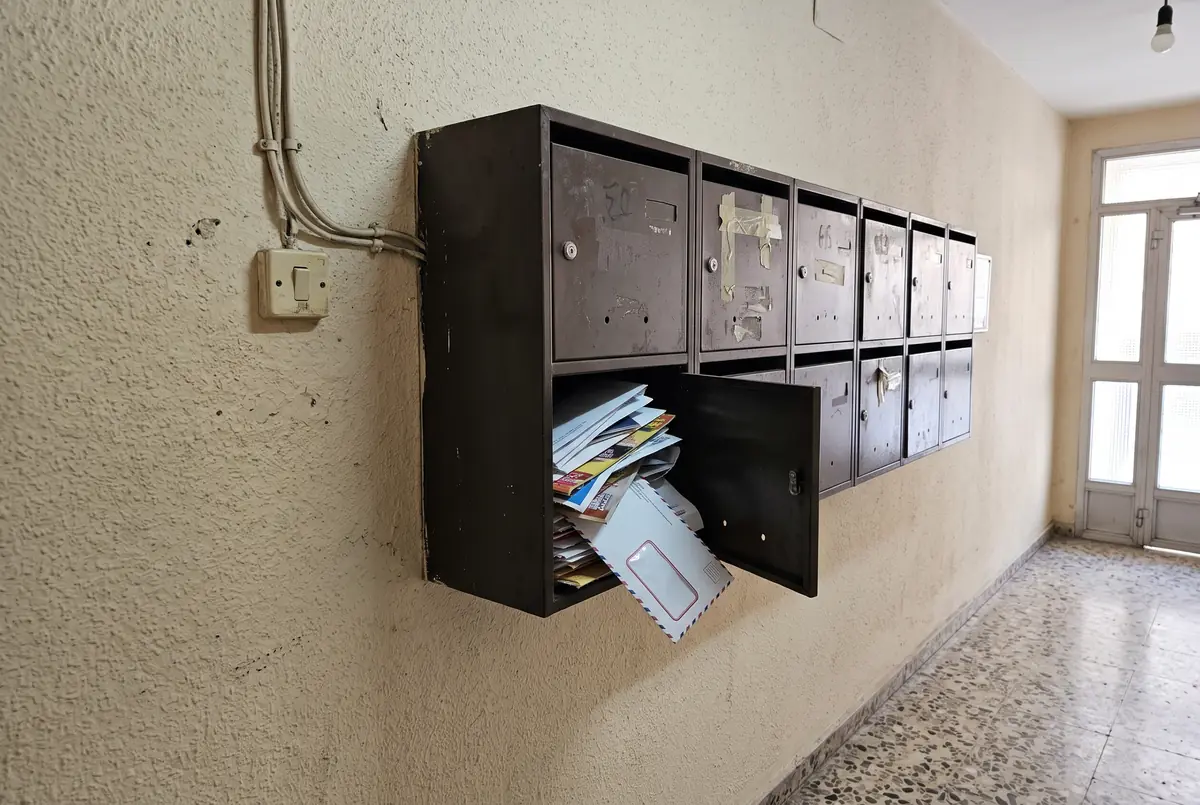
An inherited flat nobody uses, the home of an elderly relative who has moved in with their children, or the one your last tenant left and you never advertised again. Keeping an empty home in Madrid or Barcelona is not free: the IBI (the municipal property tax) and the community fees are still due, the tax authorities add an income to your return even if you receive nothing, and in some cases the council can charge a surcharge. At the same time, letting can feel daunting: fear of unpaid rent, of changes in the law or of choosing badly.
With what has been published as of 8 November 2026, we explain what an empty flat costs you in each city, which public schemes help you let it with guarantees, what the October decrees change and how to get the flat ready and choose a tenant. Madrid’s 2027 IBI bills are covered in “Madrid IBI Property Tax 2027 and the Catastro Reference Value: What Changes for Homeowners on 1 January 2027”.
The essentials in one minute
- The law lets each council charge up to 50% more IBI on a home left empty for more than two years without justified cause, and more if it exceeds three years or the owner has several. Only if its tax bylaw provides for it.
- Madrid’s 2026 bylaw does not include it. Barcelona’s does: 50%, or 100% after more than three years, only for holders of four or more homes and after a procedure in which the owner is heard.
- The Catalan tax on empty homes is paid by legal entities and, among individuals, only by those with more than fifteen homes.
- In the IRPF (Spanish personal income tax), an empty flat adds 2% of its cadastral value to your income each year, or 1.1% in some municipalities. From 2027, if the decree remains in force, there will be a scale from 1.1% to 3%.
- To let with guarantees: Plan Alquila in the Community of Madrid, ReViVa in the city of Madrid and the Borsa d'Habitatge de Lloguer in Barcelona.
- In Barcelona, if the flat has not been let as a home in five years, the starting rent cannot exceed the maximum of the reference index.
What an empty flat costs you
Even if nobody lives there, you pay the IBI, the community fees, the insurance if you have it and the minimum charges for utilities. The IRPF imputes an income to you and, if the council applies the surcharge and you meet its conditions, the IBI goes up. This is how the two cities compare:
| Item | City of Madrid | City of Barcelona |
|---|---|---|
| General urban IBI rate in 2026 | 0.414% of the cadastral value | 0.66% of the cadastral value |
| IBI surcharge on empty homes | Not included in the 2026 bylaw | 50%, or 100% after more than three years, for holders of four or more homes; another 50% if they have two or more empty in the city |
| Stressed residential market area | No: no municipality in the Community of Madrid is one | Yes, from 16-3-2024 to 16-3-2027 |
| Regional tax on empty homes | Does not exist | Only legal entities and individuals with more than fifteen homes |
| IRPF for having it at your disposal | 2% or 1.1% of the cadastral value; scale from 2027 if the decree remains in force | The same: it is a national tax |
Sources: IBI tax bylaws of Madrid (2026, art. 8.2) and Barcelona (arts. 7.2 and 10); Ministry of Housing (5-11-2026); Catalan Law 14/2015; Spanish Tax Agency and Royal Decree-law 29/2026.
The IBI surcharge on empty homes: what the law allows
The surcharge is in article 72 of the Local Finance Act. Law 12/2023 on the right to housing reformed it (third final provision): according to its preamble, it limits it to homes empty for more than two years, with a minimum of four per owner, excludes the justified vacancies set by law and allows it to rise “up to a maximum of 150 per cent” depending on the time and the number of empty homes.
Royal Decree-law 29/2026 changed it again (article 8). It is now in section 4 bis, with different rules inside and outside stressed areas, and section 4 ter adds a surcharge on tourist flats in those areas. It applies to tax periods starting after the decree came into force; as the IBI period is the calendar year (article 75), the first would be 2027. These are maximums: each council decides in its bylaw.
| Outside a stressed area (like Madrid) | In a stressed area (like Barcelona) | |
|---|---|---|
| Empty home | Continuously empty without justified cause for more than two years, owned by a holder of four or more homes | Continuously empty without justified cause for more than two years, with no minimum number of homes |
| Starting surcharge | Up to 50% of the net IBI amount | Up to 50% of the net IBI amount |
| More than three years | Up to 100% | Up to 50 more points, if the holder has four or more homes |
| More homes | Up to 50 more points if two or more are empty in the municipality | Up to 100% if the holder has four or more homes |
Local Finance Act, art. 72.4 bis, as worded by Royal Decree-law 29/2026 (BOE, consolidated text as of 7-10-2026). The stressed-area rules depend on the decree being ratified.
The law lists causes that always justify a home being empty, and they are your defence if the council opens proceedings:
- A temporary move for work or training, or a change of address due to dependency, health or social emergency.
- A second home, with a maximum of four years of continuous vacancy.
- Works or renovation, or a pending dispute or decision that prevents its use.
- Having it up for sale, on market terms, for up to a year, or up for rent for up to six months.
The surcharge accrues on 31 December and is charged every year, together with the decision declaring the home empty. You must be heard first, and the council has to show evidence such as the padrón (municipal register of residents) or utility consumption. If it is up for sale or rent, keep dated adverts and agency agreements.
What Madrid and Barcelona city councils do
Madrid. The 2026 IBI tax bylaw contains no surcharge on empty homes; the word “recargo” only appears in the general bylaw, for the late-payment enforcement surcharge. And since Madrid is not a stressed area, if it ever approved it, it could only apply it to holders of four or more homes.
Barcelona. Article 10 of its Tax bylaw 1.1, approved on 20 December 2024 and in force since 1 January 2025, charges a 50% surcharge on the net amount for homes continuously empty without justified cause for more than two years, if the holder has four or more homes. It rises to 100% after more than three years, plus 50% if the holder has two or more empty in the city. First, the municipal housing bodies must declare it empty under the procedure of Catalan Law 18/2007, with evidence and a hearing for the owner; the justified causes are those of the national law.
Barcelona is a stressed area, so under the new wording it could extend the surcharge to owners with fewer than four homes, but it would have to amend its bylaw. As of 8 November 2026, the one the Institut Municipal d'Hisenda publishes among those in force is the December 2024 bylaw. In other municipalities, search for “desocupado” or “desocupat” in the IBI bylaw.
The Catalan tax on empty homes
Catalonia also has its own tax, under Law 14/2015, on homes permanently empty for more than two years without justified cause. It is paid by legal entities that own them (and by holders of a usufruct or other property right that allows them to be exploited). An individual only pays it if they own more than fifteen homes. If you inherited a flat or own one or two, it does not concern you.
If the home is owned by a company, according to the consolidated text in the BOE:
- The two years run from when the home is available to the owner to be occupied; occupation for six consecutive months interrupts the period and a sale does not restart it.
- The tax base is the square metres empty on 31 December, minus 150 m² exempt, with rates from 13.30 to 39.90 euros per square metre depending on the total.
- There is a rebate of up to 75% for homes let at affordable rents and exemptions, among others, for those included in social rental programmes.
The income the tax authorities impute to you for an empty flat
This is the cost people most often forget. If an urban property is not your main home, is not let and is not used in a business, the IRPF Act (article 85) imputes an income to you even if you receive nothing. According to the Spanish Tax Agency (page updated 20 March 2026):
- It is 2% of the cadastral value on the IBI bill, or 1.1% if your municipality’s values were revised in a general collective valuation in force since 2012 (a rule that Royal Decree-law 29/2026 extends to 2026).
- No expenses are deducted, it is shared among co-owners according to their share and prorated by the days the home was at your disposal: days when it is let do not count.
From 1 January 2027, the decree applies a scale to the sum of the cadastral values of all your properties with imputed income (excluding your main home, undeveloped land, business property and let properties):
| Sum of cadastral values | Rate from 1-1-2027 |
|---|---|
| Up to €100,000 | 1.1% |
| €100,000 to €500,000 | 1.5% on the excess |
| €500,000 to €1,000,000 | 2% on the excess |
| Over €1,000,000 | 3% on the excess |
Law 35/2006, art. 85, as worded by Royal Decree-law 29/2026 (BOE). Depends on ratification.
An illustrative example: a single empty flat with a cadastral value of 150,000 euros. In 2026 it would impute 3,000 euros at 2% or 1,650 at 1.1%; with the 2027 scale, 1,850 euros (1,100 for the first 100,000 and 750 for the rest). That amount is taxed at your IRPF rate. From 2027, also, if you let to your spouse or a relative up to the third degree, what you declare cannot be lower than a minimum calculated from this imputation.
Once you let it, there is no imputation for those days and you declare the rental income with its reductions. For housing leases signed from 1 December 2026, if it is the first time you let the home and you are not a large landlord (gran tenedor), the reduction ranges from 50% to 100% depending on the rent and the tenant. We explain it in “Spain's 100% Income Tax Reduction for Landlords Who Cut the Rent by More Than 5%: The Exact Scale, When It Applies and What Happens If the Decree Is Not Ratified”.
In Madrid: Plan Alquila and the ReViVa programme
The Community of Madrid’s Plan Alquila is free for landlords. According to its website (14 May 2026), it includes free rent default insurance for the first three years of the lease, free home insurance for the first year, legal and tax advice, tenant search and selection, the contract, a photo inventory on request, mediation, arbitration before the Consejo Arbitral and handling of the deposit with the Agencia de Vivienda Social (the regional social housing agency). The tenant’s solvency is assessed: the rent should not exceed 40% of their income; if it falls short, they can add a guarantor.
You register through the Community of Madrid’s online portal, signed by each owner; for information it has offices at avenida de Asturias, 30, and calle Braganza, s/n.
In the capital there is also ReViVa, run by the municipal housing company (EMVS). Here you do not choose the tenant: you cede the home in usufruct to the EMVS for five to ten years and it pays you the agreed rent whether or not it is let. According to the City Council (29 November 2025), it advances up to 45,000 euros interest-free to renovate it, gradually deducted from the rent, and covers community fees, insurance, routine repairs and the IBI. The home is let at an affordable rent. The full requirements are on the EMVS website.
In Barcelona: the Borsa d'Habitatge de Lloguer
In Barcelona, the municipal scheme is the Borsa d'Habitatge de Lloguer (the city’s rental housing exchange). According to the City Council (28 February 2026), it guarantees landlords the collection of rent and helps with the contract and mediation. It gives up to 2,000 euros if the flat is empty; if it is already let with accumulated rent arrears, an equivalent amount up to 6,000 euros; and a 95% rebate on the gross IBI amount while the lease lasts, requested with a declaration of special municipal interest or utility.
For works, the 2026 call offers up to 30,000 euros per home that joins the Borsa, and the deadline to apply is 30 November 2026. The note does not detail the rent or the minimum period in the Borsa: ask about them before deciding.
| Scheme | What it offers you | What you accept in return |
|---|---|---|
| Plan Alquila (Community of Madrid) | Free rent default insurance for 3 years, home insurance in the first year, advice, tenant selection and contract | A tenant who passes its solvency check; registration signed by all owners |
| ReViVa (EMVS, city of Madrid) | Agreed rent even if empty; interest-free advance of up to €45,000; community fees, insurance, routine repairs and IBI paid | Usufruct for 5 to 10 years; affordable rent; the advance is deducted from the rent |
| Borsa d'Habitatge de Lloguer (Barcelona) | Rent collection guarantee; up to €2,000 if it was empty; 95% IBI rebate; works up to €30,000 | The scheme’s rent and minimum-period conditions |
Community of Madrid (14-5-2026), Madrid City Council (29-11-2025) and Barcelona City Council (28-2-2026). Read each scheme’s requirements before signing.
If you let it yourself, you can take out rent default insurance, but you cannot require the tenant to pay for it; see “Rent Default Insurance in Spain in 2026: What It Covers, What It Costs, Who Pays and Whether It Is Tax-Deductible”.
What Law 12/2023 and the October 2026 decrees change
Law 12/2023 allowed stressed residential market areas to be declared, the reference used today by the IBI surcharge, the rent caps and some IRPF reductions. In October two decree-laws arrived. With Parliament dissolved for the general election of 29 November, their ratification was voted on in the Standing Committee on 12 November: check the result, because a decree that was not ratified was repealed.
| Measure | Rule | From |
|---|---|---|
| IBI surcharge with its own rules in stressed areas and on tourist flats | Royal Decree-law 29/2026, art. 8 | Periods starting after it came into force (for the IBI, 2027) |
| Temporary housing (art. 9 bis LAU): justified and provable cause, from 31 days to 12 months as a rule | Royal Decree-law 29/2026 | 8-10-2026 |
| Additional guarantee of at most one month for temporary housing; rent default insurance cannot be required | Royal Decree-law 29/2026 (LAU, art. 36) | 8-10-2026 |
| Annual update: without agreement, no more than 2% | Royal Decree-law 29/2026, sixth final provision | Until 31-12-2027 |
| Adverts with the reference index, rent cap, identification code and large-landlord status, where applicable | Royal Decree-law 29/2026, art. 20 | 8-10-2026 |
| New IRPF reductions for letting a home | Royal Decree-law 29/2026, art. 6 | Leases from 1-12-2026 |
| Imputed income by scale | Royal Decree-law 29/2026, art. 6 | 1-1-2027 |
| Tacit renewal for five-year periods (seven if the landlord is a company), six months’ notice and compensation for the tenant | Royal Decree-law 28/2026 (LAU, art. 10) | 15-11-2026 |
All depend on the ratification vote of 12 November. Sources: Royal Decree-laws 28/2026 and 29/2026 (BOE, 7-10-2026) and Spanish Tax Agency.
Which contract to sign: habitual or temporary housing
If the tenant will live there on a stable basis, the lease is for a habitual home: if it is agreed for less than five years (seven if the landlord is a legal entity), it is renewed every year up to that minimum, unless the tenant gives 30 days’ notice (LAU, article 9.1). What happens at the end is covered in “Your Rental Contract in Spain Is Ending in 2026: Mandatory Extension, Tacit Renewal, Notice Periods and What Royal Decree-law 29/2026 Changes”.
The temporary housing lease (article 9 bis) is for someone away from their habitual home for a justified and provable reason, such as work or studies. The reason is stated in the contract and you have to prove it; it lasts more than 31 days and, as a rule, no more than 12 months. If the reason is missing, or the 12 months are exceeded without justification, or more than two contracts are chained with the same person, it is governed by the habitual-home rules. It is not a way to “let for a few months while I decide”.
What you can ask for is set by the LAU: a deposit of one month’s rent; an additional guarantee of up to two months for a habitual home (one for temporary housing); no more than one month in advance (article 17.2); and neither agency and contract costs (article 20.2) nor rent default insurance (article 36) can be passed on to the tenant. Lodging the deposit is covered in “Rental Deposits in Madrid and Barcelona in 2026: Lodging with the Agencia de Vivienda Social and INCASÒL, Guarantees, Deductions and Refunds”; invalid clauses, in “Rental contract clauses that are not valid in Spain in 2026: waivers, deposits, agency fees, rent increases, visits and the padrón, and how to check it before signing”.
The rent is where the two cities differ most. In Madrid, with no stressed areas, the starting rent is freely agreed and what is limited is the update (see “How Much Can Your Rent Go Up in Spain in 2026 and 2027: the Annual Update and the 2% Cap in Royal Decree-law 29/2026, with Examples”). In Barcelona, the rent of a new lease cannot exceed that of the last housing lease of the previous five years (article 17.6), and if there was none in five years, as with many empty flats, the cap is the maximum of the national reference index (article 17.7), because the resolution declaring Barcelona a stressed area says so (BOE of 15 March 2024). How to check it: “Renting a flat in Barcelona in 2026: the rent cap in stressed areas, the reference index, seasonal lets, rooms, fines and documents”.
How to get the flat ready before advertising it
- Check the electrics, water, boiler and shutters, and keep the utilities connected.
- Get the energy performance certificate: it has to be shown or made available to the tenant.
- If you are going to do works, look first at the ReViVa or Borsa grants.
- Take dated photos and make an inventory of furniture and appliances.
- Set the rent with data: in Barcelona, with the reference index; in Madrid, by comparing with similar flats in the area.
- Publish an accurate advert and gather the nota simple (Land Registry extract), the IBI and community fee receipts, the energy certificate and, if it is an inheritance, the deed of acceptance.
- Tell your insurer that the home is now let.
How to choose a tenant without getting it wrong
There are sensible criteria. Plan Alquila, for example, considers that the rent should not exceed 40% of the tenant’s income and also looks at its stability.
- Ask only for the data you need and when you need it: ID at the viewing and proof of income when both sides are interested.
- Assess solvency, not the type of employment contract: a self-employed person with their tax returns or someone with a guarantor can be as solvent as an employee.
- Be wary of haste and of anyone who wants to pay months in advance without seeing the home.
- Choose on solvency and fit, never on discriminatory grounds, and put everything in writing.
And if you would rather sell
An empty home can be sold to any buyer, including people looking for a place to live. Royal Decree-law 29/2026 adds an IRPF exemption if, between 8 October 2026 and 31 December 2027, you sell it for less than 800,000 euros to a public social and affordable housing body after it has been empty without justified cause for the previous two years: according to the Spanish Tax Agency, it is full up to 200,000 euros and decreasing up to 800,000. The steps of a sale are in “How to sell a flat in Madrid in 2026: documents, price, deposit contract, taxes and timings”.
How we do it at Llavely
To be clear: Llavely is not a public scheme and does not provide rent guarantees or insurance; for that there are Plan Alquila, ReViVa or the Borsa. What we do is turn renting around: the tenant creates a verified profile once (our team checks their identity and income, and the documents are deleted afterwards). You list your home for free, see verified candidates ranked by affinity and invite those who suit you. The contract comes from a template based on the LAU and is signed on the website.
Llavely does not charge for or handle payments: the deposit and the first month are paid directly to the landlord. Rentals are open and free in the provinces of Madrid and Barcelona: if you have an empty flat, list it for free. And if you would rather sell and it is in the Community of Madrid, we also handle sales: you contact us and we take care of everything, for 2.5% + VAT, only if it sells.
Frequently asked questions
Can I be charged more IBI for an empty flat in Madrid?
As of 8 November 2026, no: Madrid’s 2026 IBI bylaw does not include the surcharge. And since Madrid is not a stressed area, the law would only allow it for holders of four or more homes empty for more than two years without justified cause.
How much is the IBI surcharge on an empty flat in Barcelona?
50% of the net amount if the home has been empty for more than two years without justified cause and the holder has four or more homes; 100% after more than three years, and another 50% if they have two or more empty in the city. It must first be declared empty, with a hearing for the owner.
Do I have to pay the Catalan empty-homes tax on an inherited flat?
As an individual, only if you own more than fifteen homes. It is mainly paid by companies and other legal entities with homes empty for more than two years without justified cause.
Do the tax authorities charge me anything for an empty flat?
Yes, through the IRPF: 2% of its cadastral value is added to your income, or 1.1% if your municipality’s values were revised with effect from 2012, in proportion to the days and with no expenses deducted. From 2027 a scale from 1.1% to 3% would apply, if the decree remains in force.
Does a flat I have up for sale or rent count as empty?
For the IBI surcharge, having it for sale on market terms justifies up to a year, and for rent, up to six months. Works, disputes, a temporary move and a second home for up to four years are also justified.
Which public scheme guarantees I will get the rent?
In the Community of Madrid, Plan Alquila, with free rent default insurance for three years. In the city of Madrid, ReViVa: the EMVS pays you the agreed rent even if the home is empty. In Barcelona, the Borsa d'Habitatge de Lloguer guarantees collection.
Can I let it by the month while I decide what to do?
Not as a general rule. The temporary housing lease requires a justified and provable reason on the tenant’s side, such as work or studies, stated in the contract. Without it, the habitual-home rules apply from signing.
What happens if the decrees were not ratified on 12 November?
A decree that was not ratified was repealed: among other things, the surcharge rules for stressed areas, the 2027 imputation scale, the new IRPF reductions and the 2% cap would disappear. Check the result in the BOE.
Sources
- The Standing Committee validates the royal decree-law on the social function of housing and repeals the one on extending rental contracts for a main home (Congress of Deputies press release, in Spanish, 12 November 2026)
- Royal Legislative Decree 2/2004 of 5 March, consolidated text of the Local Finance Act (Ley Reguladora de las Haciendas Locales): articles 72 and 75 (BOE – Spain’s Official State Gazette, last amended 7 October 2026)
- Law 12/2023 of 24 May on the right to housing: preamble and third final provision (BOE no. 124, 25 May 2023)
- Royal Decree-law 29/2026 of 6 October adopting urgent measures to protect the social function of housing and expand the supply of affordable housing, consolidated text (BOE no. 249, 7 October 2026)
- Royal Decree-law 28/2026 of 6 October adopting urgent measures to strengthen the stability of habitual-home lease contracts, consolidated text (BOE no. 249, 7 October 2026)
- Law 29/1994 of 24 November on Urban Leases (LAU), consolidated text: articles 9, 9 bis, 17, 20 and 36 (BOE, last amended 7 October 2026)
- Catalan Law 14/2015 of 21 July on the tax on empty homes, consolidated text (BOE, last amended 17 March 2023)
- Imputed income from real estate: how the imputed income is calculated (Spanish Tax Agency, page updated 20 March 2026)
- Main tax changes introduced by Royal Decree-law 29/2026 of 6 October (Spanish Tax Agency, October 2026)
- Municipal tax bylaws and public prices 2026: tax bylaw on the Property Tax (IBI) (Agencia Tributaria Madrid, Madrid City Council)
- Tax bylaw 1.1 on the property tax (IBI): articles 7 and 10 (Institut Municipal d'Hisenda, Barcelona City Council, approved 20 December 2024)
- Plan Alquila: free services and insurance for landlords (Community of Madrid, updated 14 May 2026)
- The City Council advances up to 45,000 euros to owners of empty homes so they can renovate them and let them at affordable rents, ReViVa programme (Madrid City Council, 29 November 2025)
- Barcelona raises to 30,000 euros the grants to renovate homes that join the Borsa d'Habitatge de Lloguer (Barcelona City Council, 28 February 2026)
- Check stressed residential market areas (Ministry of Housing and Urban Agenda, page updated 5 November 2026)
- Resolution of 14 March 2024 of the Secretary of State for Housing and Urban Agenda publishing the list of stressed residential market areas in Catalonia (BOE, 15 March 2024)
- Congress will vote on the housing decrees on 12 November, the day after the general strike (Demócrata, 4 November 2026)