Renting · · 26 min read
Home insurance in a rented flat in Spain in 2026: what the landlord insures, what the tenant insures and who pays for a water leak, a fire or a burglary in Madrid and Barcelona
The landlord insures the building (continente) and their own liability; the tenant insures their belongings (contenido) and theirs. We explain what each policy covers, whether a landlord can require you to take out insurance and how that fits the cap on guarantees in article 36.5 of the LAU (Spain’s Urban Leases Act) after Royal Decree-law 29/2026, who pays for the most common damage, what happens if there is no insurance, how to report a claim within seven days, when the Consorcio de Compensación de Seguros (the public body for extraordinary risks) steps in and whether the premium is tax-deductible. With a table of cover and another of damage.
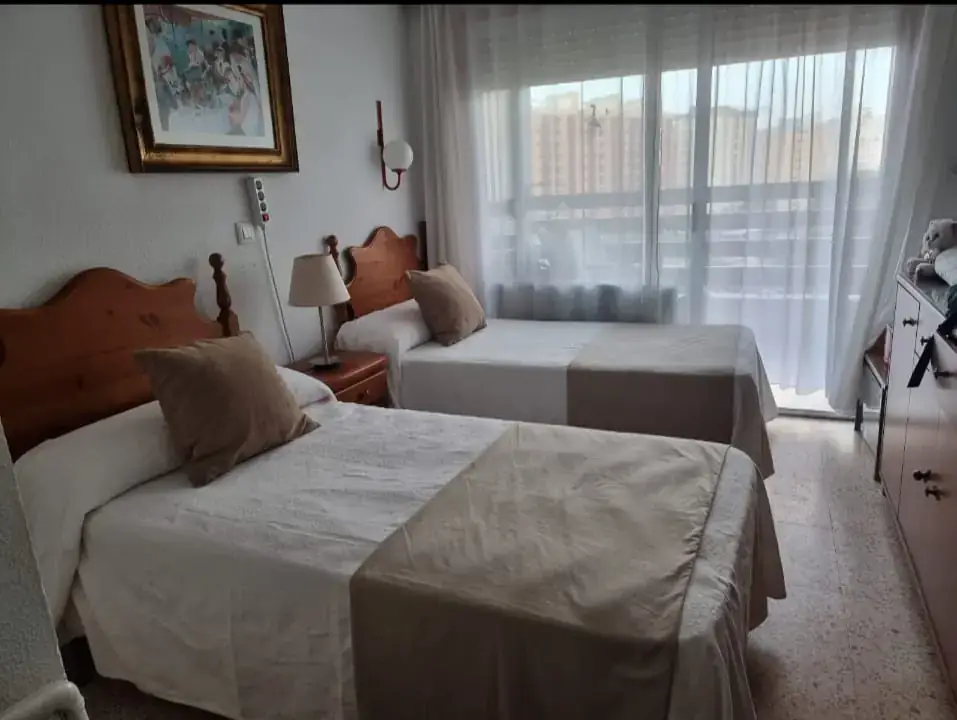
In a rented flat, two people with different interests share the same home: the landlord, who wants the property to stay undamaged, and the tenant, who lives there with their belongings. That is why there are usually two policies: the landlord’s, which protects the walls, the installations and, if the flat is furnished, the landlord’s furniture; and the tenant’s, which protects what the tenant brings into the home and covers them if they cause damage to someone else.
In this guide we explain, as at 12 November 2026, what each policy covers, whether a landlord can ask you to take out insurance, who pays for the most common damage, what happens if there is no insurance, how to report a claim and when the Consorcio de Compensación de Seguros steps in. Who fixes each breakdown is covered in “Repairs, utilities and rubbish tax in a rented flat in Spain in 2026…”; the general split of costs, in “Who Pays What When Renting in Spain in 2026? Agency Fees, IBI, Community Fees, Insurance, Special Levies and Utilities”; and the insurance that covers unpaid rent, in “Rent Default Insurance in Spain in 2026: What It Covers, What It Costs, Who Pays and Whether It Is Tax-Deductible”. Here we focus on home insurance.
The essentials in one minute
- Buildings cover (continente) is the home itself: walls, floors, doors, windows and fixed water, electricity and gas installations. Contents cover (contenido) is furniture, appliances, clothes and personal belongings.
- The sensible arrangement is for the landlord to insure the building (and their furniture, if the flat is let furnished) and their liability as owner; and for the tenant to insure their contents and their liability for any damage they cause.
- The LAU does not oblige either party to have home insurance. Since 8 October 2026, article 36.5 bans requiring the tenant to take out rent default insurance or other similar cover. If the contract asks you for another type of insurance, ask a lawyer how it fits with that rule.
- If the landlord’s insurance pays for damage you caused, their insurer can claim it back from you afterwards. Your own liability insurance is what protects you in that case.
- Report the claim as soon as possible: the law sets a maximum of seven days from when you learn of the loss, unless the policy allows longer.
- Extraordinary floods, earthquakes, winds above 120 km/h and other extraordinary risks are paid by the Consorcio de Compensación de Seguros, but only if you have a policy in force with the surcharge paid.
- For a landlord who lets, the premium is a deductible expense against rental income for IRPF (Spanish income tax); for the tenant, it is generally not deductible.
Buildings, contents and liability: what each one is
Home policies, which insurers usually call multirriesgo del hogar (comprehensive home insurance), combine several types of cover in a single contract. To understand who should insure what in a rental, you only need to tell three pieces apart:
- Buildings (continente): what you would not take with you when moving. The structure, partition walls, floors, doors and windows, pipes, the electrical installation and, depending on the policy, fixed items such as built-in wardrobes or the fitted kitchen. It belongs to the landlord.
- Contents (contenido): what you would take with you. Furniture, appliances, clothes, electronic devices, valuables. In a furnished flat, the furniture and appliances left by the landlord are the landlord’s, and those brought by the tenant are the tenant’s.
- Liability (responsabilidad civil): covers what you have to pay someone else for damage you are responsible for. The Insurance Contract Act defines it as cover against the risk that the insured becomes obliged to compensate a third party for an event provided for in the contract. The classic example in a flat is water seeping through to the neighbour below.
On top of that come types of cover such as water damage, fire, theft, glass, electrical damage, assistance or legal expenses, with each policy’s limits and exclusions. Some policies designed for owner-occupied homes exclude or limit cover if the home is let, as the OCU (Spain’s consumer organisation) points out: a landlord who lets should tell their insurer that the flat is rented out and check that the policy allows it.
What the landlord’s insurance covers and what the tenant’s covers
| What is protected | Landlord’s insurance | Tenant’s insurance | What to check |
|---|---|---|---|
| Walls, floors, doors, windows and fixed installations (buildings) | Yes, it is the core | No, unless the policy includes cover for damage to the rented property | That the buildings sum insured matches what it would cost to rebuild the home |
| The landlord’s furniture and appliances (furnished flat) | Yes, if included as the landlord’s contents | No | That the landlord’s policy states that the flat is let furnished |
| The tenant’s furniture, clothes, devices and belongings (contents) | No | Yes, it is the core | That the sum insured covers what you own, and the limits for jewellery or valuable devices |
| Damage to third parties caused by the state of the home or its installations (for example, an old pipe) | Yes, liability as owner | No | The liability limit and whether it covers the owner as a landlord |
| Damage to third parties caused by the tenant or their family (for example, a tap left running) | That is not its purpose; it may not cover it | Yes, liability as tenant or family member | That it includes the tenant’s liability (the OCU recommends at least €300,000) |
| Damage the tenant causes to the rented home itself | It may pay the landlord and then claim it back from the tenant | Only if the policy includes liability towards the landlord | Ask explicitly whether it covers damage to the property you rent |
| Burglary with damage to doors or windows | Damage to the door, lock or window (buildings) | What was stolen (contents) | Security measures the policy requires |
| Extraordinary risks (extraordinary flood, earthquake, winds above 120 km/h) | Paid by the Consorcio for whatever the policy insures | Paid by the Consorcio for whatever the policy insures | That the policy is in force and the receipt includes the Consorcio surcharge |
General guidance based on the Insurance Contract Act, the LAU, the Consorcio and the OCU, as at 12 November 2026; what each policy covers depends on its terms. The building policy, if the owners’ association has one, covers the common parts and is included in the community fees.
Can the landlord require you to take out insurance?
Neither the LAU nor the Insurance Contract Act obliges the landlord or the tenant to have home insurance. What the LAU does regulate, in article 36, are the guarantees that can be requested from the tenant.
Under no circumstances may the tenant be required to take out rent default insurance or other similar cover.
Urban Leases Act (LAU), article 36.5, as worded by Royal Decree-law 29/2026 (our translation)
Following Royal Decree-law 29/2026 of 6 October, published in the BOE on 7 October and in force from the following day, article 36.5 of the LAU says three things in the BOE consolidated text. First: the parties may agree a guarantee of the tenant’s obligations in addition to the cash deposit (an extra deposit or a bank guarantee, for example). Second: under no circumstances may the tenant be required to take out rent default insurance or other similar cover. Third: for residential leases of up to five years, or seven if the landlord is a legal entity, that additional guarantee may not exceed two months’ rent; for temporary leases, one month. That decree was voted on on 12 November; check the outcome, because the ban on requiring rent default insurance and the cap for temporary housing depend on it.
And home insurance? The text does not mention it. Contents insurance protects the tenant’s own belongings, not the fulfilment of their obligations to the landlord, so at first sight it fits poorly with the idea of a guarantee. Liability insurance that also covers damage to the rented home comes closer to a guarantee, because it protects the landlord against damage. As at 12 November 2026 we have not found any official guidance on whether requiring it counts towards the cap on additional guarantees or is “similar cover” to rent default insurance. If your contract requires it, or if you are a landlord and want to ask for it, consult a lawyer: it depends on how the clause is worded and what the policy covers.
| What the contract asks for | What the law says | What to check |
|---|---|---|
| That the tenant takes out rent default insurance or a policy covering the rent | Banned since 8-10-2026 (LAU, art. 36.5) | If the landlord wants that cover, they take it out and pay for it |
| That the tenant takes out contents and liability insurance | The LAU does not expressly regulate it | What it covers, in whose name, who chooses the insurer and whether it adds to other guarantees; consult a lawyer |
| That the tenant pays for the landlord’s buildings insurance | The LAU allows the parties to agree that the tenant bears general costs that cannot be individualised (art. 20.1), subject to formal rules | That the annual amount is stated in writing; that it is not a disguised management fee (art. 20.2) |
Source: LAU, BOE consolidated text (last amended 7 October 2026), articles 20 and 36. General guidance: whether a clause is valid in a specific case is for a judge to decide; to have it reviewed, consult a lawyer. We go through the most common invalid clauses in “Rental contract clauses that are not valid in Spain in 2026…”.
On article 20.1: for an agreement making the tenant pay general building costs to be valid, it must be in writing and state the annual amount of those costs at the date of the contract; and management and contract formalisation costs are always the landlord’s. More detail in “Who Pays What When Renting in Spain in 2026? Agency Fees, IBI, Community Fees, Insurance, Special Levies and Utilities”.
Who pays for the most common damage
The underlying rule is in the LAU and the Civil Code. The landlord must carry out the repairs needed to keep the home habitable, except where the deterioration is attributable to the tenant under articles 1,563 and 1,564 of the Civil Code (LAU, art. 21.1). Minor repairs required by wear and tear from ordinary use are the tenant’s (art. 21.4). And the tenant must tell the landlord as soon as possible about anything that needs repairing; if it is urgent to prevent imminent damage, the tenant may carry it out, notifying the landlord first, and claim the cost from the landlord immediately (art. 21.3). Insurance does not change who is responsible: it pays on behalf of whoever is, if the policy covers it.
| What happens | Who is liable, in principle | Which insurance usually responds | What to do first |
|---|---|---|---|
| Water escapes from your washing machine or you leave a tap running and it reaches the neighbour | The tenant | The tenant’s liability cover for the neighbour; the tenant’s or landlord’s policy for damage to the flat, depending on what they cover | Turn off the water, notify, take photos and report the claim |
| An old pipe in the flat bursts and the water reaches the neighbour | The landlord | The landlord’s buildings and liability cover | Turn off the water, tell the landlord in writing and let them report it to their insurer |
| The water comes from the flat upstairs | Whoever is at fault upstairs (its owner or its tenant) | The insurance of whoever caused it; meanwhile yours may pay in advance and claim it back later | Tell the neighbour and your landlord; note their insurance details |
| The leak comes from a downpipe or communal pipe of the building | The owners’ association | The association’s building insurance | Tell the property manager and the landlord |
| Kitchen fire | It depends on the cause: carelessness by the tenant or a fault in one of the landlord’s installations | The landlord’s buildings cover for the home; the tenant’s contents cover for their belongings; the liability cover of whoever caused it | Call 112 and notify both insurers |
| Burglary with the door forced | The burglar; neither party, if there was no carelessness | The landlord’s buildings cover for the door and lock; the tenant’s contents cover for what was stolen | Report it to the police and keep a copy of the report |
| An appliance left by the landlord breaks down | The landlord, if it is a breakdown due to normal use or the age of the appliance; the tenant, if it is misuse or a minor repair from ordinary use | Usually neither for a mechanical breakdown, unless the policy includes it; electrical damage, if the policy covers it | Tell the landlord in writing; see “Repairs, utilities and rubbish tax in a rented flat in Spain in 2026…” |
| The tenant breaks a door, a window pane or the floor | The tenant | Glass breakage, if a policy includes it; for the rest, the tenant’s liability cover if it covers damage to the rented home | Tell the landlord and agree on the repair; if not, it may be deducted from the deposit |
General guidance based on the LAU (arts. 21 and 36), Insurance Contract Act 50/1980 and the OCU, as at 12 November 2026. Who is liable in a specific case depends on the facts and the evidence; if there is no agreement, consult a lawyer.
The case that causes the most disputes is the last one: the tenant causes damage and the landlord’s insurance pays for it. The Insurance Contract Act allows the insurer, once it has paid the claim, to exercise against those responsible for the loss the rights the insured would have had, up to the amount it paid (art. 43). This is called subrogation. The OCU reports a case decided by the Provincial Court of Ourense in October 2024: the landlady’s insurer compensated her for the damage left by the tenant and then sued him for more than €4,400, and won. The OCU also points out that the Civil Code presumes damage to the home is the tenant’s fault unless they prove they acted with due care; that is why it recommends that the tenant has their own liability policy.
If you have a pet, check that your liability cover includes damage it causes (“Renting with a pet in Spain in 2026…”); and for how damage is deducted from the deposit, see “Rental deposits in Madrid and Barcelona in 2026…”.
If two policies cover the same thing
If two policies cover the same risk, the person who took them out must tell each insurer about the others and, after the loss, notify all of them; they pay in proportion to what each insures, without exceeding the actual damage (Insurance Contract Act, art. 32). The opposite is underinsurance (art. 30): if the sum insured is lower than the actual value of what is insured, the insurer pays the damage in the same proportion, unless the policy excludes that rule. If you insure your contents for half of what they are worth, you may be paid half of the damage.
What happens if there is no insurance
Having no insurance does not change who is responsible: it only changes who pays. Without a policy, each party pays out of their own pocket whatever they are liable for.
- If the tenant has no insurance and causes damage to the neighbour, the neighbour or their insurer can claim directly from the tenant. If the damage is to the home, the landlord can claim it or deduct it from the deposit at the end of the contract, with justification.
- If the landlord has no insurance and one of their installations causes damage, they are liable to the neighbour and to the tenant for the tenant’s belongings. And the landlord still owes the repair of the home (LAU, art. 21.1).
- If nobody has insurance, there is no Consorcio: extraordinary risks are only compensated for those with a policy in force and the surcharge paid. Each party bears the cost of an extraordinary flood.
- If there is no agreement on who is liable, the options are negotiation, mediation or the courts. Keep photos, messages and invoices from day one.
How to report a claim, step by step
The policyholder, the insured or the beneficiary must notify the insurer of the occurrence of the loss within a maximum of seven days of becoming aware of it, unless a longer period has been set in the policy.
Insurance Contract Act 50/1980, article 16 (our translation)
- Limit the damage. The law requires the insured to use the means at their disposal to reduce the consequences of the loss (art. 17): turn off the stopcock, cut the electricity if there is water near sockets, cover a broken window. If you do not, the insurer may reduce what it pays.
- Tell the other party. If you are the tenant, tell the landlord in writing (an email or a message that is kept): the LAU requires you to inform them as soon as possible of anything that needs repairing.
- Document it. Take photos and videos before cleaning or throwing anything away, keep broken parts if you can and ask for the details of the affected neighbour or whoever caused it, and of their insurer.
- Report it on time. Call the policy’s phone number or use its website, within seven days of learning of it at the latest, unless the policy allows longer. If you do not, the insurer can claim from you the loss caused by the delay, unless it is proven that it already knew by other means (art. 16).
- If there is a burglary, report it. Go to the police and keep the copy of the report with the list of what was stolen.
- Deal with the loss adjuster and keep the invoices. The insurer may ask for an appraisal. By law, it must pay or repair once its checks are complete and, in any case, pay within forty days of the claim the minimum amount it may owe (art. 18). If the policy allows it and you agree, it may repair instead of paying.
- If you disagree, complain. First to the insurer’s customer service department or customer ombudsman, which must reply within one month; then to the Complaints Service of the Dirección General de Seguros (the Spanish insurance supervisor), with a maximum of 90 calendar days, according to the Comunidad de Madrid.
Extraordinary risks: the Consorcio de Compensación de Seguros
The Consorcio de Compensación de Seguros is a public body that pays for damage caused by so-called extraordinary risks, which ordinary policies do not cover. According to the Comunidad de Madrid (page updated 5 November 2026), these are extraordinary floods, earthquakes, tsunamis, volcanic eruptions, meteorite falls, atypical cyclonic storms (tornadoes and winds with gusts above 120 km/h) and certain violent events such as terrorism or riots. Rain falling directly on the property is not considered an extraordinary flood.
- Requirement: having a policy in force of a type that includes the surcharge in favour of the Consorcio (for homes, for example, one covering fire, theft or combined damage), being up to date with payments and having the surcharge shown on the receipt. If the tenant only has their contents insured, the Consorcio pays for the contents; the building, only if the landlord has it insured.
- Excess: the Consorcio applies no excess to damage to homes or to residential owners’ associations.
- How to claim: as soon as possible, on the free phone number 900 222 665 or on the Consorcio’s website, directly or through your insurer, agent or broker. For wind damage, the Consorcio and insurers have agreed that the insured should go to their insurer.
- Anything that is not extraordinary (a power cut, direct rain, hail or wind below that threshold, a leak) is covered, if at all, by your ordinary policy according to its terms.
It is not a remote risk. According to UNESPA (9 March 2026), insurers paid €492 million in 2025 for more than 628,800 claims caused by weather events, and households received €213 million. The province of Madrid received the most, €79.2 million, with more than 109,500 claims, and the province of Barcelona was second, with €40.5 million.
Is home insurance tax-deductible?
| Who pays the premium | What the Agencia Tributaria says | Where it is |
|---|---|---|
| The landlord who lets | The premium is a deductible expense against rental income: premiums for liability, fire, theft, glass breakage or other similar insurance on the rented property are deductible | Renta 2025 practical manual, income from real estate capital, other necessary expenses |
| A tenant with a pre-2015 contract who applies the transitional state rent deduction | The deduction base includes the premium for home insurance covering the building, when required by the landlord | Renta 2025 practical manual, deduction for renting the main home: transitional regime |
| Tenants in general | There is no state deduction for home insurance on your own contents. The Madrid regional rent deduction is calculated on the amounts paid as rent and does not mention insurance | Renta 2025 practical manual, regional deductions of the Comunidad de Madrid |
Source: Agencia Tributaria, Renta 2025 practical manual, consulted on 12 November 2026. These are the rules for the 2025 tax return; for your case, consult a tax adviser, for example if the home was empty for part of the year. What tenants can deduct for rent is explained in “What tenants can deduct for rent in the 2025 and 2026 Spanish income tax returns in Madrid and Catalonia…”.
What it costs: an illustrative example without invented figures
We have not found an official average home insurance premium in any public source we were able to open (nor have we been able to open a sector statistic from ICEA or UNESPA with that figure), so we do not give a price. What UNESPA does publish is the cost of a claim: in 2024, home insurance handled 8,392,724 claims, one every three seconds, with an average cost of €387. Water damage was the most frequent cause, with around 4.6 million call-outs in insured properties and an average cost of €443; a fire in a home cost €4,060 on average (UNESPA, 24 November 2025).
Illustrative example: two people rent a furnished flat in Madrid. The landlord insures the building for what it would cost to rebuild, their furniture and their liability as landlord, and tells their insurer that the flat is let. The two tenants insure only their contents, for the value of their belongings, with liability cover that includes damage to the rented home. If the hose on their washing machine bursts and the water reaches the neighbour, the neighbour’s ceiling is paid by the tenants’ liability cover; the flat’s floor, by whichever policy covers it, and if the landlord’s pays, their insurer could claim it back from the tenants, which is exactly what the tenants’ policy covers. The price of each policy depends on what you ask for:
- The sums insured for buildings and contents, and whether they are insured at replacement value (what it costs to buy new) or actual value (allowing for wear).
- The liability limit. The OCU recommends at least €300,000 and, if the difference in premium is reasonable, up to €600,000.
- The excess, the part of each claim you pay yourself.
- Extra cover: electrical damage, appliance breakdown, jewellery, valuables outside the home, assistance, legal expenses.
- The home: area, age of the building and the pipes, floor, security measures.
There are also public options for landlords. In the Comunidad de Madrid, the Plan Alquila (regional rental scheme) includes free home insurance during the first year of the contract, in addition to free rent default insurance for the first three years (page updated 14 May 2026). In Barcelona, according to an undated city council leaflet, the Borsa d’Habitatge de Lloguer (the city’s rental housing exchange) includes comprehensive home insurance and legal expenses insurance for landlords who let through it; confirm the current conditions with the city council.
Before signing: what to check
- Landlord: tell your insurer that the home is let, whether it is furnished and whether it is a main home or a temporary let. Check that the policy allows it.
- Landlord: if you want the tenant to have insurance, put it in writing and first ask a lawyer how it fits with article 36.5 of the LAU. Rent default insurance cannot be required.
- Tenant: insure your contents and your liability, and ask explicitly whether it covers damage to the home you rent and to the neighbour.
- Both: draw up an inventory with photos on moving in, signed by both of you. It helps with the insurance and with getting the deposit back.
- Both: check that the receipt includes the Consorcio surcharge and that the policy is renewed.
How we do it at Llavely
A good rental starts with knowing who you are signing with and what you are signing. Llavely is renting in reverse: the tenant creates a verified profile once, our team checks their identity and income, the documents are deleted after the check, and it is the landlords and agencies who invite the tenant to view their home. Landlords list for free and see verified candidates ranked by affinity, and a member of our team reviews every home in less than 24 hours before it is published.
Llavely does not sell insurance or handle payments: the rent and deposit are paid directly to the landlord, and each party takes out their own policy if they wish. Rentals are open in the provinces of Madrid and Barcelona and are free. If you are looking for a flat, create your profile for free; if you have a home to let, list it for free. And if you are thinking of selling a home in the Comunidad de Madrid, you can also do it with us for 2.5% + VAT, all included, and request your free valuation.
Frequently asked questions
Is home insurance compulsory in a rented flat in Spain?
No. Neither the LAU nor the Insurance Contract Act obliges the landlord or the tenant to have home insurance. The sensible arrangement is for the landlord to insure the building and their liability, and the tenant their contents and theirs.
Can the landlord make me take out insurance?
Not rent default insurance: since 8 October 2026, article 36.5 of the LAU, as worded by Royal Decree-law 29/2026, bans requiring the tenant to take out rent default insurance or other similar cover. That decree was voted on on 12 November; check the outcome. For home insurance, the law says nothing explicit; if your contract requires it, ask a lawyer how it fits with that rule and with the cap on additional guarantees.
What does the landlord’s insurance cover and what does the tenant’s cover?
The landlord’s covers the building (walls, floors, doors, windows, installations), their furniture if the flat is let furnished and their liability as owner. The tenant’s covers their contents (furniture, clothes, devices, belongings) and their liability for damage they cause, for example to the neighbour.
If water escapes from my flat and damages the neighbour’s, who pays?
If you caused the leak (a tap left running, the washing machine), you are liable, and your liability insurance covers it if you have it. If the cause is an old pipe in the home, the landlord and their insurance are liable. If it comes from a communal pipe of the building, the owners’ association. Turn off the water, tell the landlord and the neighbour, take photos and report the claim within seven days at most.
Does the landlord’s insurance cover me if I break something?
It does not protect you. If their insurer pays the landlord for the damage, it can claim it back from you afterwards up to what it paid (art. 43 of the Insurance Contract Act). That is why it is worth having your own liability cover and asking whether it covers damage to the home you rent.
What about a flood or a storm?
If it is an extraordinary risk (an extraordinary flood, an earthquake, winds with gusts above 120 km/h, among others), the Consorcio de Compensación de Seguros pays, with no excess for homes, provided you have a policy in force with the surcharge paid. Claims are made on 900 222 665 or on its website. Rain falling directly on the home or wind below that threshold is covered, if at all, by your ordinary policy.
Is home insurance tax-deductible?
For a landlord who lets, yes: the premium is a deductible expense against rental income for IRPF. For the tenant, generally not; only the transitional state rent deduction (contracts signed before 2015) includes the premium for buildings insurance when the landlord requires it. Check with an adviser for your case.
Sources
- Act 29/1994 of 24 November on Urban Leases, consolidated text: articles 20, 21 and 36 (BOE, last amended 7 October 2026)
- Royal Decree-law 29/2026 of 6 October adopting urgent measures to protect the social function of housing and expand the supply of affordable housing, consolidated text (BOE)
- Act 50/1980 of 8 October on Insurance Contracts, consolidated text: articles 16, 17, 18, 30, 32, 43 and 73 (BOE, last amended 3 October 2026)
- What is the Consorcio’s excess? (Consorcio de Compensación de Seguros)
- Quick guide to claiming compensation for extraordinary risks (Consorcio de Compensación de Seguros)
- Storms, floods, snowfall: how to claim for damage (Comunidad de Madrid, updated 5 November 2026)
- What does the Consorcio de Compensación de Seguros cover in floods, earthquakes or other extraordinary risks? (Ministry of Social Rights, Consumer Affairs and 2030 Agenda)
- Renta 2025 practical manual: other expenses necessary to obtain income from real estate capital (Agencia Tributaria)
- Renta 2025 practical manual: deduction for renting the main home, transitional regime (Agencia Tributaria)
- Renta 2025 practical manual, regional deductions: Comunidad de Madrid, renting the main home (Agencia Tributaria)
- Plan Alquila (Comunidad de Madrid, updated 14 May 2026)
- The three keys of the Barcelona Rental Housing Exchange (Barcelona City Council, undated leaflet)
- Payments exceed 5,100 million a year: property claims in 2024 (UNESPA, press release, 24 November 2025)
- Insurance pays 492 million for climate-related claims in 2025 (UNESPA, 9 March 2026)
- The tenant’s civil liability (OCU, 26 June 2023)
- Home insurance pays for damage in a rented home (OCU, 9 January 2025)