Renting · · 23 min read
Key handover and inventory at the start of a rental in Spain in 2026: the check-in report, photos, meters, keys and paperwork that get your deposit back in Madrid and Barcelona
The day you get the keys decides much of what happens to your deposit when you leave. What the inventory and the condition report are, how to do them with photos and video, which meters to read, which keys to record, what paperwork the home must have, where the deposit is lodged, what to do about a fault on day one and how to use the same inventory when you move out. With a checklist for handover day.
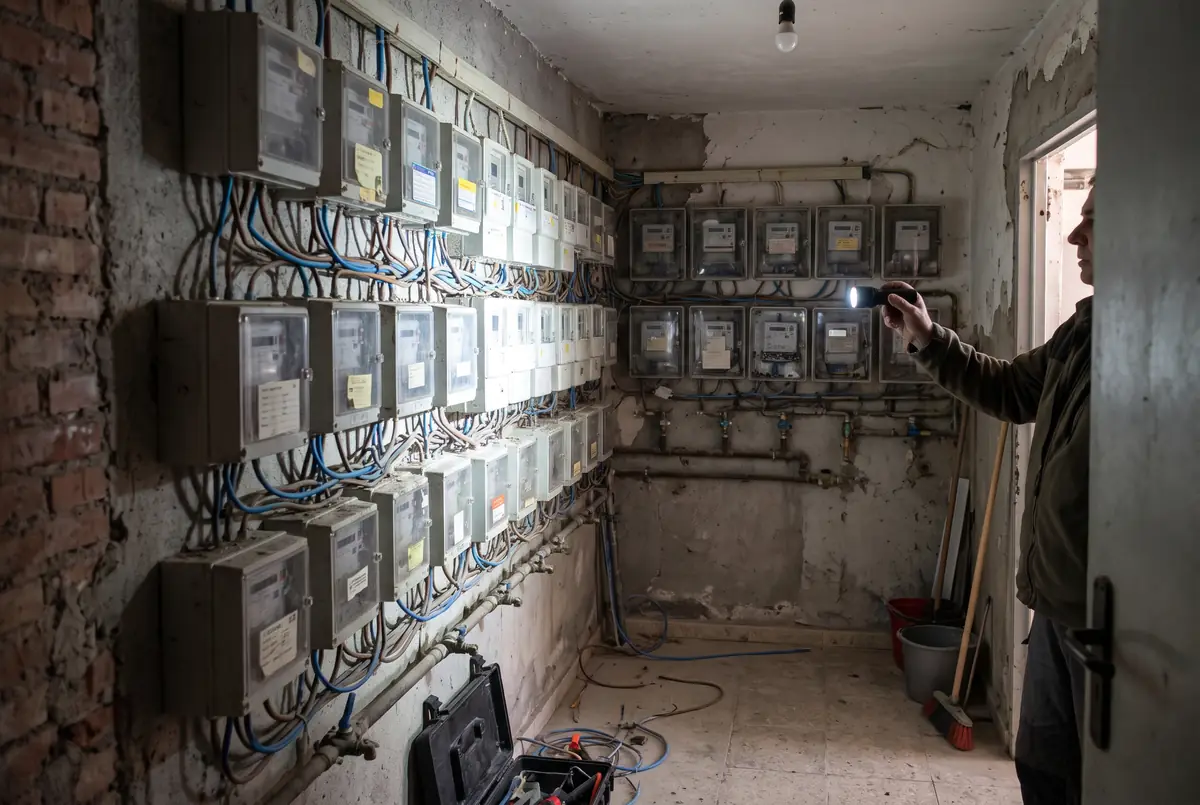
You sign the contract, pay the deposit and get the keys in a hurry. But what is written down, or not, that day is what will be looked at when you leave, in one, five or ten years, to decide whether you get your whole deposit back. A stain on the parquet, a wardrobe door hanging off or an oven that does not heat up can end up being deducted if nobody recorded that they were already like that.
This guide focuses on that day: the key handover and the inventory at the start of a rental in Madrid and Barcelona. How much the deposit is, where it is lodged and how to claim it is covered in “Rental Deposits in Madrid and Barcelona in 2026”; who fixes each fault and who pays each bill, in “Repairs, utilities and rubbish tax in a rented flat in Spain in 2026”; clauses that are not valid, in “Rental contract clauses that are not valid in Spain in 2026”; and insurance, in “Home insurance in a rented flat in Spain in 2026”. Here we stick to the practical side: what to check, how to put it in writing and what to keep.
The essentials in one minute
- The inventory and the condition report are not compulsory when you move in, but they are your best evidence. If nothing is in writing, the Civil Code presumes you received the home in good condition.
- Since 8 October 2026, the LAU requires the condition of the home to be recorded in writing at the end of the contract, in an end-of-tenancy document signed by both parties. That document is compared with the one you made when you moved in.
- Take dated photos and video of every room, of the furniture and appliances working, and of every existing defect. Write it all down in a list signed by both parties, with a copy for each.
- Read and photograph the electricity, water and gas meters, record how many keys and remotes you are given and decide whose name the utilities will be in.
- The home must have an energy performance certificate: the label is attached to the contract and you must be given the recommendations for use. In Catalonia, it also needs a cédula de habitabilidad (certificate of habitability).
- When you leave, if your deposit is not returned within a month of handing back the keys, the amount owed earns interest.
What the inventory is and why it decides your deposit
The inventory is the list of what is in the home when you move in: furniture, appliances, lamps, curtains, kitchenware if there is any. The condition report, which is often part of the same document, describes the state of everything: walls, floors, doors, windows, bathrooms, kitchen, installations. Together they are the “snapshot” of the starting point. They can be an annex to the contract or a separate document signed on handover day.
The LAU does not require them at the start. What the law does is allocate the burden of proof, and that is why they matter. The Civil Code says the tenant must return the home as it was received, except for what has deteriorated through the passage of time or an unavoidable cause (article 1561), and that the tenant is liable for deterioration unless they prove it was not their fault (article 1563). It adds a rule worth reading slowly:
In the absence of a statement of the condition of the property at the time of letting it, the law presumes that the tenant received it in good condition, unless proven otherwise.
Spanish Civil Code, article 1562 (our translation)
If nobody wrote down on moving-in day that the worktop was already burnt, it is presumed to have been fine. That is why the inventory mainly protects the tenant. But it also protects the landlord: if it records that the sofa was new and the dishwasher worked, they will have clear evidence if those items are missing or broken at the end.
Royal Decree-law 29/2026 added a paragraph 7 to article 36 of the LAU that focuses on the end of the contract, not the beginning. It reads:
At the end of the contract, the parties must record in writing the condition of the home at the moment possession is handed over, by means of an end-of-tenancy document signed by both parties.
Urban Leases Act (LAU), article 36.7, as worded by Royal Decree-law 29/2026 (our translation)
The same paragraph adds that, if that document is not signed or does not record any damage, it will be presumed, unless proven otherwise, that the home was returned in an adequate state of repair. The rule does not say expressly whether it also applies to contracts signed before 8 October 2026, but in practice it is worth doing it for any contract. And that exit document only really works if it can be compared with an entry one: a “scratch on the living room door” at the end says nothing if nobody knows whether it was already there.
Before handover day: what to ask for
Law 12/2023 on the right to housing allows anyone interested in renting a home on offer to ask, before signing, for minimum information in writing: who the landlord is and, where applicable, the intermediary; the financial terms; and the essential features of the home, including the certificate or cédula of habitability, the energy performance certificate, services and installations, and accessibility conditions (article 31). Also ask for everything else you will need on the day:
- A copy of the signed contract and, if there is one, the draft inventory so you can review it calmly.
- The energy certificate label, which must be attached to the contract, and the recommendations for use document.
- In Catalonia, a valid cédula de habitabilidad.
- Which utilities are connected (electricity, water, gas, internet) and in whose name, and the CUPS code (supply point code) for electricity and gas, which appears on any bill.
- How many keys, remotes and cards there are, and whether any key can be copied or needs an ownership card.
- Who to contact if something breaks: the landlord, the agency or a property manager, with a phone number and an email address.
How to do the inventory, step by step
You do not need an official form or a notary. A clear document that you will both understand in a few years’ time is enough. The most practical approach is to walk through the home together, without rushing, from the front door inwards:
- Meet in daylight with the electricity and water working, so you can test everything.
- Go room by room: hallway, living room, kitchen, each bedroom, each bathroom, terrace, storage room and garage if there are any.
- In each one, note walls and ceilings (paint, damp, holes), floor, doors and handles, windows and shutters, sockets and switches, radiators or air conditioning, and lights.
- List the furniture and appliances with their brand and condition: “new”, “good condition”, “normal wear” or the specific defect. Check that they work.
- Describe every existing defect precisely: what it is, where it is and its approximate size. “10 cm stain on the wall of bedroom 2, next to the window” is useful; “some wear” is not.
- Take a photo of everything you note down, numbered to match the list, and record meters, keys and remotes.
- Date and sign the document together, on every page if it is on paper, and keep one copy each. If it is signed electronically, keep the signed file.
- If something you did not see turns up later, report it in writing with photos within the first few days.
If the landlord will not sign an inventory, make the list and take the photos yourself anyway and send them the same day by a means that leaves a record, such as an email or a message showing the date, asking them to confirm whether they agree. It does not carry the same weight as a document signed by both of you, but it is far better than nothing: it is evidence of the condition of the home and that you told them.
Table: checklist for key handover day
| What to check | Who does it | What evidence to keep |
|---|---|---|
| Condition of walls, ceilings, floors, doors and windows | Tenant and landlord or agency, together | Signed room-by-room report and numbered, dated photos |
| Furniture and appliances (present and working) | Both, testing them there and then | Inventory with brand and condition, and video with the appliances switched on |
| Existing defects | Both; the tenant insists everything is noted | Specific description in the report and a close-up photo of each |
| Electricity, water and gas meters | Both, at the same time | Photo of each meter showing the reading, and the reading in the report |
| Holder or payer of the utilities | The tenant if they put them in their name; the landlord if they stay in theirs | Change-of-holder request or written agreement on how they are paid |
| Keys, remotes, cards and keys to the letterbox or storage room | The landlord hands them over; the tenant counts them | Number and type of each in the report |
| Energy certificate and, in Catalonia, cédula de habitabilidad | The landlord provides them | Label attached to the contract, recommendations for use and a copy of the cédula |
| Lodging of the deposit | The landlord lodges it | Receipt for the deposit payment; proof of lodging or certificate |
| Faults visible on day one | The tenant reports; the landlord repairs | Written, dated notice with photos, and the landlord’s reply |
An indicative list: adapt it to your home, furnished or unfurnished.
Photos and video that work as evidence
A photo works as evidence if it is clear when it was taken and what it shows. The date your phone stores can be lost when the image is forwarded through some messaging services, so it is worth emailing the photos and video to the other party, or to yourself, on handover day: the email records the date and the content. Also keep the originals somewhere safe, separate from your phone.
A continuous video walking through the home from start to finish without cuts is hard to dispute. First give an overview of each room and then move in on the details: the chipped plaster, the blackened shower grout, the scratched glass of the hob. Switch on the hob, the oven, the washing machine and the air conditioning for a few seconds so it can be seen that they work. At the start, say the date and the address out loud: a simple way for the video to explain by itself what it shows and when it was recorded.
Meters and utilities: readings and changing the account holder
On handover day, read the electricity, water and, if there is one, gas meters, take a photo of each one showing the figure and write the reading in the report. If there is central heating with heat cost allocators on the radiators, record their readings too. That makes it clear which consumption is from before you moved in and which is yours, and doing the same when you leave will settle the accounts.
For electricity and gas there are two options. The first is to change the holder of the contract and put it in your name. According to the CNMC (Spain’s markets and competition regulator) guide, this is free, it is always requested by the new holder from the supplier, and it takes 1 to 20 working days; you need the details and ID of the new and the old holder, the CUPS code or the full address, a bank account for direct debit and, if asked, the rental contract. From the change onwards, the bills belong to the new holder, and the old one receives the bill for earlier consumption. The second option is for the contract to stay in the landlord’s name while you pay for the consumption; this is common, but it is worth agreeing in writing how it will work. For water, the procedure depends on each municipality’s company, which is shown on the bill. Who pays each utility and which costs can be passed on to you is explained in “Repairs, utilities and rubbish tax in a rented flat in Spain in 2026”.
In Catalonia there is one more detail: according to the Generalitat, the cédula de habitabilidad is needed to connect water, electricity, gas and telecommunications services. If a utility is disconnected, ask the landlord to reconnect it before you move in.
Keys, remotes and access
This is a common deduction at the end of a contract. Record in the report how many keys you are given for each door (building entrance, flat, letterbox, storage room, garage), how many garage remotes and how many cards or fobs for communal areas. If any key is a security key that cannot be copied without a card, note it. When you leave you will have to return at least the ones you were given. If you want to change the lock cylinder, agree it in writing with the landlord.
The paperwork the home must have
The energy performance certificate is compulsory when a home is sold or let to a new tenant, under Royal Decree 390/2021 (article 3). The landlord commissions it and it is valid for a maximum of ten years, or five if the rating is G. For rentals, the regulation requires two specific things:
Where the subject of the contract is the lease of all or part of the building, as appropriate, a copy of the energy efficiency label shall be attached to the lease contract and the tenant shall be given a copy of the Recommendations for use document.
Royal Decree 390/2021, article 17.2 (our translation)
In addition, the label must appear in every offer, promotion and advertisement for selling or letting the home (article 15). If the listing did not show it or the contract does not have it attached, ask for it before signing. How it is obtained and what it costs is covered in “Energy Performance Certificate to Sell a Flat in Madrid in 2026”; for renting, the certificate is the same.
In Catalonia, the home must also have a cédula de habitabilidad. According to the Generalitat, the second-occupation cédula is needed to sell, let or transfer the use of a home and to connect utilities. In both Madrid and Barcelona, ask for the manuals or instructions for the boiler, the water heater and the appliances, and for the date of the last boiler or gas installation check: keep them with the inventory.
The deposit and guarantees on day one
On signing, the compulsory deposit (fianza) is paid: one month’s rent for a residential lease (article 36.1 of the LAU). An additional guarantee can also be agreed, such as an extra deposit or a bank guarantee, with a cap: two months’ rent for a main home on a contract of up to five years, or seven if the landlord is a company, and one month for temporary housing. Since 8 October 2026, a tenant cannot be required to take out rent default insurance or similar cover (article 36.5). Always ask for a receipt for whatever you pay, with a clear description: “deposit”, “additional guarantee” or “December rent”.
| Community of Madrid | Catalonia (Barcelona) | |
|---|---|---|
| Where the deposit is lodged | Agencia de Vivienda Social (the Community of Madrid’s social housing agency) | INCASÒL (Institut Català del Sòl) |
| Who lodges it | The landlord | The landlord |
| Deadline | 30 days from signing (the Community’s website also refers to 30 working days) | 2 months from signing the contract |
| What you can check as a tenant | You can obtain proof of the deposit through Cuenta Digital or request it through the procedure for requesting or reporting proof of deposit | The landlord must give you a copy of the proof of deposit within 2 months |
| If lodged late | Surcharge of 2%, or 5% if more than a year has passed | Catalan law treats it as an offence, with surcharges and fines |
| At the end | The landlord requests the return of the deposit with form 254 | The registration is cancelled when the deposit is returned |
What is lodged is the statutory deposit; the additional guarantee is held by the landlord or, if it is a bank guarantee, by the bank. Sources: Community of Madrid (deposits page, updated on 28 October 2026) and Catalan Law 13/1996.
Insurance
Ask the landlord whether the home has home insurance, what it covers and who to call if there is an incident, and note the policy number and phone number with the inventory. If you take out your own insurance, the inventory and the move-in photos will also help you with your insurer. What each party insures and who pays for a water leak or a burglary is explained in “Home insurance in a rented flat in Spain in 2026”.
Registering on the padrón
The law requires you to register on the padrón (the municipal register of residents): “Every person living in Spain is required to register in the Padrón of the municipality in which they habitually reside” (article 15 of the Local Government Act, as worded by Law 4/1996; our translation). It is what proves where you live for many procedures and benefits. In Madrid, registration can be requested online through the City Council’s electronic office, attaching a document that proves your use of the home; in Barcelona, the City Council states that, if you are a tenant, you must provide the current contract, and registering is free. If the contract says anything about registering, see what we explain in “Rental contract clauses that are not valid in Spain in 2026”.
If a fault turns up when you move in
It is common to discover something in the first few days: a socket that does not work, a broken shutter, a dripping water heater. A fault that already existed when you moved in is not the result of your use, so in principle repairing it is the landlord’s job: the LAU requires the landlord to carry out the repairs needed to keep the home habitable, except for damage that is the tenant’s fault (article 21.1). Small repairs due to everyday wear and tear are the tenant’s responsibility (article 21.4). What to do:
- Report it in writing as soon as possible, with photos and the date, and if you see it on handover day, note it in the report. The law requires the tenant to report the need for repairs as soon as possible (article 21.3), and a notice on day one makes it clear that the fault predates your arrival.
- If it is urgent to prevent greater damage, such as a water leak, you can carry out the urgent repair and then claim the cost from the landlord (article 21.3). Keep the invoice.
- If it affects habitability and is not fixed, since 8 October 2026 you can request the repair in writing with a quote; if the landlord does not reply within fifteen calendar days, you can carry it out yourself and deduct the cost from subsequent rent (article 21.5). We explain it step by step in our repairs guide.
When you leave: the same inventory to get your deposit back
When the contract ends, the move-in inventory comes back out. Ideally, meet at the home, walk through it with the inventory in hand and compare room by room, as you did at the start. What is the same, or shows the normal wear of the years, should not be deducted: article 1561 of the Civil Code excludes deterioration caused by time. What is missing or broken and is not in the move-in inventory is what can be disputed. Take the same photos and meter readings, return the keys listed in the report and sign the end-of-tenancy document now required by article 36.7 of the LAU, listing specific damage or stating that there is none.
The clock starts when the keys are handed back. If a month passes from then without the landlord returning what is owed, that amount earns statutory interest (article 36.4), which in 2026 is 3.25%, according to the Banco de España. An illustrative example: a deposit of €900 returned four months after that month earns about €9.75 in interest (900 × 3.25% × 4/12). The figure is small; what really helps you claim is having the move-in inventory and the end-of-tenancy document.
- Before leaving, get out the move-in inventory and photos and go over what has changed.
- Repair anything you have broken and clean the home; leave the furniture and appliances in the inventory in place.
- Arrange to meet the landlord or agency at the home for the handover; avoid leaving the keys in a letterbox.
- Take move-out photos and video, and read and photograph the meters.
- Sign the end-of-tenancy document, with readings and keys returned, and a copy for each of you.
- Cancel or transfer the utilities in your name, with the final reading.
- Note the date you hand back the keys: the month for returning the deposit counts from then.
How we do it at Llavely
Llavely is renting in reverse, open and free in the provinces of Madrid and Barcelona: the tenant creates a verified profile once, our team checks their identity and income, the documents are deleted afterwards, and it is landlords and agencies who invite them to view the home. Landlords list for free and see verified candidates ranked by affinity, instead of receiving loose documents from strangers by chat or email.
In rentals, Llavely does not handle payments: the deposit and rent are paid directly to the landlord, and you do the inventory and key handover yourselves. What we explain here applies equally whether you find a flat with us or another way. If you are looking for a flat, create your profile for free and wait for invitations. If you have a home to let, list it for free and choose whom to invite. And if you want to sell a property in the Community of Madrid, we do that too, for 2.5% + VAT only if it sells: ask for your free valuation.
Frequently asked questions
Is it compulsory to do an inventory when renting a flat in Spain?
Not when you move in: the Urban Leases Act (LAU) does not require it. But it is the best evidence of the condition of the home because, if nothing is in writing, the Civil Code presumes the tenant received it in good condition (article 1562). When you leave, since 8 October 2026 the LAU does require the condition of the home to be recorded in writing in an end-of-tenancy document signed by both parties (article 36.7).
What should the key handover report include?
The date, the parties and the home, the condition of each room, the furniture and appliances, existing defects, meter readings, the keys and remotes handed over and both signatures, with a copy for each and a reference to dated photos.
What if the landlord will not sign the inventory?
Do it yourself anyway, with a list, photos and video, and email it to them the same day asking for their agreement. It is not worth the same as a document signed by both of you, but it proves the condition of the home and that you told them.
Do I have to put the electricity in my name when renting?
It is not compulsory. You can change the holder, which according to the CNMC is free and takes 1 to 20 working days, or leave the contract in the landlord’s name and pay for the consumption yourself. Either way, read and photograph the meter on handover day and agree in writing how it will be paid.
Do they have to give me the energy certificate when I rent?
Yes. Under Royal Decree 390/2021, a copy of the energy efficiency label is attached to the rental contract and the tenant is given a copy of the recommendations for use document. The label must also appear in the listing. In Catalonia, the home also needs a cédula de habitabilidad.
How long does the landlord have to return the deposit?
The LAU says that if a month passes from the day the tenant hands back the keys without the amount owed being returned, that amount earns statutory interest, which in 2026 is 3.25%. That is why people talk about a one-month deadline. Damage that is the tenant’s responsibility can be deducted, and that is where the move-in inventory makes the difference.
Can the landlord deduct normal wear and tear from the deposit?
The Civil Code excludes from what the tenant must return anything that has deteriorated through time or an unavoidable cause (article 1561). Normal wear from use is not damage. Nor are defects already listed in the move-in inventory.
Sources
- Law 29/1994 of 24 November on Urban Leases, consolidated text: articles 21, 36 and 37 (BOE, consulted on 15 November 2026)
- Royal Decree-law 29/2026 of 6 October adopting urgent measures to protect the social function of housing and expand the supply of affordable housing: article 3 (BOE, 7 October 2026)
- Resolution of 12 November 2026 of the Congress of Deputies ordering publication of the agreement validating Royal Decree-law 29/2026 (BOE no. 283, 13 November 2026)
- Civil Code, articles 1561 to 1563: return of the leased property and the tenant’s liability (Noticias Jurídicas, consulted on 15 November 2026)
- Royal Decree 390/2021 of 1 June approving the basic procedure for certifying the energy performance of buildings, consolidated text: articles 3, 13, 15 and 17 (BOE)
- Law 12/2023 of 24 May on the right to housing, consolidated text: article 31 (BOE)
- Law 4/1996 of 10 January amending Law 7/1985 on the Bases of Local Government with regard to the municipal register: article 15 (BOE, 12 January 1996)
- Rental deposits: lodging, proof and return (Community of Madrid, updated on 28 October 2026)
- Law 13/1996 of 29 July on the Register and Lodging of Deposits for Urban Rental Contracts, Catalonia (BOE, 23 August 1996)
- Second-occupation certificate of habitability (Government of Catalonia, gencat procedures, updated on 23 October 2023)
- How to change the terms of your electricity or gas contract: change of holder and contracted power (CNMC, consumer guide, consulted on 15 November 2026)
- Table of statutory interest rates (Banking Customer Portal, Banco de España, consulted on 15 November 2026)
- Guide to registering on the municipal register through the electronic office (Madrid City Council, consulted on 15 November 2026)
- Information leaflet on registering on the padrón: how to do it and what documents to provide (Barcelona City Council, consulted on 15 November 2026)
- End of the tenancy: how to hand back the keys (OCU, 3 October 2025)
- Legal changes affecting rentals and housing (OCU, 19 October 2026)