Renting · · 23 min read
Repairs, utilities and rubbish tax in a rented flat in Spain in 2026: who fixes what under the LAU, how to change the electricity or water account holder and how to check what you are charged in Madrid and Barcelona
Bill by bill, what the tenant pays and what the landlord pays in a main-residence rental: community fees and levies, IBI, Madrid’s rubbish fee and Barcelona’s on the water bill, electricity, water, gas and internet and how to change the account holder, boiler servicing, breakdowns and minor repairs, improvements, home insurance and fees. With what article 20 of the LAU requires before you can be charged community fees, what changed on 8 October 2026, what depends on the 12 November vote and what to do if you are asked for something that is not in the contract.
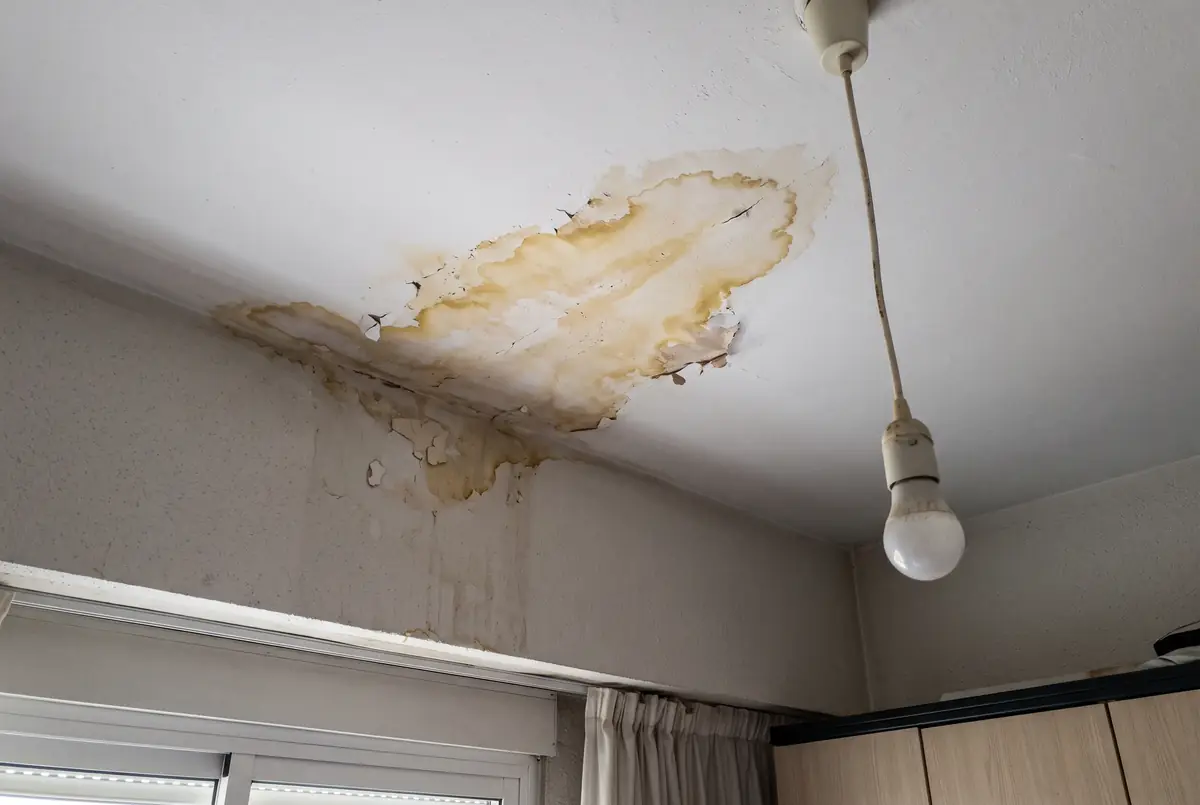
When you rent a flat, the rent is only the first figure. Then come the community fees, the IBI, the rubbish collection fee, electricity, water, gas, the boiler service and, sooner or later, a breakdown. Each bill has its rule, almost always in the Urban Leases Act (LAU, Spain’s main tenancy law), but many tenants pay whatever they are told without knowing whether it is theirs to pay, and many landlords charge what they always have without checking whether the law has changed. And it has: since 8 October 2026, Royal Decree-law 29/2026 bars landlords from passing the IBI and other property taxes on to the tenant.
This guide goes bill by bill, using the law published in the BOE (Spain’s Official State Gazette) as at 6 November 2026, and focuses on the practical side: how each cost reaches you in Madrid and in Barcelona, how to check what you are charged and what to do if you are asked to pay something that is not in the contract. We cover the general split of costs in “Who Pays What When Renting in Spain in 2026? Agency Fees, IBI, Community Fees, Insurance, Special Levies and Utilities”; void clauses in “Rental contract clauses that are not valid in Spain in 2026”; and the deposit in “Rental Deposits in Madrid and Barcelona in 2026”.
The essentials in one minute
- Community fees: paid by the landlord, unless a written agreement sets their annual amount. In the first five or seven years they can only rise by agreement and by at most twice what the rent can rise.
- Levies (derramas) for building works: paid by whoever owns the property. Repair works cannot push up the rent.
- IBI (annual municipal property tax) and other property taxes: since 8 October 2026 they cannot be imposed on the tenant, unless the tenant is the person legally liable for the tax.
- Rubbish collection fee: depends on each council. In Madrid the landlord can pass it on to the tenant; in Barcelona it arrives on the water bill of whoever holds the water contract.
- Metered electricity, water and gas: always the tenant’s. Changing the account holder for electricity or gas is free, according to the CNMC (the Spanish markets and competition regulator).
- Breakdowns: the landlord pays what is needed to keep the home habitable; the tenant pays for minor repairs due to wear and tear and for anything they break. If the landlord does not reply within 15 days to a written repair request with a quote, the tenant can carry it out and deduct it from the rent.
- Agency fees and the costs of drawing up the contract: always the landlord’s, since Law 12/2023.
- If you are charged for something that is not in the contract, ask in writing for the breakdown and the supporting document before paying.
Bill by bill: who pays what
The last column is the one people forget: which document to ask for to check the amount.
| Cost | Who pays | Where the rule is | What to ask for to check it |
|---|---|---|---|
| Ordinary community fee | Landlord, unless agreed in writing with an annual amount | LAU, art. 20.1 and 20.3 | The community’s annual budget or statement, and the flat’s ownership share |
| Levy for building works | Landlord | Horizontal Property Act, art. 17.11; LAU, arts. 19 and 21 | The minutes of the owners’ meeting that approved it |
| IBI and other property taxes | Landlord (since 8-10-2026 they cannot be imposed on the tenant) | LAU, art. 20.1 | If your contract is older and includes it, that year’s bill |
| Rubbish collection fee | Depends on each council’s bylaw | Madrid and Barcelona tax bylaws | In Madrid, the council bill; in Barcelona, the line on the water bill |
| Metered electricity, water and gas | Tenant | LAU, art. 20.4 | The full bill, with readings and dates |
| Repairs to keep the home habitable | Landlord | LAU, art. 21.1 | The quote and the invoice for the repair |
| Minor repairs due to ordinary wear and tear | Tenant | LAU, art. 21.4 | A clause in the contract saying what counts as a minor repair |
| Improvement works by the landlord | Landlord; rent only rises after 5 or 7 years, by at most 20% | LAU, arts. 19 and 22 | The written notice, at least three months ahead |
| Agency and contract fees | Landlord | LAU, art. 20.2 (Law 12/2023 and RDL 29/2026) | Nothing: they cannot be charged to the tenant under any name |
LAU in force on 6 November 2026, main residence. RDL: Royal Decree-law. Protected (social) housing has its own rules.
Community fees: what it takes for the tenant to pay them
Community fees (cleaning, lift, concierge, building insurance, property manager) are owed by the landlord according to the flat’s ownership share (Horizontal Property Act, Spain’s condominium law, art. 9). The LAU allows them to be passed on to the tenant subject to conditions, and the first is the one most often ignored:
For this agreement to be valid, it must be in writing and state the annual amount of those costs as at the date of the contract.
Urban Leases Act, article 20.1 (our translation)
- In writing and with a figure: a clause that only says “community fees are payable by the tenant” does not comply with the law. It must state how much those costs come to per year at the date of the contract.
- Only what belongs to that flat: the general building costs attributable to the rented home and its extras, such as a parking space or storage room if they are in the contract.
- Nothing in buildings without a community: since 8 October 2026, if the building is not under the horizontal property regime (for example, because it belongs entirely to a single owner), community costs cannot be charged to the tenant.
- Capped increases: during the first five years of the contract, or seven if the landlord is a company, the amount can only rise by agreement, once a year and never by more than twice the percentage by which the rent can rise.
If the community raises its fee at the annual meeting, the increase is not passed on to the tenant automatically: it needs agreement and must respect the cap. And without an annual amount in the contract, the clause is not valid and the landlord pays the community fees.
Levies: ordinary, extraordinary and who is liable
People sometimes speak of “ordinary levies” for top-ups to the year’s budget and “extraordinary levies” for works: façade, roof, lift. Towards the community, the owner is liable in both cases, and the Horizontal Property Act puts levies for improvements on “whoever is the owner at the time they become payable” (art. 17, rule 11, our translation). Repair works are also the landlord’s obligation and cannot push up the rent (LAU, art. 21.1).
What about a clause that passes levies on to the tenant? It sits badly with article 20, which requires an annual amount to be set at signing and caps increases, when a levy is precisely a cost nobody planned for. If your contract says so, get advice before paying.
IBI: what changed on 8 October 2026
The IBI (Impuesto sobre Bienes Inmuebles) is the annual municipal property tax paid by the owner. Until 7 October 2026 it could be agreed that the tenant would pay it. Since 8 October, the LAU says that “under no circumstances may the taxes associated with the home be imposed on the tenant” (our translation), except where the tenant is the person legally liable for the tax, which is not usually the case with the IBI.
Royal Decree-law 29/2026 contains no transitional rule on costs. The OCU (Spain’s largest consumer organisation) takes the view that the change “does not, in principle, cancel validly agreed clauses” (our translation): if your contract from before 8 October validly makes you pay the IBI, that obligation would continue. If in doubt, ask before you stop paying or charging.
The rubbish collection fee in Madrid and Barcelona
The rubbish collection fee is governed by each council’s tax bylaw, which decides who the taxpayer is. That is why the ban on imposing property taxes on the tenant does not, as a general rule, prevent the fee from falling on them, as the OCU points out: the law makes an exception where the tenant is the person legally liable.
In Madrid city, the waste management fee treats as taxpayer whoever benefits from the service, that is, whoever lives in the home, and treats owners as substitute taxpayers: they answer to the City Council and can pass the fee on to the occupant, according to the Madrid City Tax Agency. The Municipal Consumer Institute concluded in October 2025 that it can be passed on even if the contract pre-dates the fee and does not mention it, and noted that consumer authorities cannot intervene in rentals between private individuals.
In Barcelona city, the municipal waste collection fee (tax bylaw 3.18, in force since 1 January 2025) treats as taxpayer whoever holds the home’s water contract, and it is charged on the water bill as a separate item. The owner is only the substitute if the water contract is not in the name of the person living there: if you put the water in your name, the fee comes to you. In 2026 it ranges from €36.85 to €288.36 a year depending on the type of home and water consumption, with reductions of, for example, up to 14% for using the deixalleries (recycling centres). In the Barcelona Metropolitan Area, which includes the city, the water bill also carries the AMB’s metropolitan waste treatment fee (TMTR), on the same basis.
| Madrid (city) | Barcelona (city) | |
|---|---|---|
| Who the taxpayer is | Whoever benefits from the service: whoever lives in the home | Whoever produces the waste and holds the water contract |
| The owner’s role | Substitute taxpayer: answers to the City Council and can pass the fee on | Substitute only if the water contract is not in the occupant’s name |
| How it reaches you | Through the landlord, who can pass the amount on to you | On the water bill, as an item separate from consumption |
| Amount | Depends on the home: ask for that year’s bill | €36.85 to €288.36 a year in 2026, depending on type of home and consumption, with reductions |
| Also | — | The AMB’s metropolitan waste treatment fee (TMTR), also on the water bill |
| Other towns in the province | Each council has its own bylaw | Each council has its own bylaw |
Sources: Madrid City Tax Agency (11-4-2025), Madrid Municipal Consumer Institute (2-10-2025), Barcelona City Council tax bylaw 3.18 and AMB TMTR 2026 bylaw (BOPB, 19-12-2025). Barcelona amounts: bylaw 3.18, 2026 rates.
The sensible thing is for the contract to say who pays the fee and how, and for the tenant to see the bill. In stressed residential market areas (zonas tensionadas) there is one more rule: a new contract cannot add costs that were not in the previous contract for that home (LAU, art. 17.6). Barcelona is one of the 140 Catalan municipalities declared in March 2024, for three years; we explain it in “Renting a flat in Barcelona in 2026”.
Electricity, water, gas and internet: who pays and how to change the account holder
Here the law is clear-cut: “costs for services in the leased property that are individually metered shall in all cases be borne by the tenant” (LAU, art. 20.4, our translation). What you choose is how: put the contracts in your name, or leave them in the landlord’s name and pay them for your consumption with the bill in front of you. Internet and pay TV are contracted and paid for by whoever wants them.
Putting them in your name lets you see the bills and choose your tariff, and in Barcelona it means the waste fee comes straight to you. Here is how:
- On moving-in day, take a photo of each meter showing the reading and the date, and send it to the landlord in writing.
- Ask for the CUPS code (the supply point number) for electricity and gas, which appears on any bill, and the water contract number.
- Electricity and gas: ask the supplier of your choice for a change of account holder. According to the CNMC it is free; you will be asked for your details and the previous holder’s, the CUPS, your bank account and, if needed, the rental contract. It takes 1 to 20 working days, and the previous holder pays for consumption before the change.
- Changing the contracted power is a separate process: lowering it costs €9 in connection fees, and raising it has costs that depend on the case and may require the electrical installation certificate (CNMC).
- Water: in the Community of Madrid it is supplied by Canal de Isabel II, which asks, among other documents, for your ID and the rental contract, according to the Community of Madrid’s consumer service. In Barcelona and its area, contact your town’s water company.
Gas involves two different checks. The periodic inspection of the installation takes place every five years, the distributor gives at least three months’ notice and it is charged on the gas bill, never in cash on the spot, according to Consumo Responde with information from the CNMC. And boiler maintenance is required by the Regulation on Thermal Installations in Buildings (RITE): in a home, a wall-mounted gas boiler of up to 70 kW must be serviced every two years, and a gas water heater of up to 24.4 kW every five, by an authorised company. The RITE makes the holder or user of the installation responsible, but the LAU does not say who pays for the service in a rental: put it in writing in the contract. If the service finds a fault that is not due to misuse, repairing it is the landlord’s job.
Breakdowns and repairs: the article 21 test
The line that causes the most arguments is in article 21 of the LAU. The landlord must carry out, without raising the rent, “all repairs needed to keep the home in a habitable condition for the agreed use” (our translation), except where the damage is attributable to the tenant. And the tenant pays for “the minor repairs required by wear and tear from ordinary use of the home” (art. 21.4, our translation). To decide what is attributable to the tenant, the LAU refers to the Civil Code, which makes the tenant liable for damage to the home “unless they prove it occurred through no fault of their own”, and also for damage caused “by the members of their household” (arts. 1563 and 1564, our translation).
The law gives no list and no amount. This table applies the test to common cases; it is guidance only: if you disagree, the contract decides and, as a last resort, a judge.
| Case | Who usually pays | Why |
|---|---|---|
| Light bulb, tap washer, flexible hose, worn cistern mechanism | Tenant | Wear and tear from daily use and a small cost: a minor repair (art. 21.4) |
| Boiler or water heater failing through age or a fault, without misuse | Landlord | A repair needed to keep the home habitable (art. 21.1) |
| Appliance included in the contract that stops working without misuse | Usually the landlord | It is part of what is let; the inventory should list it |
| Damp or a leak from a pipe, the roof or the façade | Landlord (or the community, through the landlord) | Upkeep of the home and the building |
| Broken glass, a stain or burn, a lost key | Tenant | Damage caused by the tenant or someone living with them (Civil Code, arts. 1563 and 1564) |
| A leak that could flood the home or the neighbour below | Landlord, unless due to misuse | The tenant can act at once, giving notice first, and claim the cost afterwards (art. 21.3) |
Guidance on the LAU’s general test for a main residence as at 6 November 2026. The law sets no list of minor repairs: the safest option is to define it in the contract.
When something breaks, the tenant must report it “as soon as possible” and let the landlord inspect it (art. 21.3); if it is urgent, to prevent imminent damage or serious discomfort, the tenant can repair it after giving notice and claim the cost. If repair works last more than twenty days, the rent goes down proportionally (art. 21.2). And since 8 October 2026, for damage affecting habitability, safety or health and, in general, for any necessary repair that falls to the landlord, there is a procedure (art. 21.5):
- Request the repair in writing (an email or a burofax, a certified letter) and attach a reasonable quote.
- The landlord has fifteen calendar days from receiving your request to accept the quote, propose another repair or carry it out themselves.
- If they do not reply or refuse without justification, you can have the work done and deduct the cost from future rent.
- The cost must be reasonable, proportionate to the damage and supported by documents: keep the quote, the invoice and proof of payment.
Improvements: the landlord’s and the ones you want to make
Improvement works by the landlord, such as replacing the windows, are not repair works. The tenant must put up with those that cannot reasonably be postponed, with at least three months’ written notice of the work, its duration and its cost; the tenant can withdraw from the contract within the following month if genuinely affected and, if they stay, is entitled to a proportional rent reduction and to be reimbursed for the expenses caused (art. 22). An improvement only allows the rent to be raised after five years of the contract, or seven if the landlord is a company, by at most 20% (art. 19), unless agreed otherwise.
If you are the one who wants to carry out works, without the landlord’s written consent you cannot change the layout of the home, and you can never carry out works that reduce stability or safety (art. 23). If you do them without permission, the landlord can terminate the contract or, at the end, ask you to restore everything or keep the works without paying you anything. The exception is interior works needed for a person with a disability or aged over seventy who lives in the home (art. 24).
Home insurance and fees
The LAU does not require anyone to take out home insurance. The sensible split is for the landlord to insure the building (structure, installations and, if furnished, the furniture) and for the tenant, if they wish, to insure their contents and their civil liability, for example for a leak that reaches the neighbour. What cannot be required of the tenant since 8 October 2026 is rent default insurance or any similar cover, as the OCU points out. And property management and contract costs have been the landlord’s since Law 12/2023, in force since 26 May 2023: they cannot be passed on to the tenant “directly or indirectly, under any concept or name”, including on renewal (art. 20.2, our translation). This rule does not depend on the 12 November vote.
How to check what you are charged
- Find the costs clause in your contract: which items you take on and what annual community fee amount was set at signing.
- Ask for the supporting document every year: the community’s statement, the rubbish fee bill and, if you pay it under an older contract, the IBI bill.
- Compare with the previous year: in the first five or seven years, an increase in community fees is only valid if you agreed to it and it is no more than twice what the rent can rise.
- If the utilities are still in the landlord’s name, ask for the full bill and check that the period starts on the day you moved in.
- The rent receipt must itemise each amount you pay (LAU, art. 17.4). A charge for “management” or “administration” of the contract cannot be made to you.
- Keep the contract, meter photos, receipts, emails and invoices: they will also help you get your deposit back.
What to do if you are charged for something that is not in the contract
- Do not simply pay it, but do not stop paying the rent: they are separate matters, and not paying the rent has serious consequences.
- Ask in writing what the item is, which clause it is based on and for the supporting document.
- If it is not in the contract and the law does not put it on the tenant, reply in writing that it does not apply, citing the LAU article (20.1 for the IBI, 20.2 for management costs).
- If you have already paid it, ask in writing for a refund and keep the reply.
- If you cannot agree, consult a lawyer, a consumer association or the housing office of your council or regional government.
If your contract pre-dates 8 October 2026, a clause on the IBI that was valid at the time has not necessarily stopped being so, according to the OCU. What was never valid, such as charging agency fees in a contract signed on or after 26 May 2023, still is not.
What depends on 12 November
Royal Decree-law 29/2026 was published in the BOE on 7 October 2026 and came into force on the 8th. With Parliament dissolved for the general election on 29 November, ratification falls to the Standing Committee of Congress, and the vote is scheduled for 12 November, according to Europa Press. If the text is not ratified, it ceases to apply. For rental costs, this is what is at stake:
- Depend on the vote: the ban on imposing the IBI and other taxes on the tenant, the ban on charging community fees in buildings without horizontal property, the fifteen-day deadline to answer a repair request and the ban on requiring rent default insurance.
- Do not depend on it: agency and contract costs borne by the landlord (Law 12/2023), metered utilities borne by the tenant, the written agreement with an annual amount for community fees and the general split of repairs.
- Unclear: what would happen to clauses in contracts signed while it was in force. If you sign in these weeks, keep a copy of the contract and of the law as it stood that day.
How we do it at Llavely
Many disputes over costs start with a contract that does not say how much the community fees are or who pays for rubbish collection. Llavely is renting the other way round, open and free in the provinces of Madrid and Barcelona: tenants create their verified profile once, our team checks their identity and income, the documents are deleted afterwards, and it is landlords and agencies who invite them to view their homes. The contract is drawn from a template based on the LAU and signed within the website, so both of you know from the start which costs each one takes on.
Llavely does not charge or handle payments in rentals: the deposit and the first month are paid directly to the landlord, and costs are shared as the contract you sign says. If you are looking for a flat, create your profile for free; if you have a home to let, list it for free and you will see verified candidates ranked by affinity. And if you want to sell a home in the Community of Madrid, we do that too, for 2.5% + VAT only if it sells: ask for your free valuation.
Frequently asked questions
Who pays the community fees in a rented flat?
The landlord, unless the contract says in writing that the tenant pays them and sets their annual amount. In the first five years (seven if the landlord is a company), the amount can only rise once a year, by agreement and by at most twice what the rent can rise.
Can I be charged the IBI if I rent in 2026?
In contracts subject to the wording in force since 8 October 2026, no: the LAU bans imposing property taxes on the tenant unless the tenant is the person legally liable, and for the IBI that is the owner. If your contract is older and contains a valid agreement, the OCU takes the view that, in principle, it still applies. This rule depends on the ratification of Royal Decree-law 29/2026, scheduled for 12 November.
Who pays the rubbish collection fee if I rent in Madrid or Barcelona?
In Madrid city, the taxpayer is whoever lives in the home, and the landlord, as substitute, can pass the fee on. In Barcelona, the municipal and metropolitan fees arrive on the water bill of whoever holds the water contract. In other towns, check your council’s bylaw.
Who pays for the boiler service in a rented flat?
The LAU does not say expressly. The RITE requires a wall-mounted gas boiler in a home to be serviced every two years by an authorised company and makes the holder or user of the installation responsible. It is best to put it in writing in the contract. If the service finds a fault that is not due to misuse, the repair is the landlord’s.
Do I have to put the electricity and water in my name?
It is not compulsory, but metered utilities are always paid by the tenant. Putting them in your name lets you see the bills and choose your tariff, and in Barcelona it means the waste fee comes straight to you. According to the CNMC, changing the account holder for electricity or gas is free and takes 1 to 20 working days.
What can I do if the landlord does not fix a breakdown?
Tell them in writing as soon as possible. If it is a necessary repair that falls to them, especially one affecting habitability, safety or health, request it in writing with a reasonable quote: if they do not reply within fifteen calendar days or refuse without justification, you can carry it out and deduct the cost from future rent, with an invoice.
Can I claim back what I have overpaid?
You can ask in writing for a refund, explaining why it does not apply and citing the LAU article. If you cannot agree, consult a lawyer, a consumer association or your council’s housing office, and do not stop paying the rent in the meantime.
Sources
- Law 29/1994 of 24 November on Urban Leases (LAU), consolidated text: articles 17, 19, 20, 21, 22, 23 and 24 (BOE, last amended 7 October 2026)
- Royal Decree-law 29/2026 of 6 October adopting urgent measures to protect the social function of housing and expand the supply of affordable housing, consolidated text (BOE, 7 October 2026)
- Law 12/2023 of 24 May on the right to housing: first final provision (BOE, 25 May 2023)
- Law 49/1960 of 21 July on horizontal property (Spain’s condominium law), consolidated text: articles 9 and 17 (BOE, last amended 3 October 2026)
- Royal Decree 1027/2007, Regulation on Thermal Installations in Buildings (RITE), consolidated text: article 25 and IT 3.3 (BOE, last amended 2 August 2022)
- Tax bylaw 3.18, fee for the collection of municipal waste generated in private homes (Barcelona City Council, approved 20 December 2024, in force since 1 January 2025)
- Final approval of the tax bylaw on the metropolitan fees for the treatment and final disposal of municipal waste (TMTR) for 2026 (Barcelona Metropolitan Area, Official Gazette of the Province of Barcelona, 19 December 2025)
- Ruling on the substitute taxpayer for the municipal waste management fee (Madrid City Tax Agency, 11 April 2025)
- Charging the rubbish collection fee in rentals, query CC-01-2025 (Municipal Consumer Institute, Madrid City Council, 2 October 2025)
- Full information on water supply (Community of Madrid, Consumer Affairs, updated 10 September 2026)
- How to change the terms of your electricity or gas contract: change of account holder and of contracted power (CNMC, consumer guide, accessed 6 November 2026)
- Inspection and maintenance of natural gas installations and boilers (Consumo Responde, Regional Government of Andalusia, with information from the CNMC, updated 8 October 2026)
- Civil Code, articles 1563 and 1564: the tenant’s liability for damage to the leased property (Noticias Jurídicas, accessed 6 November 2026)
- Legal changes affecting rentals and housing (OCU, 19 October 2026)
- Congress will vote on the housing decrees on 12 November: key points of a session between the general strike and the 29 November election (Moncloa.com with Europa Press, 17 October 2026)
- Resolution of 14 March 2024 of the Secretary of State for Housing and Urban Agenda publishing the list of stressed residential market areas (BOE, 15 March 2024)