Renting · · 25 min read
Renting or lending a flat to your son, daughter or another relative in Spain in 2026: tenancy agreement or free loan, minimum income for tax, reductions, aid, deposit and what happens in an inheritance or a divorce in Madrid and Barcelona
If you let a son, a nephew or your parents use a flat, you can sign a tenancy agreement or lend it to them for free (a comodato or a precario). We explain what the owner declares in each case (the minimum income under article 24 of the Income Tax Act when the tenant is a relative up to the third degree, the deemed income if the flat is free, and what happens to the 50% to 90% reductions), why a first- or second-degree relative is excluded from the Bono Alquiler Joven and the Community of Madrid rental aid, the deposit, the padrón, the tenant’s deduction, inheritance, divorce and an illustrative example with figures.
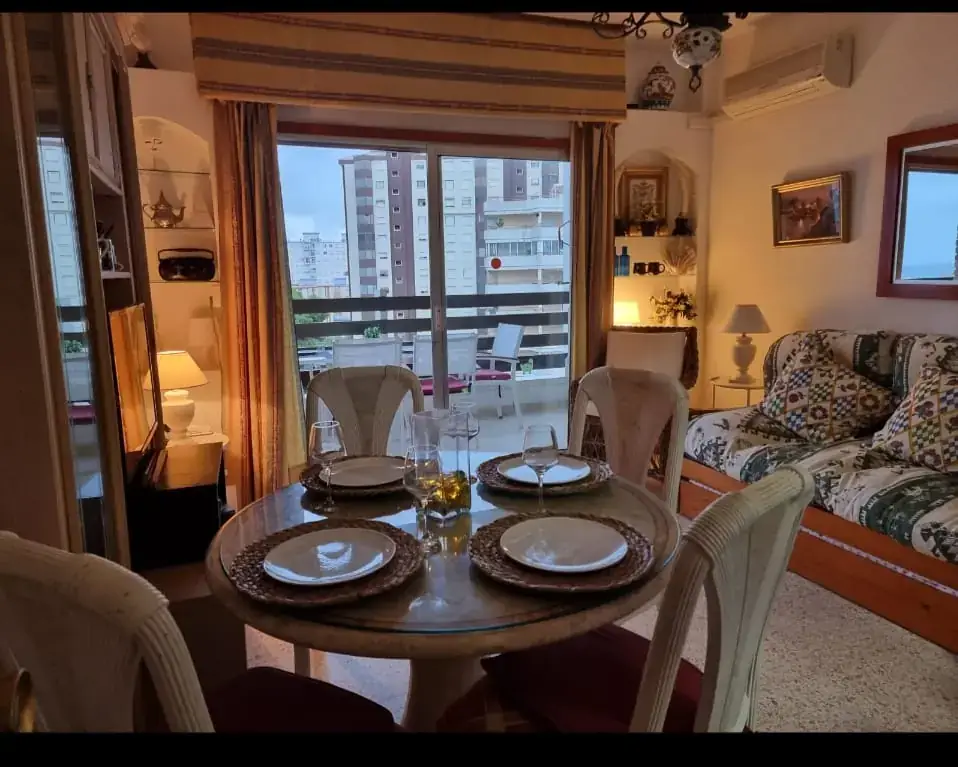
It is a very common situation in families with a spare flat: a son or daughter leaving home, a niece moving to Madrid or Barcelona, elderly parents who need a different home. The question comes straight away: do I give them a tenancy agreement, charge them something symbolic or let them live there for free? Each option has different consequences for the owner’s IRPF (Spanish personal income tax), for the aid the relative can apply for, for the deposit, for the padrón (the municipal register of residents) and, above all, for what happens if one day there is an inheritance or a divorce involved.
In this guide, based on what had been published as of 11 November 2026, we explain the three ways of letting a relative use a flat (a tenancy agreement, a comodato or loan for use, and a precario or occupancy at will), what the owner declares in each case, whether the reductions for letting a home are lost, which aid is ruled out, and an illustrative example with figures. We do not repeat what we have covered in other articles: tenants’ deductions are in “What tenants can deduct for rent in the 2025 and 2026 income tax returns in Madrid and Catalonia…”; the new scale of income tax reductions, in “100% income tax reduction if you lower the rent by more than 5%…”, and lodging the deposit, in “Rental deposits in Madrid and Barcelona in 2026…”.
The essentials in one minute
- You can let a flat to a relative with an ordinary LAU tenancy agreement or let them use it for free. If it is free and a use or a period has been agreed, it is a comodato (loan for use); if there is no period and no specific use, it is a precario and you can ask for it back whenever you want.
- If you let to your spouse or to a relative up to the third degree (including in-laws), the rental income you declare cannot fall below a minimum: 2% of the cadastral value (the official tax value of the property) a year, or 1.1% in municipalities whose values have been revised since 2012.
- If you let them use it for free, there is no rent to declare, but you are taxed every year on that same 2% or 1.1% of the cadastral value as deemed income, without being able to deduct any expenses.
- The reductions for letting a home (50% in general, 60%, 70% or 90% in specific cases) do not disappear because the tenant is family, but they are applied before comparing with the minimum: if the result is lower, you declare the minimum.
- A first- or second-degree relative (parents, children, parents-in-law, sons- and daughters-in-law, siblings, brothers- and sisters-in-law, grandparents and grandchildren) cannot receive the Bono Alquiler Joven (youth rent allowance) or the Community of Madrid rental aid for the flat you let to them.
- With a tenancy agreement, the deposit is lodged just as it would be with a stranger. Without one, the padrón and deductions become more complicated, and an inheritance or a divorce can turn into a problem.
Three ways of letting a relative use a flat
The first is a residential tenancy agreement, just like the one you would sign with anyone else. It is governed by the LAU: there is rent, a deposit of one month’s rent, a minimum term and extensions, and your relative has the same rights as any tenant. You agree the rent freely; in Barcelona, as a stressed residential market area, there are maximum caps but no minimums (we explain them in “Renting a flat in Barcelona in 2026…”).
The second is the comodato, the loan for use in the Civil Code. According to its article 1740, a comodato is by its nature free of charge: the owner keeps ownership and the relative acquires the use, but not the fruits (article 1741), so they cannot, for example, sublet it to others. Whoever receives the flat must pay the ordinary costs needed to use and maintain it (article 1743). And the owner cannot claim the flat back until the use for which it was lent has ended, unless they urgently need it (article 1749). That is why, in a comodato, it is worth putting in writing what the flat is lent for (for example, as the son’s home while he studies) and for how long.
If neither the duration of the comodato nor the use for which the lent item was intended was agreed, […] the lender may reclaim it at will.
Spanish Civil Code, article 1750 (our translation)
That is the third situation: the precario. It is what almost always happens when the flat is lent ‘by word of mouth’, with no price, no term and no specific use. The owner can ask for it back whenever they like, and the occupant does not have a tenant’s protection. It looks like the most flexible option, but the relative has no security at all and, if one day they refuse to leave, the owner will have to bring eviction proceedings for occupancy at will (desahucio por precario).
What the owner declares for income tax
If there is a tenancy agreement, the owner declares income from real estate capital: what they receive during the year minus deductible expenses (IBI, the municipal property tax, community fees, insurance, mortgage interest, repairs, depreciation…). The difference compared with a stranger lies in article 24 of the Income Tax Act. According to the Spanish Tax Agency’s 2025 income tax practical manual, when the tenant or subtenant is the owner’s spouse or a relative, “including relatives by marriage, up to and including the third degree”, the total net income cannot be lower than the amount resulting from the deemed real estate income rules in article 85.
In practice, for the 2025 tax year that minimum is 2% of the cadastral value a year, or 1.1% if the flat is in a municipality whose cadastral values were revised or set in a general collective valuation in force from 1 January 2012. If only some of the tenants are relatives, the minimum applies to their share. And if the income, after applying the reductions, is lower than that minimum, the minimum is entered on the tax return (box 0152 in the 2025 return).
And if you let them live there for free? Then there is no rent, but there is deemed income (imputación de rentas). The Tax Agency explains that the regime does not look at who actually uses the home but at whether it is available to the owner, and it only excludes, among other cases, the owner’s own main home, undeveloped land, properties used in a business and the family home whose use a judge has awarded to the former spouse. A flat lent for free to a son or daughter still generates deemed income: the same 2% or 1.1% of the cadastral value, in proportion to the days of the year, and according to the manual no expenses of any kind may be deducted from that amount. In other words, you pay the IBI and the community fees and cannot deduct them.
What stands out is that, under the 2026 rules, a very low rent and a free loan end up being taxed the same: in both cases you declare at least that percentage of the cadastral value. We show it with figures further down.
The reductions for letting a home: are they lost with a relative?
Not because the tenant is family. The reductions in article 23.2 of the Income Tax Act apply to positive net income from residential lettings, that is, when the flat meets the tenant’s permanent need for housing; not to seasonal lettings or holiday lets. For contracts signed from 26 May 2023, following the Housing Act (Law 12/2023), the Tax Agency’s manual sets out these percentages:
| Reduction | When it applies (contracts from 26-5-2023) |
|---|---|
| 90% | Same owner, new contract on a home in a stressed residential market area, with an initial rent more than 5% below the last rent of the previous contract, once updated |
| 70% | First letting of the home in a stressed area to a tenant aged 18 to 35; or letting to a public authority or a non-profit organisation for social housing or under a public programme with capped rent |
| 60% | Home with refurbishment works completed in the two years before the contract was signed |
| 50% | General rule, when none of the above cases applies |
| 60% | Contracts signed before 26-5-2023 (previous regime) |
Source: Spanish Tax Agency, 2025 income tax practical manual. The requirements are checked at signing and the reduction only continues while they are met. There is no reduction if the contract breaches article 17.6 of the LAU (rent caps in stressed areas), nor on amounts adjusted in a tax inspection.
With a relative, the reduction is calculated in the same way, but with a consequence that the manual makes clear: if the tenant is a relative, the reduced net income declared is the higher of the already reduced income and the family minimum. The lower the rent, the more likely it is that the reduction makes no difference, because the minimum ‘swallows’ the advantage. With a market rent, on the other hand, the income is usually above the minimum and the reduction works as it would with any other tenant. Outside stressed areas, the usual figure is 50%; in Barcelona, which has been declared a stressed area, the 90% or 70% may come into play if their requirements are met. If you are unsure about your municipality, check the Ministry of Housing’s list.
What changes with Royal Decree-law 29/2026? For contracts signed from 1 December 2026, a new scale of reductions ranging from 15% to 100% depending on the rent, the type of owner and the tenant (we explain it in “100% income tax reduction if you lower the rent by more than 5%…”). According to the Tax Agency’s bulletin on the decree, the article 24 family rule is kept and reworded: the minimum will be the cadastral value multiplied by an ‘average effective percentage’, obtained by dividing the deemed income by the sum of the cadastral values of the owner’s properties. From 1 January 2027, in addition, deemed income will be calculated with a scale based on the sum of cadastral values. All of this depends on the ratification vote held on 12 November: check the result before deciding.
Table: contract at market rent, low rent or free loan
| Contract at market rent | Contract at low rent | Free loan (comodato or precario) | |
|---|---|---|---|
| Governing law | LAU | LAU | Civil Code (articles 1740 to 1752) |
| Owner’s income tax | Net income (income minus expenses) with its reduction; usually above the minimum | Whatever results after the reduction, but never less than the family minimum (2% or 1.1% of the cadastral value) | Deemed income of 2% or 1.1% of the cadastral value, with no expenses deducted |
| Reduction of 50% to 90% | Applies as with any tenant | Applies, but may make no difference if the minimum is higher | None, because there is no rent |
| Deposit | One month’s rent, lodged with the Agencia de Vivienda Social (Madrid) or INCASÒL (Catalonia) | The same, one month of that rent | No LAU deposit; you can agree a guarantee in writing |
| Relative’s rights | Those of any tenant: minimum term, extensions, the spouse taking over in a divorce | The same | Use of the flat for the agreed use or period (comodato) or until the owner asks for it back (precario) |
| Bono Alquiler Joven and Madrid aid | Excluded if a first- or second-degree relative | Excluded if a first- or second-degree relative | Not applicable: no rent is paid |
| Tenant’s deduction | Possible if they meet the requirements of their region or of the state deduction | Possible, on what is actually paid | No: no rent is paid |
| If the relative divorces | The other spouse can stay if the judge awards them the use (LAU, art. 15) | The same | The Supreme Court treats it as a precario: the owner can recover it |
| Main risk | Nothing special if everything is declared | The tax saving being smaller than expected | Lack of security for both sides and disputes in inheritances and divorces |
Illustrative summary as of 11 November 2026, based on the Spanish Tax Agency’s 2025 income tax practical manual, the Civil Code, the LAU, Supreme Court judgment 548/2014 and the Community of Madrid’s official website. For contracts from 1-12-2026 and for 2027, see the previous section.
Illustrative calculation
Take a flat in the Community of Madrid with a cadastral value of 120,000 euros, in a municipality with values revised since 2012 (so 1.1% applies), which the parents let their daughter use for the whole of 2026. The contract, if there is one, is signed before 1 December 2026 and qualifies for the general 50% reduction. We assume 3,000 euros a year of deductible expenses (IBI, community fees, insurance and depreciation). The figures are made up for the example: the result is added to the owner’s other income and taxed at their income tax rate.
| Market rent: €1,100/month | Low rent: €300/month | Free loan | |
|---|---|---|---|
| Income for the year | €13,200 | €3,600 | €0 |
| Deductible expenses | €3,000 | €3,000 | Cannot be deducted |
| Net income | €10,200 | €600 | — |
| 50% reduction | −€5,100 | −€300 | — |
| Reduced net income | €5,100 | €300 | — |
| Family minimum or deemed income (1.1% × €120,000) | €1,320 | €1,320 | €1,320 |
| What the owner declares | €5,100 | €1,320 | €1,320 |
Illustrative example with assumed figures. It does not include the resulting tax, which depends on the rest of the owner’s income and on the region. If the cadastral value had not been revised since 2012, the percentage would be 2% (€2,400 in this example).
Look at the middle column: at 300 euros a month, the 50% reduction leaves 300 euros, but as the minimum is 1,320, 1,320 is declared. The tax result is the same as lending the flat for free, with two differences: the parents receive 3,600 euros a year and their daughter has a contract. And if the rent were 150 euros a month, with income below expenses, there would be no loss to deduct either: the 1,320-euro minimum would be declared all the same. A tax adviser can do this calculation with your real figures, including the calculation of the corresponding taxes.
Can your relative apply for rental aid?
This is one of the least known consequences. Royal Decree 42/2022, which regulates the state Bono Alquiler Joven, provides that the aid is not granted if the tenant or anyone living in the home is related to the landlord in the first or second degree by blood or by marriage, or is a partner or shareholder of the person or company letting the home. The Community of Madrid states the same in the Bono Alquiler Joven page of its official website (updated on 8 October 2026), which also requires applicants to be aged 18 to 35. Payment dates are covered in “Bono Alquiler Joven in Madrid: 1 to 15 December 2026 to get paid…”.
The Community of Madrid’s rental aid for young people and low-income groups follows the same line. The page for the 2025 call, whose application period ran from 4 November to 15 December 2025, puts it like this:
Not being related in the first or second degree to the landlord.
Official website of the Community of Madrid, 2025 housing rental aid (A858) (our translation)
New calls may change their rules, so if the 2026 call is published, check it; what is expected from it is summarised in “Community of Madrid rental aid 2026…”. To know who falls into each degree:
- First degree: parents and children; by marriage, parents-in-law and sons- and daughters-in-law.
- Second degree: grandparents and grandchildren, and siblings; by marriage, brothers- and sisters-in-law.
- Third degree: uncles, aunts, nephews and nieces, and great-grandparents and great-grandchildren. They are not covered by the exclusion from this aid, but they are covered by the article 24 income tax minimum.
- Fourth degree: cousins. Outside both rules.
And CASA 47, the state-owned public housing company? It is different: it is not aid for a flat let to you by a relative, but affordable rental homes let by the company itself. In the call for 442 homes open until 26 November 2026, according to the Ministry of Housing and the CASA 47 portal, there are no homes in the Community of Madrid (as of 9 November, the portal shows 71 in Catalonia), and applicants must not own a home, must have an income of between 2 and 7.5 times the IPREM (the public income indicator used for aid) depending on the home, and the rent must represent between 15% and 30% of the household’s net income. Living in your parents’ flat does not make you an owner. The details are in “CASA 47 opens 442 affordable rental homes until 26 November 2026…”.
Deposit: Agencia de Vivienda Social and INCASÒL
If you sign a tenancy agreement, the deposit works as with any tenant: one month’s rent for a home. In the Community of Madrid, the owner must lodge it with the Agencia de Vivienda Social (the regional social housing agency) within 30 working days of signing the contract (general regime), in person or online with a self-assessment. Late lodging carries a 2% surcharge, or 5% if more than a year has passed, and failing to lodge it can be penalised. In addition, the deposit receipt is essential for the tenant to claim the Madrid rent deduction. In Catalonia, the deposit is lodged with INCASÒL (the Catalan Land Institute). Deadlines, payment methods and refunds are covered in “Rental deposits in Madrid and Barcelona in 2026…”. With a free loan there is no LAU deposit, because there is no tenancy.
Registering on the padrón
The padrón must reflect where each person really lives, whether the flat is rented, lent or owned. The technical instructions of the National Statistics Institute for town halls (Resolution of 17 February 2020) allow the town hall to ask for a document showing the right to occupy the home, such as a current tenancy agreement with the latest rent receipt, or, if someone is already registered at that address, the written authorisation of an adult registered there who holds a title to the home. This gives the town hall no power to decide property questions: the padrón only proves where someone lives. With a contract, the process is straightforward; without one, each town hall states which documents from the owner it requires.
The tenant’s deduction
If your relative pays real rent, they may be entitled to deduct part of what they pay. The pages of the Spanish Tax Agency’s 2025 income tax practical manual that we have consulted (the Community of Madrid deduction and the Catalan one) do not include an exclusion for being related to the landlord, but they do include requirements that families sometimes fail to meet: in Madrid, being under 40, not exceeding the income limits, the rent exceeding 20% of the taxable base and holding the deposit receipt; in Catalonia, entering the landlord’s NIF (tax identification number) on the return. For the new 10% state deduction in Royal Decree-law 29/2026, the Tax Agency’s bulletin does not mention a family exclusion either, and it depends on the 12 November vote. All the requirements are in “What tenants can deduct for rent in the 2025 and 2026 income tax returns in Madrid and Catalonia…”. With a free loan there is nothing to deduct, and it is worth confirming your case with a tax adviser.
What happens in an inheritance or a divorce
Inheritance. If the owner dies, the flat passes to their heirs, who also inherit the situation it is in. With a tenancy agreement, the contract continues and the heirs become the landlords. With a comodato, under article 1742 of the Civil Code, the rights and obligations pass to the heirs of both parties, unless the loan was made with that particular relative in mind. With a precario, the heirs can ask for the flat back whenever they want. If there are several siblings and one lives in the flat, putting it in writing avoids a lot of disputes. What an inheritance costs in Madrid is explained in “How much an inheritance costs in Madrid in 2026: notary, land registry, taxes and lawyer”.
The relative’s divorce. If the son or daughter living in the flat separates, the way the flat was lent matters a great deal. With a tenancy agreement, article 15 of the LAU allows the spouse who did not sign the contract to stay in the home if the judge awards them its use; they must notify the owner within two months of being notified of the court decision. If you lent it for free and without a term, the Supreme Court has repeatedly held that it is a precario. In its judgment 548/2014 of 14 October, it restates its case law:
The situation of a person who occupies a home lent by its owner without consideration and without a fixed term, to be used by the borrower and their family as the marital or family home, is that of an occupant at will once the couple has split up, regardless of whether the right to use and enjoy the home as the family home has been awarded to them by a court decision.
Spanish Supreme Court, Civil Division, judgment 548/2014 of 14 October, citing that of 2 October 2008 (our translation)
In that case, the grandparents recovered the flat they had lent to their son and which a divorce agreement had awarded to his former wife and their daughter. The fact that the owner can recover it does not mean it is quick or easy: if the occupant does not leave, court proceedings are needed. And if it is the owners themselves who divorce, the flat is divided like the rest of their assets, with whatever contract or loan it has; we explain it in “What to do with the home in a divorce or separation in Madrid in 2026…”.
Risks of not having a contract
- For the relative, insecurity: in a precario, the owner (or their heirs) can ask for the flat back at any time.
- For the owner, lack of proof: if there is ever a disagreement, nothing is written down about the term, expenses or the condition of the flat.
- If the relative divorces, a loan without a term is treated as a precario, and recovering the flat may end up in court.
- In an inheritance, the siblings who do not live in the flat may not agree with the situation, and the one who lives there has no clear title.
- Without a contract, the relative has no rent deduction, and the padrón depends on the owner’s authorisation.
- If the relative pays something every month, that is rental income even without paperwork, and the owner must declare it; without a contract it is harder to prove what was agreed.
- What does not change with or without a contract: the owner declares at least 2% or 1.1% of the cadastral value.
- If you are going to sign in December 2026, first check the result of the 12 November vote and consult a tax adviser or a lawyer.
How we do it at Llavely
When the flat is for the family, what matters is putting the conditions in writing and running the numbers with an adviser. Sometimes, once the sums are done, it makes more sense to let the flat to someone else and for the son or niece to find their own home, with their own contract and, if they meet the requirements, with the aid they would not get by renting from their family. That is what Llavely is for, the rental market turned around: the tenant creates their verified profile once (our team checks their identity and income, and the documents are deleted afterwards), and owners and agencies invite them to view their home.
If you are an owner, you list for free and see verified candidates ranked by affinity; each home is reviewed by a member of the team within 24 hours before it goes live. Llavely does not handle payments: rent and deposit are paid directly to the owner. Rentals are open in the provinces of Madrid and Barcelona and free for tenants, owners and agencies. If you are looking for a flat, create your profile for free; if you have a home to let, list it for free. And if you are thinking of selling a home in the Community of Madrid, you can also do it with us for 2.5% + VAT, all included: you contact us and we take care of everything.
Frequently asked questions
Can I rent a flat to my son for less than the market price?
Yes, the rent is freely agreed between the parties (in Barcelona there are maximum caps, not minimums). But for income tax, if the tenant is your spouse or a relative up to the third degree, what you declare cannot be lower than 2% of the cadastral value a year, or 1.1% in municipalities with values revised since 2012. With a very low rent, you will end up declaring that minimum.
Do I have to declare anything if I let my son live in the flat for free?
Yes. Even if you charge nothing, the flat is not your main home and generates deemed real estate income: 2% or 1.1% of the cadastral value, in proportion to the days of the year, with no expenses deductible.
What is the minimum income for letting to a relative?
It is the rule in article 24 of the Income Tax Act: if you let to your spouse or to a relative up to the third degree, including relatives by marriage, the net rental income cannot be lower than the deemed income would be. If it comes out lower after the reductions, the minimum is declared.
Do I lose the 50% reduction if I let to a relative?
Not because they are family: the reduction applies in the same way to positive net income. But it is then compared with the family minimum and the higher amount is declared. With a market rent, the reduction usually makes a difference; with a low rent, the minimum can cancel it out.
Can my son receive the Bono Alquiler Joven if the flat is mine?
No. Royal Decree 42/2022 and the Community of Madrid exclude a tenant who is related to the landlord in the first or second degree, by blood or by marriage. The Community of Madrid’s 2025 rental aid says the same.
Do I have to lodge the deposit if I let to a relative?
Yes, if there is a tenancy agreement. In the Community of Madrid it is lodged with the Agencia de Vivienda Social within 30 working days of signing, and the receipt is needed for the tenant to claim the Madrid deduction. In Catalonia, with INCASÒL. With a free loan there is no LAU deposit.
What happens to the flat if my son gets divorced?
It depends on how you lent it. With a contract, his former spouse can stay in the home if the judge awards them its use (article 15 of the LAU). If you lent it for free and without a term, the Supreme Court considers it a precario and you can recover it, although court proceedings may be needed.
Sources
- The Standing Committee validates the royal decree-law on the social function of housing and repeals the one on extending rental contracts for a main home (Congress of Deputies press release, in Spanish, 12 November 2026)
- 2025 income tax practical manual: minimum computable income in the case of family relationships, articles 24 and 85 of the Income Tax Act (Spanish Tax Agency, consulted on 11 November 2026)
- 2025 income tax practical manual: reduction for letting properties used as homes (Spanish Tax Agency, consulted on 11 November 2026)
- 2025 income tax practical manual: deemed real estate income regime, concept and requirements (Spanish Tax Agency, consulted on 11 November 2026)
- 2025 income tax practical manual: calculating the amount of deemed income (Spanish Tax Agency, consulted on 11 November 2026)
- Main tax changes introduced by Royal Decree-law 29/2026 of 6 October (Spanish Tax Agency, October 2026)
- 2025 income tax practical manual, regional deductions of the Community of Madrid: renting the main home (Spanish Tax Agency, consulted on 11 November 2026)
- 2025 income tax practical manual, regional deductions of Catalonia: renting the main home (Spanish Tax Agency, consulted on 11 November 2026)
- Bono Alquiler Joven: requirements and latest actions (official website of the Community of Madrid, updated on 8 October 2026)
- Housing rental aid for young people and low-income groups 2025 (official website of the Community of Madrid, updated on 8 October 2026)
- Rental deposits (Community of Madrid, updated on 28 October 2026)
- Royal Decree 42/2022 of 18 January regulating the Bono Alquiler Joven and the State Housing Access Plan 2022-2025 (Noticias Jurídicas)
- Civil Code, book IV, title X: Loans, comodato (articles 1740 to 1752) (Noticias Jurídicas)
- Supreme Court judgment 548/2014 of 14 October, Civil Division, on a home lent by relatives and occupancy at will (El Notario)
- Urban Leases Act, article 15: separation, divorce or annulment of the tenant’s marriage (Conceptos Jurídicos)
- Technical instructions to town halls on managing the municipal register (padrón), Resolution of 17 February 2020 (Derecho Local)
- Open affordable rental calls, deadline 26 November 2026 (CASA 47 portal, consulted on 9 November 2026)