Renting · · 24 min read
Renting a Room in Spain in 2026: Which Contract You Sign, Your Rights and What the Housing Decrees Change
Is renting a room in Spain covered by the Urban Leases Act (LAU) or by the Civil Code? Since 8 October 2026, Royal Decree-law 29/2026 has brought rooms into the LAU and capped what can be charged for all the rooms in a flat. We explain the term and extensions, the deposit, who pays the bills, whether the landlord can come in, registering on the padrón (local census), rent aid, and what happens if the decree is not ratified on 12 November. With a comparison table and a checklist to use before you sign.
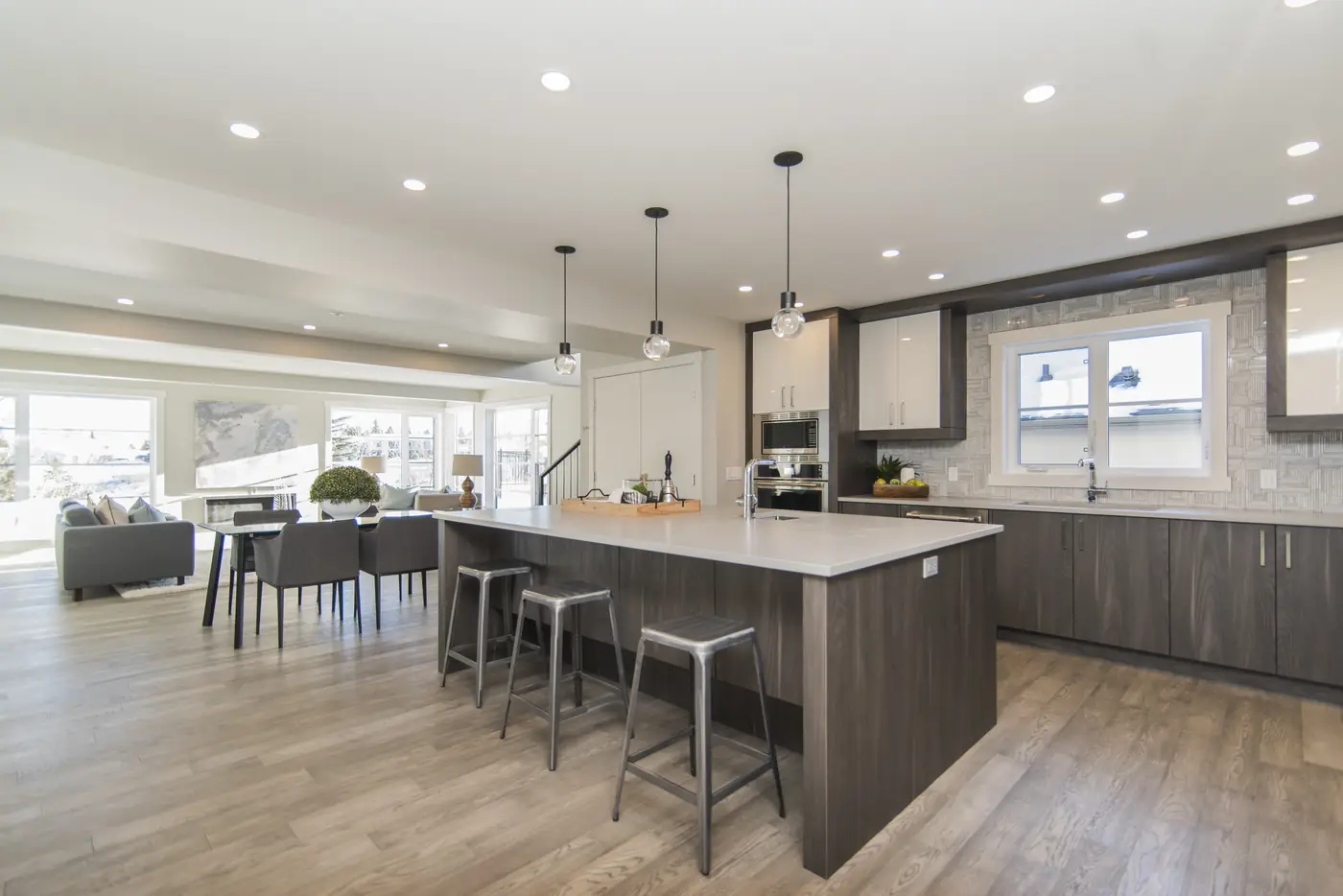
For many people in Spain, sharing a flat is the only way to live near work or university. And for years it has had an underlying problem: nobody knew for sure which law applied to someone renting a room. Some courts said the Urban Leases Act (Ley de Arrendamientos Urbanos, LAU), others the Civil Code, and in practice each contract said whatever the landlord wanted. Since 8 October 2026 that has changed: Royal Decree-law 29/2026 has expressly brought room rentals into the LAU and put a ceiling on what can be charged for all the rooms in a flat.
In this guide we go through, based on what the BOE (Spain's Official State Gazette) says as of 24 October 2026, which contract you sign today for a room, how long it lasts, what deposit can be asked for, who pays for electricity and water, whether the landlord can come in, how to register on the padrón, whether it counts for rent aid, and what changes if the owner lives in the flat. General tenant rights are covered in «Tenant rights in Spain in 2026…», the deposit in detail in «The rental deposit in Spain in 2026…» and the timetable of the vote in «Spain's Housing Decrees Vote on 12 November 2026…»; here we focus on what is specific to rooms.
Renting a room in Spain in 2026: the short answer
- Since 8 October 2026, renting a room to live in is a residential lease under the LAU: a main-home lease (vivienda habitual) if it is your permanent residence, or a temporary residential lease (vivienda temporal) if you are away from your home for a specific, provable reason.
- If it is your main home, you are entitled to stay at least five years, or seven if the landlord is a company, even if the contract says one, and you can leave after six months by giving 30 days' notice.
- The total charged for all the rooms let at the same time may not exceed the rent for the whole flat.
- The deposit (fianza) on a main-home lease is one month's rent, and in the Madrid region the landlord must also lodge it with the authorities when letting a room.
- Your room is your home in law: the landlord cannot enter it without your permission, except with a court order or when a crime is being committed.
- With a room contract you can register on the padrón, and rent aid such as the Bono Alquiler Joven (youth rent voucher) has accepted rooms, with its own rent caps.
- Room contracts signed before 8 October have no specific transitional rule, and if the decree is not ratified on 12 November rooms would go back to the previous situation.
Before 8 October: the LAU or the Civil Code?
Until now, neither the LAU nor the Civil Code mentioned rooms, and the courts did not follow a single approach. According to an analysis by lawyer Alejandro Fuentes-Lojo published in El Derecho, there were three positions. The majority view held that a room with use of shared areas is a residential lease under the LAU, as the Provincial Court (Audiencia Provincial) of Cádiz found in judgment 84/2006 of 18 July. Another classed it as a lease for a use other than housing. And a third left it outside the LAU altogether, subject to what was agreed and to the Civil Code, as the Provincial Courts of Ciudad Real (judgment 255/2017 of 14 September) and Burgos (judgment 494/2011 of 20 December) held.
In practice, many room contracts were drafted expressly under the Civil Code. That meant the term, the deposit and rent increases were whatever was agreed, without the minimums the LAU guarantees to the tenant of a home. That is why so many room contracts ran for a year, or ten months, with no extensions. And it is why the Government, in the preamble to Royal Decree-law 29/2026, speaks of preventing seasonal and room lets from being used to sidestep the rules on residential renting.
What the LAU now says about rooms
Royal Decree-law 29/2026 of 6 October, published in the BOE on the 7th and in force since the 8th, rewrites article 2 of the LAU. A main-home lease is one over a habitable building whose primary purpose is to meet the tenant's need for a home, and the law then adds that this includes renting only part of it:
…including the partial lease of a room or space in the dwelling.
Urban Leases Act (LAU), article 2.1, as worded by Royal Decree-law 29/2026
What determines the type of contract is not the label the parties give it, but what the room is used for. If it is where you live permanently, it is a main-home lease. If you are away from your home for a specific reason, such as a temporary job or a course, it is a temporary residential lease, which the LAU now regulates in article 2.3 and in the new article 9 bis. Excluded are rooms provided by non-profit social organisations in programmes for vulnerable people (article 5), tourist stays of up to 31 days subject to tourism rules, and hospedaje (lodging), that is, accommodation with services such as cleaning or meals, which the LAU expressly excludes from leases for non-residential use. The decree also respects rules adopted by the regions within their powers, such as Navarre's Regional Law 11/2026 regulating the letting of rooms.
Table: a room, a whole flat and a seasonal let
| Aspect | Room as main home | Whole flat as main home | Temporary let (flat or room) |
|---|---|---|---|
| Applicable law | LAU, art. 2.1, since 8-10-2026 (before, uncertainty between the LAU and the Civil Code) | LAU, art. 2.1 | LAU, arts. 2.3 and 9 bis (before, a non-residential use) |
| What it is for | Your permanent residence | Your permanent residence | A stay away from home for a real, provable reason that must be stated in the contract |
| Term | Minimum of 5 years, or 7 if the landlord is a company, if the tenant wishes to stay | Same | More than 31 days and, as a rule, no more than 12 months |
| If the tenant leaves early | After 6 months, with 30 days' notice, no compensation | Same | After 1 month, with 10 days' notice, no compensation |
| Rent limit | All rooms together may not exceed the rent for the whole flat; in a stressed area, also the limits in art. 17 | Free, except in a stressed area | In a stressed area, the IRAV caps the increase between successive contracts |
| Annual increase | As agreed, capped by the IRAV; until 31-12-2027, without a new agreement, 2% at most | Same | Capped by the IRAV; whether the 2% applies is unclear |
| Deposit and guarantees | 1 month's deposit and up to 2 months' additional guarantee | Same | Additional guarantee of 1 month at most |
| Rent-default insurance | Cannot be required of the tenant | Cannot be required | Cannot be required |
| Extension of up to 2 years under RDL 29/2026 | For contracts in force on 8-10-2026; for room contracts signed earlier, doubtful | Yes, subject to conditions | No |
| If RDL 28/2026 is ratified | In principle, renewal for 5 or 7 years, though the decree does not mention rooms | Renewal for 5 or 7 years and 6 months' notice | Does not apply |
Source: Law 29/1994 on Urban Leases, BOE consolidated text with the amendments made by Royal Decree-law 29/2026 (arts. 2, 9, 9 bis, 11, 17, 18 and 20); fifth and sixth final provisions of Royal Decree-law 29/2026; Royal Decree-law 28/2026; analyses by Sepín and Selectra of article 36 of the LAU. An indicative summary as of 24 October 2026; each contract must be checked on its own. IRAV: the Rental Housing Reference Index published by the INE.
Term and extensions of a room contract
If the room is your main home, the same rules on term apply as for a whole flat. Article 9 of the LAU allows any term to be agreed, but if it is less than five years, or seven where the landlord is a legal entity, the contract is extended year by year until that minimum is reached, unless the tenant gives at least 30 days' notice that they do not wish to continue. In addition, after six months the tenant may leave at any time by giving 30 days' notice, and since 8 October the law states that this does not entitle the landlord to compensation. Once the five or seven years are up, tacit renewal and the extraordinary extensions come into play, which we explain in «Your Rental Contract in Spain Is Ending in 2026…».
If the room is for a temporary stay, the contract must last more than 31 days and, as a general rule, no more than twelve months, and it must state the reason for the stay, which the landlord must be able to prove. If it lasts more than twelve months without a reason that justifies it, or more than two temporary contracts are chained between the same parties for the same home, the first one is treated as a main-home lease, with its five or seven years. A temporary tenant can leave after one month by giving ten days' notice.
And room contracts signed before 8 October? The decree includes a transitional provision for earlier seasonal contracts, which keep their rules until they end and cannot be extended, but not a specific one for rooms let as a main home, as the analysis in Emprendedores magazine points out. If your room contract is older and was signed under the Civil Code, it is unclear whether the LAU minimums now apply to it: it is one of the points worth checking before you assume you can stay five years or that you can be asked to leave.
The owner lives in the flat: does anything change?
The new wording of article 2 does not distinguish between a flat where only tenants live and the home where the owner lives and lets a room. The test is the same: if the room meets your need for a home, it is a residential lease. The analyses we have consulted do not deal specifically with how, for example, a minimum five-year term fits with living day to day with the owner, so this is one of the grey areas of the reform.
There is one difference worth being clear about: if, besides the room, the owner provides services such as cleaning, meals or changing the bed linen, it may be a hospedaje (lodging) contract, which is not a lease and which the Supreme Court describes as a complex contract. In that case the LAU rules we explain here do not apply. If you are going to rent a room in the owner's own home, ask for the contract to state clearly what is being let, which areas are shared and which services are included.
How much can be charged for a room and how much it can go up
The big financial change is in the new paragraph 9 of article 17 of the LAU. The landlord can split the rent between the rooms as they wish, for example charging more for the outward-facing one with its own bathroom, but the total has a ceiling:
…may not exceed the amount of the rent under a single lease of the whole dwelling.
Urban Leases Act (LAU), article 17.9, as worded by Royal Decree-law 29/2026
A simple example: if the whole flat would let for €1,200 a month, four rooms let at the same time may not add up to more than €1,200, even if one pays €350 and another €250. The rule leaves a question that experts point out: it does not say how the rent for the whole flat is set when it has never been let as a whole. Carlos Torrejón, academic director of the Master's in Real Estate Management at UNIR, told Emprendedores that the rule does not specify how that rent should be set when there is no previous contract to serve as a reference. If the home is in a stressed residential market area (zona tensionada), the rent for the whole flat or the total of the rooms must also respect the limits of Law 12/2023 on the right to housing; there are none declared in the Madrid region, as we explain in «Stressed rental areas in Spain in 2026…».
Once signed, the rent can only go up once a year if the contract provides for it, and never by more than the Rental Housing Reference Index (Índice de Referencia de Arrendamientos de Vivienda, IRAV) published by the INE, Spain's national statistics office (article 18). In addition, the sixth final provision of Royal Decree-law 29/2026 states that, for updates of residential leases until 31 December 2027, the increase may not exceed 2% without a new agreement. If your room is your main home under a contract signed on or after 8 October, that limit covers you; for older contracts governed by the Civil Code, the prudent course is not to go above 2% without discussing it. The calculation with examples is in «How Much Can Your Rent Go Up in Spain in 2026 and 2027…».
Deposit, guarantees and rent-default insurance
As a main-home lease, a room carries a compulsory deposit of one month's rent. The landlord can also ask for an additional guarantee, such as a bank guarantee or a cash deposit, of up to two months' rent on contracts of up to five or seven years; on a temporary let, that additional guarantee may not exceed one month. What the landlord can no longer do is require rent-default insurance: under the new article 36, the tenant may in no case be required to take out insurance against non-payment of rent or similar cover. The landlord may take it out, but at their own expense.
In the Madrid region, the deposit does not stay in the landlord's account: it has to be lodged with the Agencia de Vivienda Social (the regional social housing agency). The regional government itself answers that the obligation to lodge it also applies to the letting of rooms, within the 30-day period stated on its information page. And at the end of the contract, the law now calls for a document signed by both parties on the condition of the home: if it is not signed or does not record any damage, it is presumed, unless proven otherwise, that the tenant returned it in good condition. For a room, it is worth having that document distinguish what is yours from what is shared. Deadlines and how to claim the deposit back are in «The rental deposit in Spain in 2026…».
Bills and costs: who pays for electricity, water and internet
Article 20 of the LAU says that services measured by individual meters, such as electricity, water or gas, are always payable by the tenant. In a shared flat, however, the meters usually cover the whole flat, not each room, so the usual approach is one of two: bills included in the rent, or bills split between the tenants. The law does not set how to split them; what matters is that the contract states it in writing and that you can see the bills.
- Taxes on the property, such as the IBI (local property tax), cannot be passed on to you unless you are the person legally liable for them.
- Estate agency and contract-drafting fees cannot be passed on to the tenant, directly or indirectly.
- General building costs that cannot be individualised, such as community fees, can only be charged to you if agreed in writing with their annual amount; in buildings without a community of owners, they cannot be charged to the tenant.
- Other non-essential services only if you ask for them in writing after being told they are optional and what they cost.
Can the landlord enter your room?
Not without your permission. The room you live in is your home in law, and the Spanish Constitution protects it:
The home is inviolable. No entry or search may be made without the occupant's consent or a court order, except in flagrante delicto.
Spanish Constitution, article 18.2
Shared areas are a different matter: what the landlord can do in the living room or kitchen depends on what the contract says and, above all, on whether or not they live in the flat. According to Legálitas, the landlord cannot enter each tenant's room or use their belongings. What you must allow is access for necessary repair work. If the owner keeps a key to your room, it is reasonable for the contract to state that it will only be used with your permission or in an emergency.
Registering on the padrón in a rented room
Yes, you can, and in many cases it is in your interest: the padrón (municipal register of residents) is the gateway to your local health centre, your children's school and a lot of aid. The technical instructions on the municipal padrón, approved by the INE and the Ministry in 2020, state that it must reflect the address where each person actually lives. The town hall can ask for a document showing you occupy the home, and these include a current rental contract, with the latest receipt. If other people are already registered at the address, written authorisation from an adult registered there who holds title to the home may be enough.
The town hall can carry out checks, but it can only refuse registration by a reasoned decision, which can be appealed, and if it does not reply within three months the application is deemed accepted. That is why it matters that the room contract is in your name and in writing: since 8 October, moreover, the LAU requires it to be put in writing if the tenant asks.
Rent aid if you rent a room
Renting a room does not rule you out of aid, but there are separate caps. In the Madrid region, the Bono Alquiler Joven, €250 a month for young people aged 18 to 35, has required the rent for a room not to exceed €300, or €450 in Madrid city and the other municipalities in its annex, and a certificado de empadronamiento (padrón registration certificate) has been among the documents requested. The new State Housing Plan 2026-2030 provides for young people up to €200 a month in the case of rooms, with a maximum rent of €600, according to what was published in April 2026; the final requirements are set by each region in its call for applications.
For all of them, the essentials are the same: a contract in your name, in writing, and the room being your main home. A verbal agreement or a contract only in another flatmate's name tends to complicate the application. Deadlines and requirements are in «Madrid's Bono Alquiler Joven (Youth Rent Voucher)…» and «Comunidad de Madrid Rent Aid 2026…».
What happens if the decree is not ratified on 12 November
A royal decree-law applies from the date its text says, but the Constitution requires Congress to decide whether to ratify or repeal it within thirty days. As Parliament has been dissolved, the vote falls to the Standing Committee (Diputación Permanente), and the expected date, according to Europa Press, is 12 November 2026. Royal Decree-laws 28/2026 and 29/2026 will be voted on. Everything in this guide about rooms comes from 29/2026.
- If 29/2026 is ratified: rooms remain within the LAU, with the ceiling on total rents, the limited guarantees and the other rules we have explained.
- If it is not ratified: it is repealed from the date the decision is published in the BOE. Articles 2 and 17 of the LAU would lose the reference to rooms and the previous situation would return, with the uncertainty between the LAU and the Civil Code. The text does not say what happens to contracts signed while it was in force: this already happened with Royal Decree-law 26/2026, which also covered rooms and which Congress did not ratify on 2 October.
- If 28/2026 is ratified: from 15 November main-home leases would be renewed for periods of five or seven years, with six months' notice from the landlord. That decree does not mention rooms; in principle it would reach those that are a main home, as long as 29/2026 remains in force.
- If 28/2026 is not ratified: it would never apply, and the three-year tacit renewal and four months' notice would remain.
Checklist before signing a room contract
- Check who is letting: ask for the owner's ID and a nota simple (land registry extract showing who owns the property), or written authorisation if someone else is letting, such as a tenant subletting.
- Read what type of contract it is: main home or temporary. If it is temporary, it must state the reason and last more than 31 days and, as a rule, no more than twelve months.
- Make sure the contract identifies your room, the shared areas you can use and the furniture included.
- Check the rent, the payment date and the account, and ask how much is charged for the other rooms: the total may not exceed what the whole flat would let for.
- Look at the update clause: without one there are no increases, and with one the cap is the IRAV and, until the end of 2027, 2% without a new agreement.
- Ask how bills and internet are paid: included in the rent or split, with access to the bills, and make sure it is in writing.
- Check the deposit (one month on a main-home lease) and any additional guarantee, and ask for proof it has been lodged. Do not accept being required to take out rent-default insurance.
- Read the house rules and what the contract says about visitors, keys and the landlord's access.
- Take dated photos of the room and shared areas on the day you move in, and attach them to the contract.
- Do not pay anything before seeing the room and signing, and never in cash without a receipt or by untraceable methods; the most common traps are in «Rental scams in Spain in 2026…».
- If in doubt, especially if your contract predates 8 October or the owner lives in the flat, consult a lawyer, a tenants' association or the housing office of your town hall or region.
How we do it at Llavely
Many of the problems with rooms start before signing: not knowing who the owner is, not knowing who you will be living with, or paying a reservation fee for a room you have never seen. That is why Llavely is renting the other way round: tenants create their verified profile once, with their identity and income checked (if anything doesn’t add up, a member of our team reviews it), and it is landlords and agencies who invite them to view their property. It is free for tenants, landlords and agencies, with every feature; for tenants, it is always free.
Let's be honest: no platform decides which law applies to your contract or which decree is ratified; that is set by the law and by what you sign. What we do is make sure landlord and tenant start with verified information and clear written terms. Rentals are already open in the provinces of Madrid and Barcelona: if you are looking for a room or a flat, create your profile for free; if you are a landlord or an agency, list your property for free. You can paste the text of the listing you already have, and a member of our team checks every property in under 24 hours before it goes live. In the rest of Spain there is a waiting list: sign up with your areas and we will email you when we open there. And if you are thinking of selling a home in the Madrid region (Comunidad de Madrid), you can already do so with us for 2.5% + VAT, only if you sell, and request your free valuation.
Frequently asked questions
Is renting a room in Spain governed by the LAU or the Civil Code?
Since 8 October 2026, by the LAU: Royal Decree-law 29/2026 includes in article 2 the partial lease of a room or space when its purpose is to meet the tenant's need for a home. Before that, the courts did not follow a single approach and many contracts were signed under the Civil Code. If the decree is not ratified, that situation would return.
How long does a room rental contract last?
If the room is your main home and the contract was signed on or after 8 October 2026, you are entitled to stay at least five years, or seven if the landlord is a company, even if the contract says less, and you can leave after six months with 30 days' notice. If it is a temporary let, it lasts more than 31 days and, as a rule, no more than twelve months.
How much deposit can I be asked for on a room?
On a main-home lease, one month's deposit plus an additional guarantee of up to two months; on a temporary let, the additional guarantee may not exceed one month. You cannot be required to take out rent-default insurance. In the Madrid region the landlord must also lodge the deposit when letting a room.
Can my landlord enter my room without permission?
No. The room you live in is your home in law, and the Constitution (article 18.2) prohibits entry without the occupant's consent or a court order, except in flagrante delicto. What happens in shared areas depends on the contract and on whether the owner lives in the flat. You must allow access for necessary repair work.
Can I register on the padrón in a rented room?
Yes. The padrón must reflect where you actually live, and a current rental contract with the latest receipt is accepted as proof that you occupy the home. The town hall can carry out checks, but it can only refuse registration by a reasoned decision.
Can I apply for the Bono Alquiler Joven if I rent a room?
Yes, with separate caps: in the Madrid region the rent for the room could not exceed €300, or €450 in Madrid city and the other municipalities in the annex. The State Plan 2026-2030 provides up to €200 a month for rooms with a rent of up to €600; the requirements are set in each call for applications.
How much can be charged for the rooms in a flat?
The landlord can set a different price for each room, but the rents of all the rooms let at the same time may not add up to more than the rent for the whole flat (article 17.9 of the LAU). Stressed areas have additional limits; there are none declared in the Madrid region.
What happens to my room contract if the decree is not ratified on 12 November?
If Royal Decree-law 29/2026 is not ratified, it is repealed from the date the decision is published in the BOE and the LAU no longer mentions rooms. The text does not say what happens to contracts signed while it was in force; if yours dates from that period, keep all your paperwork and consult a lawyer.
Sources
- The Standing Committee validates the royal decree-law on the social function of housing and repeals the one on extending rental contracts for a main home (Congress of Deputies press release, in Spanish, 12 November 2026)
- Law 29/1994 of 24 November on Urban Leases, consolidated text: articles 2, 3, 4, 5, 9, 9 bis, 11, 17, 18 and 20 (BOE, last amended 7 October 2026)
- Royal Decree-law 29/2026 of 6 October adopting urgent measures to protect the social function of housing and expand the supply of affordable housing (BOE, 7 October 2026)
- Royal Decree-law 28/2026 of 6 October adopting urgent measures to strengthen the stability of main-home leases (BOE, 7 October 2026)
- Spanish Constitution, consolidated text: articles 18.2, 78.2 and 86.2 (BOE)
- Resolution of 17 February 2020 of the INE and the Directorate-General for Regional and Local Cooperation issuing technical instructions to town halls on managing the municipal padrón (BOE, 2 May 2020)
- Rental deposits (Fianzas de arrendamiento) (Comunidad de Madrid, updated 13 October 2026)
- The Comunidad de Madrid approves the Bono del Alquiler Joven with €250 a month (Comunidad de Madrid, 14 September 2022)
- How to apply for the Bono Alquiler Joven in the Comunidad de Madrid: requirements and documents (Genbeta, 23 September 2022)
- It's official: aid of up to €300 a month for young renters for up to 4 years (El Español, 25 April 2026)
- Rules applicable to room rental contracts, by Alejandro Fuentes-Lojo Rius (El Derecho, 13 June 2018)
- 2026 reform of the LAU: what is new in leases (Sepín legal blog, 15 October 2026)
- New housing decree: the legal gap left hanging for those who let flats by the room (Emprendedores, 16 October 2026)
- Housing decree on room rental contracts: are rents limited? (JL Casajuana Abogados, 8 October 2026)
- The insurance your landlord can no longer require from 8 October (Selectra, 9 October 2026)
- Tenants and landlords: can the owner come and go as they please in a shared flat? (Legálitas, 4 February 2021)
- Congress will vote on the housing decrees on 12 November: key points of a session between the general strike and the 29 November election (Moncloa.com with Europa Press, 17 October 2026)