Renting · · 11 min read
Seasonal rentals in Spain in 2026: the register struck down, the decree voted down and supply that keeps growing
Seasonal (temporary) lets now account for almost three in ten rental listings in Spain, while their regulation has had a turbulent year: the Supreme Court struck down the national Single Rental Register and Congress has just rejected the decree that was going to restrict them. We explain what is in force today and what you should know.
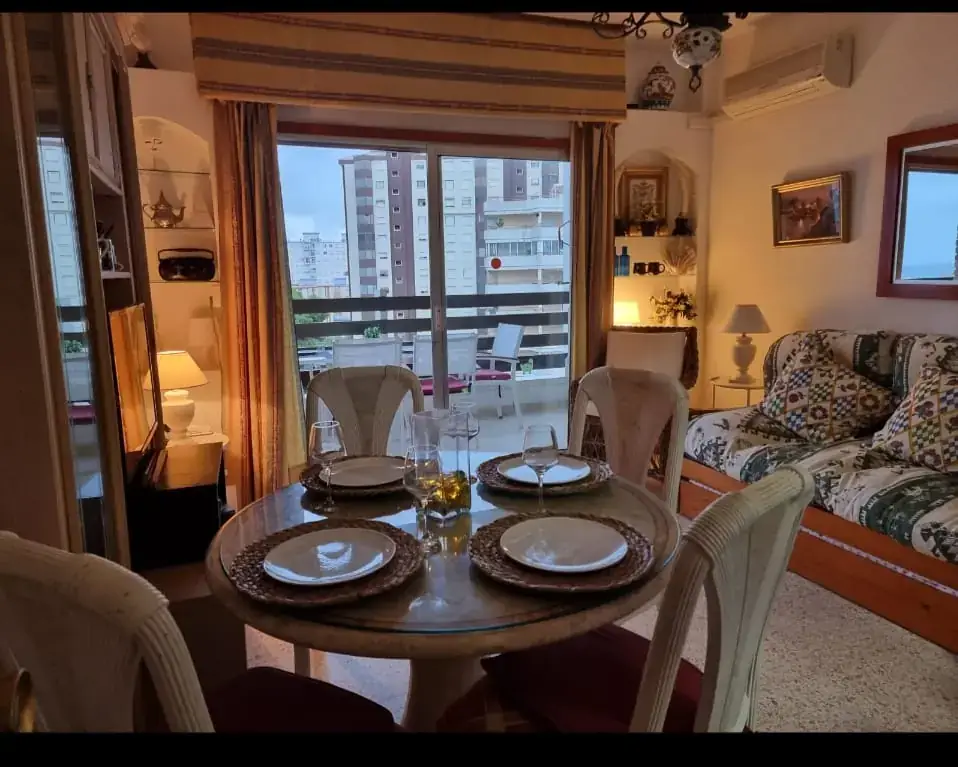
The seasonal let (alquiler de temporada), the kind signed to cover a temporary housing need such as a work posting, a course of study or medical treatment, has gone in a few years from a niche to a very significant part of the market. At the same time, it has become the focus of the regulatory debate: for some it is a way round the limits of the Housing Law (Ley de Vivienda); for others, a legitimate response to genuine demand for short stays.
2026 has been a particularly eventful year. In May the Tribunal Supremo (Supreme Court) struck down the Registro Único de Arrendamientos (Single Rental Register) that the State had made compulsory in July 2025. Catalonia and Navarre have passed their own rules. And at the end of September the Government approved a decree-law imposing new rules on seasonal contracts, but Congress repealed it on 2 October, just two days after it came into force. We review the situation with figures and dates.
What a seasonal let is in legal terms
The Ley de Arrendamientos Urbanos (LAU, Spain's Urban Tenancies Act) does not treat a seasonal let as a residential tenancy but as a tenancy for a use other than housing. The difference is crucial: a contract for a main residence gives the right to a minimum term of five years, or seven if the owner is a company, and is subject to rent limits in stressed areas (zonas tensionadas). A seasonal let is governed essentially by whatever the parties agree.
That is why the key has always been the reason for the let. A seasonal contract is only legitimate if it meets a genuinely temporary need of the tenant and the home does not become their permanent residence. When a flat is let on a seasonal contract to someone who in fact lives there on a stable basis, the courts may find that the law is being circumvented (fraude de ley) and treat it as a main-residence tenancy.
The growth in supply, in figures
Data from property portals shows a clear shift in supply towards seasonal lets. According to idealista, in the second quarter of 2026 seasonal rental listings grew by 13% year on year, while long-term rental listings remained practically flat, with a change of -0.2%. Seasonal lets now represent 29% of all rental supply in the country.
In some cities the trend is much more pronounced. An analysis by the OCU (Spain's consumers' organisation) of listings published on idealista on 17 March 2026 found that in Barcelona 72% of rental supply was seasonal, with more than 1,900 temporary listings compared with just over 700 long-term ones. In eight of the city's ten districts, temporary listings exceeded 80%.
| City | Seasonal share of supply | Premium per m² over long-term rentals |
|---|---|---|
| Barcelona | 72% | 16.9% |
| Madrid | 34% | 34.1% |
| Seville | 34% | 21.9% |
| Valencia | 31% | 13.4% |
Source: OCU, analysis of rental listings published on idealista on 17 March 2026.
The same study found that seasonal lets are consistently more expensive. In Madrid, the price per square metre of temporary listings was 34.1% higher than for long-term ones; in Seville, 21.9%; in Barcelona, 16.9%; and in Valencia, 13.4%. From the owner's point of view, the higher price comes with less exposure to regulation and to prolonged non-payment.
Contract data points in the same direction. In Catalonia, deposits lodged with the Incasòl (the Catalan public body where rental deposits are held) showed that seasonal contracts rose from 6.1% to 11% of new contracts in the first quarter of 2025, after a 52% increase in one year. And in September 2026 the Ministry of Consumer Affairs (Ministerio de Consumo) estimated that 1.15 million people in Spain live in seasonal or room rentals, of whom around 422,000 would have preferred a main-residence tenancy.
The Single Rental Register: from compulsory to struck down
Royal Decree 1312/2024 (Real Decreto 1312/2024) created the Registro Único de Arrendamientos and the Ventanilla Única Digital de Arrendamientos (Digital Single Rental Window) to apply in Spain the European Regulation 2024/1028 on data relating to short-term rentals. The rule came into force on 2 January 2025 and its use was compulsory from 1 July 2025. It affected tourist and seasonal lets, of whole homes or rooms, advertised on online platforms.
The system required owners to obtain, through the Registro de la Propiedad (Land Registry), a registration number that had to appear in every listing. Platforms, for their part, had to send data on their activity to the single window periodically. By 27 June 2025, registrars had approved 90,046 applications, 83.65% of those submitted up to then.
With compulsory registration came the rejections. Between July and August 2025, 68,594 applications were processed and 34,529 were refused, roughly half, according to data from the Ministry of Housing (Ministerio de Vivienda). At the end of August 2025 there were 174,901 active registrations and 51,692 had been revoked. In 2026 the Consejo General del Notariado (General Council of Notaries) went as far as speaking of administrative hypertrophy because of the appeals and procedures the system generated.
The turning point came with Supreme Court judgment 620/2026 of 19 May 2026, which ruled on an appeal by the Generalitat Valenciana (Valencian regional government) and was published in the BOE (Spain's Official State Gazette) on 8 June. The court concluded that the State lacks the power to impose a single registration procedure linked to the Land Registry and struck down the provisions that regulated it. The Digital Single Window does remain, as a tool for coordination and data exchange between authorities and platforms.
In practice, anyone who obtained a national registration number should now check what their autonomous community (region) requires, because the regional registers of tourist homes are back at centre stage. The platforms' reporting obligations deriving from the European regulation remain in force.
The decree that lasted two days
The most ambitious attempt to regulate seasonal lets at national level was Royal Decree-law 26/2026 (Real Decreto-ley 26/2026), approved by the Council of Ministers on 29 September, published in the BOE on the 30th and in force from 1 October. Its content on seasonal lets was broad:
- Definition: a seasonal let was tied to the tenant being away from their main residence for a justified, provable reason.
- Burden of proof: it was for the owner to prove the reason; without it, the contract was treated as a main-residence tenancy.
- Duration: a minimum of 31 days and a maximum of 12 months, including extensions.
- Chaining: more than two consecutive temporary contracts between the same parties for the same home turned the first into a main-residence contract.
- Guarantees: any additional deposit was limited to one month's rent, and successive rent increases to the IRAV (the official rental update index).
- Rooms: these came under the LAU and the total rent could not exceed that of the whole home.
On 2 October 2026, the full Congress refused to validate it by 178 votes against, from PP, Vox, Junts and UPN, to 172 in favour. The decree was repealed. It is the second failed attempt this year: in April Congress had already voted down Royal Decree-law 8/2026, which provided for an extraordinary extension of contracts. The Minister for Housing, Isabel Rodríguez, has proposed turning the measures into a bill to be processed, with amendments, in Parliament.
One legal question remains open: what happens to contracts signed during the two days the rule was in force. Published analyses suggest they could remain subject to its terms until there is legal or judicial clarification, so anyone who signed on those dates would do well to consult a professional.
Catalonia and Navarre go their own way
Where there are rules in force is at regional level. In Catalonia, Law 11/2025 of 29 December (Ley 11/2025), which stems from Decree-law 2/2025, has applied since 1 January 2026. It subjects seasonal lets without a holiday purpose, that is, those linked to work, study, medical reasons or temporary needs, to the same rent limits as main-residence contracts in stressed areas. The contract must state and prove the purpose, and for room rentals the total rent cannot exceed the maximum for the whole home.
Navarre passed Regional Law 11/2026 of 2 July (Ley Foral 11/2026), regulating room rentals, published in the BOE on 28 July. It limits seasonal contracts to one year, requires the reason to be stated with supporting documents and, in stressed areas, prevents the total rent for rooms from exceeding the maximum applicable to the whole home. Contracts will have to be entered in a regional register from 1 January 2027.
In the rest of Spain, following the repeal of the decree, seasonal lets are still governed by the LAU as a use other than housing, by whatever the parties agree and by the courts' case law on circumventing the law.
What tenants and owners should bear in mind
For tenants, the first thing is to make sure that the temporary reason stated in the contract is genuine. If you are actually going to live in the flat on a stable basis, a seasonal contract may leave you without the protections of a main-residence tenancy, such as the minimum term or the cap on increases. In Catalonia and Navarre, regional rules also give you additional tools.
For owners, seasonal lets offer flexibility but demand rigour: document the reason, match the duration to the real need and avoid chaining contracts with the same tenant. If the home is advertised on platforms, it is worth checking which regional register applies following the Supreme Court ruling. And since the Government intends to take up regulation again through Parliament, it is reasonable to expect new rules in the coming months.
At Llavely we prioritise main-residence lets with verified tenant and owner profiles, a way of reducing the uncertainty that often pushes many owners towards seasonal lets.
Frequently asked questions
What is a seasonal let?
It is a contract to cover a tenant's temporary housing need, such as a work transfer, a course of study or medical treatment. The LAU treats it as a tenancy for a use other than housing, so it does not have the five- or seven-year minimum term of a main-residence tenancy. Its validity depends on the temporary reason being genuine.
How long can a seasonal contract last?
The LAU does not set a general maximum term, and the decree that limited it to between 31 days and 12 months was repealed by Congress on 2 October 2026. In Navarre, Regional Law 11/2026 does limit these contracts to one year. In any case, the duration must be consistent with the reason that justifies the contract.
Is the Single Rental Register still compulsory?
Not in its national form. In its judgment of 19 May 2026 the Supreme Court struck down the single registration procedure linked to the Land Registry, finding that the State did not have the power to impose it. The Digital Single Window remains for exchanging data with platforms, and every owner should check the registration requirements of their autonomous community.
What happened to the decree regulating seasonal lets?
Royal Decree-law 26/2026 came into force on 1 October 2026, but Congress refused to validate it the next day by 178 votes to 172, so it was repealed. It included the obligation to prove the reason, a term of 31 days to 12 months and a maximum additional deposit of one month's rent. The Government has proposed processing those measures as a bill.
Do the stressed-area limits apply to seasonal lets?
Under current national rules, not directly, because a seasonal contract is not a main-residence tenancy. In Catalonia, however, Law 11/2025 has since January 2026 extended the rent limits to non-holiday seasonal contracts in stressed areas. Navarre limits the total rent for rooms in those areas.
What happens if I sign a seasonal contract but live there permanently?
If the temporary reason is not genuine, a judge may find that the law has been circumvented and treat the contract as a main-residence tenancy, with its minimum term and other guarantees. It is worth keeping evidence of how the home is used. If in doubt, it is advisable to get advice before signing or making a claim.
Are seasonal lets more expensive?
Yes, according to the available data. An OCU analysis from March 2026 of idealista listings found that the price per square metre for seasonal lets was 34.1% higher than for long-term rentals in Madrid and 16.9% higher in Barcelona. They are usually furnished and often include utilities, which explains part of the difference.
How much has the supply of seasonal lets grown?
According to idealista, seasonal listings grew by 13% in the second quarter of 2026 compared with the previous year and now account for 29% of all rental supply in Spain. In Barcelona, the OCU counted in March 2026 that 72% of rental listings were temporary.
What should a properly drafted seasonal contract include?
It should state in writing the specific reason for the temporary let and, ideally, documents that prove it, such as a temporary employment contract or a course enrolment. It is also wise to set a duration in line with that reason, the rent, the deposit and how costs and utilities are shared. In Catalonia and Navarre, proving the purpose is a legal requirement.
Sources
- The fall in long-term rental supply remains most marked in stressed areas (idealista, 21 July 2026)
- Trends in seasonal rentals (OCU, March 2026)
- Ministry of Consumer Affairs estimates that more than a million people live in seasonal or room rentals (idealista, 7 September 2026)
- Price of new regulated rentals falls 5% and seasonal contracts soar (Ara, 17 June 2025)
- The new tourist and seasonal rental register becomes compulsory from this Tuesday (Forbes España, 29 June 2025)
- The new tourist rental register received 68,500 applications over the summer and half were rejected (Bolsamanía/Europa Press, 2025)
- Notaries criticise administrative hypertrophy in short-term rental regulation (idealista, 21 July 2026)
- The Supreme Court partially strikes down the Royal Decree regulating the Registro Único de Arrendamientos – Single Rental Register (Notarios y Registradores, 2026)
- Alert: Supreme Court judgment on the Single Register of short-term rentals (Andersen, June 2026)
- The Supreme Court strikes down the Single Register of short-term rentals (Uría Menéndez, 2026)
- Referencia del Consejo de Ministros – Council of Ministers summary of 29 September 2026 (La Moncloa)
- The Government requires every seasonal let to be justified and restricts room rentals (idealista, 30 September 2026)
- A majority of MPs vote down the two housing decrees (idealista, 2 October 2026)
- Congress rejects Royal Decree-law 8/2026 on rental extensions (Iberley, 2026)
- Catalonia regulates seasonal tenancies (Cuatrecasas, 2026)
- Catalonia approves capping the price of seasonal and room rentals (idealista, December 2025)
- Ley 29/1994, de 24 de noviembre, de Arrendamientos Urbanos – Urban Tenancies Act 29/1994 of 24 November, consolidated text (BOE)
- Ley Foral 11/2026, de 2 de julio – Navarre Regional Law 11/2026 of 2 July regulating room rentals (BOE, consolidated text)