Renting · · 23 min read
Viewing a rental flat in Spain: what to check and what to ask before you sign (2026 checklist, Madrid and Barcelona)
In a 30-minute viewing you need to check nine things in the flat, ask for four documents (energy certificate, cédula de habitabilidad in Catalonia, nota simple and utility bills) and ask about the term, deposit and guarantees, costs, the annual rent increase and, in Barcelona, the stressed-area cap. And never pay anything before you have seen it. With two tables to print.
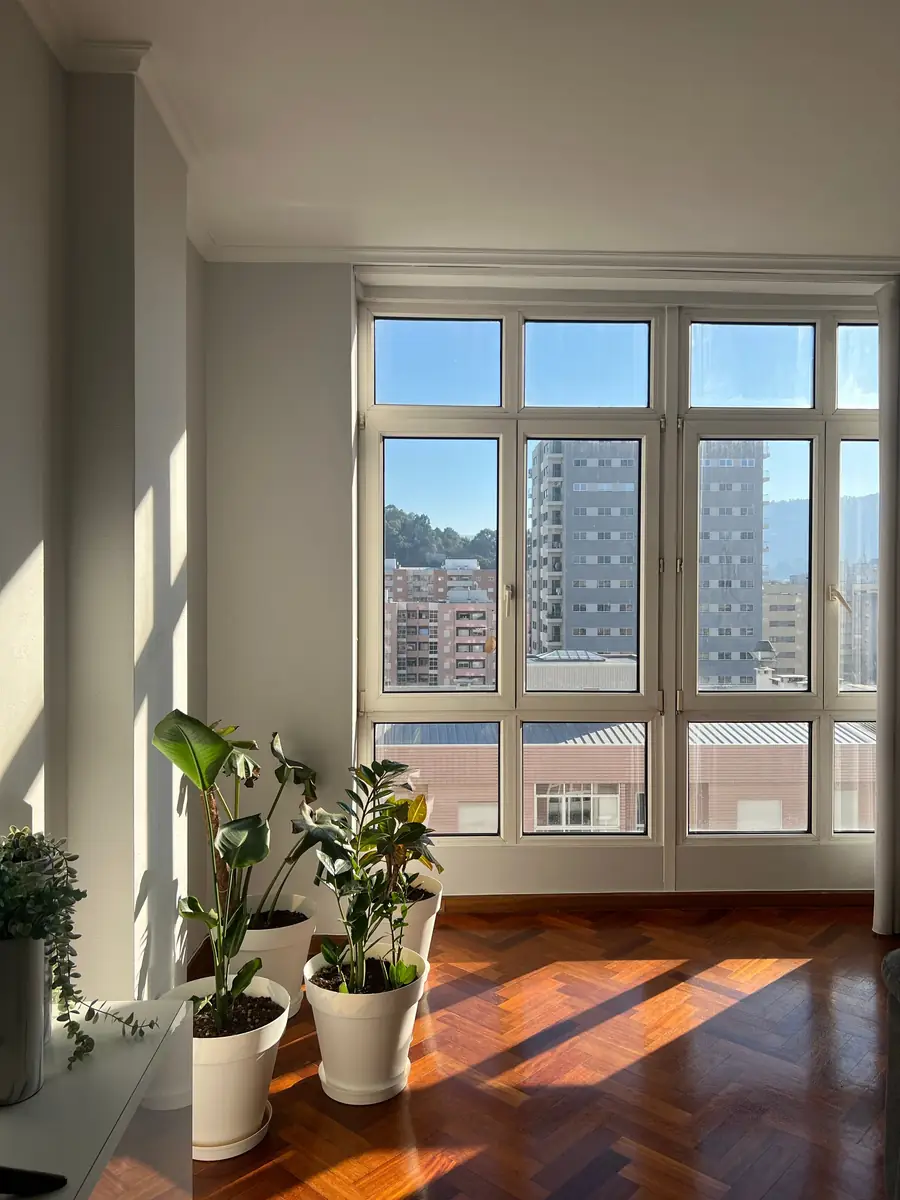
You get half an hour, sometimes with other people waiting on the landing. In that time you decide whether you will live there for the next few years. Most people look at the living room and forget what causes trouble later: the damp behind the wardrobe, the water heater that cannot manage two showers, or the service-charge clause nobody explained.
This guide is a practical checklist for tenants viewing flats in Madrid and Barcelona: what to look at, which documents to ask for, what to ask about the contract and how to spot a scam. It includes two tables to print: a checklist and a list of questions with the answer you should hear. Handover day is covered in detail in «Key handover and inventory at the start of a rental in Spain in 2026».
The essentials in one minute
- Do not pay anything before you see the flat: not for the viewing, not to «reserve» it. It is the clearest sign of a scam.
- At the viewing, check nine things: entrance and building, windows and damp, wiring, hot water and boiler, heating, kitchen and appliances, noise, orientation and light, and mobile coverage.
- Ask for or look at four documents: the energy certificate (its label must appear in the advert), the cédula de habitabilidad in Catalonia, the nota simple to check who the owner is, and a recent utility bill. Law 12/2023 lets you request this information in writing before signing.
- Ask about the term (yearly extension up to 5 years, or 7 if the landlord is a company), the deposit (one month), guarantees (two more at most), costs (the landlord pays the agency) and increases (until 31-12-2027, at most 2% without a new agreement).
- In Barcelona, a stressed area, ask for the rent of the previous contract and, where relevant, the reference index.
Before you go: what you can check from home
Look at the advert before you go. The energy performance certificate is compulsory to let to a new tenant (Royal Decree 390/2021, article 3), and its label, from A to G, must appear «in every offer, promotion and advertisement» for the home (article 15). If the advert does not show it, that is your first question.
Look at the price too: does it include the community fees, water or central heating? The consumer association OCU reminds you that you must be given the total rent and, if there are separate costs, their real amount.
- Look the area up on a map (transport, traffic, bars, building works) and, if you can, ask for a daytime viewing to see the real light.
- Bring your phone charged (for photos, a torch and checking coverage), a small charger to test sockets, a tape measure if you have large furniture, and this list printed.
- Have your documents ready, but do not send them to just anyone; we explain why in «What data and documents can you be asked for to rent a flat in Spain in 2026, and which not».
Scam warning signs: first you see the flat, then you talk money
The rule is simple and both the OCU and the National Police repeat it: never pay anything before visiting the home, nor for the viewing. If you are asked for a «deposit» by bank transfer or Bizum to «hold the flat» before you have seen it, stop there. As reported by Moncloa.com on 7 August 2026, the National Police advise distrusting any price far below the local level and flag as warning signs artificial urgency («someone else is interested, decide now»), photos that appear in other adverts and not being able to see the flat in person before paying.
- You are asked for money before the viewing or for the viewing.
- The price is much lower than that of similar flats on the same street.
- The advertiser cannot show you the flat, or the photos appear in other adverts with a different address.
- You are asked for copies of your ID, payslips and bank statements before being shown anything.
- The person signing does not match the owner shown in the nota simple and has no written authorisation.
If you have already paid, call your bank as soon as possible and report it at a police station with screenshots of the advert, the messages and the receipt. We go into more detail in «Rental scams in Spain in 2026: how they work, how to spot them and what to do if it happens to you».
The viewing, area by area
You do not need to be an expert: just look methodically, open, switch on and ask. If something does not work, get it in writing before you sign, with who will fix it and when. Repairs needed to keep the home habitable are the landlord's responsibility (LAU, article 21), and whatever was already broken when you move in is not the result of your use.
1. Entrance, stairs and building
- State of the entrance, stairs and lift: cleanliness, working lights, letterboxes in good condition. They say a lot about how the building is run.
- Whether there is a lift and what condition it is in. If there is none, count the floors with your shopping or a pushchair.
- Cracks in the façade or notices of building works: ask whether any works are planned in the building that could affect you.
- Whether there is a storage room or space for bikes, and whether the contract allows pets.
2. Windows, damp and smells
- Open and close every window and shutter. Check that they close properly, that the shutters go up and down and whether the glazing is double: you notice it in the noise and in the heating bill.
- Look for dark stains or bubbling paint in the corners of the ceiling, behind furniture, around windows and in the bathroom. A wall freshly painted in just one corner deserves a question.
- Smell. A damp or musty smell, especially in built-in wardrobes and the bathroom, usually gives away condensation or leaks.
- Check whether the bathroom has a window or a working extractor fan.
3. Wiring and the electrical certificate
According to the Comunidad de Madrid, every home must have an electrical installation certificate, known as the boletín eléctrico, stating the power it can take. If you need to raise the contracted power above the maximum the installation allows, a new certificate is required. The energy regulator CNMC adds that, if the certificate is more than 20 years old and something in the supply contract needs changing, the installation may have to be inspected.
- Open the fuse box: it should have a residual-current device (the switch with a test button) and circuit breakers labelled by area.
- Test several sockets with the charger, especially in the kitchen, the bathroom and where your desk will go. See whether there are enough sockets or extension leads everywhere.
- Ask what power is contracted. With an induction hob, oven and air conditioning on at once, low power trips the switches.
- Be wary of exposed cables or scorched sockets.
4. Hot water, boiler and gas: the inspection you must ask about
Turn on the taps and see how long the hot water takes, whether the pressure is good and whether the drain empties well. If the hot water comes from an electric water heater, ask its capacity: a small one cannot manage two showers in a row.
If there is gas, ask about two different checks: the periodic inspection of the installation, which according to the Comunidad de Madrid takes place every five years, and the servicing of the boiler or water heater. According to Madrid City Council's guide, wall-mounted gas boilers of up to 70 kW are serviced every two years and gas water heaters of up to 24.4 kW every five, and the latest certificate must be kept.
- Ask for the certificate of the last gas inspection and the date of the last boiler service, and get in writing who is responsible for maintenance.
- Check that the kitchen ventilation grilles are not blocked and that the flame of the hob or water heater is blue, not yellow, as the Comunidad de Madrid recommends.
- A useful tip: with mains gas the inspection is charged on the gas bill and you never have to pay on the spot, according to Madrid City Council. If someone knocks on your door demanding payment for an inspection, be wary and check with the distribution company.
5. Heating and air conditioning
- Which system it has: individual gas boiler, central heating for the building, electric radiators, heat pump or nothing.
- If it is central, ask whether it is included in the community fees, how much was paid last winter and whether the radiators have heat cost allocators.
- The energy label gives you a clue about running costs: a low letter (F or G) usually means colder winters, hotter summers and higher bills.
6. Kitchen, bathroom and appliances
- Switch on the hob, oven, extractor hood, washing machine and fridge. Check that the freezer gets cold and that the washing machine does not leak.
- Ask what stays in the flat and in what condition: whatever is in the inventory is what will be checked when you leave.
- Look at the seals of the shower and sink, blackened silicone and stains under the sink, a sign of drips.
- Open cupboards and drawers and look for damp or signs of insects.
7. Noise
- Close the windows and stay silent for a minute in the bedroom: listen for the street, the lift, the neighbours and the drainpipes.
- See whether there is a bar, restaurant, nightlife venue or kitchen extractor outlet below.
- Ask about planned works in the building or on the street.
8. Orientation and light
- See which way the main windows face. A flat with windows facing south or west usually gets more sun and more heat in summer; one facing north, less direct light and more cold in winter.
- Tell exterior (facing the street) from interior (facing a courtyard): interior flats are usually quieter and darker.
- Switch off the lights and see how much daylight comes in.
9. Mobile coverage and internet
- See how many bars your phone has in each room and make a short call from the bedroom.
- If you work from home, ask whether the building has fibre and whether the flat already has a line installed.
Checklist to print
| Area | What to check | How to check it at the viewing | Note |
|---|---|---|---|
| Entrance and building | State of the building, lift, planned works or special levies | Look at the stairs and façade; ask about works and the property manager | Good / fair / poor |
| Windows and shutters | That they close properly; double glazing | Open and close them all; listen to the noise with everything shut | Good / fair / poor |
| Damp | Stains, bubbling paint, smell | Ceiling corners, behind furniture, wardrobes, bathroom | Where and how much |
| Electricity | Fuse box with RCD, sockets, contracted power, certificate | Test sockets with a charger; ask about the power | Power: ___ kW |
| Hot water and boiler | Pressure, time until hot, boiler service and gas inspection | Turn on the taps; ask for dates and certificates | Last service: ___ |
| Heating and air conditioning | Type of system and whether it works in every room | Switch it on; ask what was paid last winter | Type: ___ |
| Kitchen and appliances | That they work and what stays | Switch on hob, oven, washing machine and fridge | What fails |
| Noise | Street, neighbours, premises below | One minute of silence in the bedroom with everything shut | Good / fair / poor |
| Orientation and light | Exterior or interior; which way it faces | Switch off the lights; see which windows get the sun | North / south / east / west |
| Coverage and internet | Mobile signal, fibre | Make a call from the bedroom; ask about fibre | Bars: ___ |
| Energy label | Letter from A to G | It must be in the advert; ask for the copy | Letter: ___ |
| Total price | Rent and separate costs | Ask what the rent includes and the amount of each cost | Total per month: €___ |
Use one copy per flat. Take photos of anything you mark as fair or poor and ask in writing for it to be fixed before signing.
The documents worth asking for or checking
Law 12/2023 on the right to housing allows anyone interested in renting a home on offer to request, before signing, minimum information (article 31): who is letting it and who is acting as intermediary; the total price and what it includes; the characteristics of the home, among them the «certificate or cédula of habitability» and the «energy performance certificate of the home»; and the registry information and charges. Ask for it by email and keep the reply.
Energy performance certificate
It is compulsory to let to a new tenant and the landlord commissions it. It is valid for a maximum of ten years, or five if the rating is G (Royal Decree 390/2021, article 13). In a rental, a copy of the label is attached to the contract and the tenant is given a copy of the document with recommendations for use (article 17).
Cédula de habitabilidad, if the flat is in Catalonia
In Barcelona and the rest of Catalonia, the home must have a cédula de habitabilidad (certificate of habitability). According to the Generalitat, the second-occupation certificate is needed to sell, let or grant the use of a home, and to connect water, electricity, gas and telecommunications. It is valid for 15 years and includes the floor area, the rooms and the maximum occupancy, that is, how many people may live in the flat. If you are sharing, check that you are below that maximum.
Nota simple: who really owns the flat
The nota simple from the Land Registry states who the registered owner of the home is and whether it has charges, such as a mortgage or an attachment. It is requested online at the website of the Colegio de Registradores, which charges €9.02 per property, excluding taxes. You can search by address, giving the municipality and the Registry. What matters to you is comparing the name on the nota simple with the person signing the contract. If they do not match, because an agency, a relative or a tenant subletting is letting it, ask to see the owner's written authorisation. How to read it, in detail, in «The nota simple and charges before buying or selling a home in Madrid in 2026».
Utility bills, as a guide
Ask to see a recent electricity, gas and water bill, ideally from winter if the heating is electric or gas. It is not compulsory, but it gives you an idea of the cost and tells you whether the supplies are connected; the OCU advises keeping an eye above all on heating costs. If the electricity or gas remain in the landlord's name, agree in writing how you will pay; changing the account holder and who pays what is explained in «Repairs, utilities and rubbish tax in a rented flat in Spain in 2026».
Questions about the contract you must ask
Ask about the contract at the viewing, before it is put in front of you. These are the LAU rules in force as of 16 November 2026.
- Term. It is freely agreed, but if it is under five years (seven if the landlord is a company), the contract is compulsorily extended each year until it reaches that minimum, unless you give at least thirty days' notice that you do not want to continue (article 9.1). After that, if nobody gives notice, it is extended year by year up to three more years (article 10.1). You can leave after six months, giving thirty days' notice (article 11.1).
- Deposit. One month's rent in cash, compulsory (article 36.1). In Madrid the landlord lodges it with the Comunidad's Agencia de Vivienda Social and must give you a copy of the receipt; in Catalonia, with INCASÒL.
- Additional guarantees. An extra deposit or a bank guarantee may not exceed two months' rent on residential contracts of up to five or seven years, and one on temporary ones. And «under no circumstances may the tenant be required to take out rent-default insurance or similar cover» (article 36.5).
- Costs. Community fees can be agreed, but in writing and stating the annual amount (article 20.1). Since 8 October 2026, taxes on the home, such as IBI (property tax), cannot be imposed on the tenant. And estate agency and contract-drafting costs «may not be passed on to the tenant, either directly or indirectly» (article 20.2).
- Annual increase. Without an update clause, the rent does not rise; with one, the cap is the change in the INE's reference index for annual updates (IRAV) (article 18). In addition, until 31 December 2027, if the rent exceeds the limit of the reference index system there is no increase, and without a new agreement the increase may not exceed 2% (Royal Decree-law 29/2026, sixth final provision).
- Extraordinary extension. Royal Decree-law 29/2026 allows tenants to ask for their contract to be extended by up to two more years, subject to conditions. We explain it in «How to request the extraordinary two-year extension of your lease after the validation of Royal Decree-law 29/2026».
Question and the answer you should hear
| Question | Answer you should hear | If you are told something else |
|---|---|---|
| Can I see the flat before paying anything? | Of course. First the viewing; the money, when signing. | Do not pay. It is the clearest sign of a scam. |
| Who is the owner and who signs the contract? | You are given the name and it matches the nota simple, or you are shown the written authorisation. | Ask for the nota simple and the authorisation before going further. |
| What is the total monthly price and what does it include? | One figure with every item and the amount of each separate cost. | Ask for it in writing: you have the right to know the total price (Law 12/2023, art. 31). |
| How much is the deposit and is there an additional guarantee? | One month's deposit and, at most, up to two of guarantee. | Anything more is not valid on a residential contract of up to 5 or 7 years (LAU, art. 36.5). |
| Do I have to take out rent-default insurance? | No. | It cannot be required since 8 October 2026 (LAU, art. 36.5). |
| Are there agency fees or charges for drawing up the contract? | No, the landlord pays them. | They cannot be passed on to the tenant under any name (LAU, art. 20.2). |
| How long is the contract? | One year extendable up to five (seven if the landlord is a company), or five straight away. | A waiver of the extension in a main residence is not valid; check it before signing. |
| How is the rent updated each year? | According to the official index and, until 31-12-2027, at most 2% without a new agreement. | A fixed 5% rise or «CPI plus two points» does not apply above that cap. |
| Can you show me the energy label? | Here it is; the copy will be attached to the contract. | It is compulsory to let (RD 390/2021). |
| In Barcelona: what was the rent of the previous contract? | You are told the figure and, if the landlord is a large owner, the reference index value. | You must be informed before signing (Law 12/2023, art. 31.3). |
Take it printed and note the answers. Whatever you are told verbally, ask for it to appear in the contract or in an email.
Barcelona: stressed area and reference index
Barcelona is a stressed residential market area: according to the Ministry of Housing list (updated on 5 November 2026), from 16 March 2024 to 16 March 2027. The Generalitat announced on 28 July 2026 that it is extending the first declaration by one year for 118 municipalities. No municipality in the Comunidad de Madrid is on that list, so there the rent of a new contract is freely agreed.
In a stressed area, the initial rent of a new contract may not exceed that of the last main-residence contract of the past five years on that flat, with its update (LAU, article 17.6). If the landlord is a large owner (gran tenedor), which in Catalonia's stressed areas means owning five or more residential urban properties in the area, according to the Generalitat, the rent also may not exceed the rental price reference index (article 17.7). Law 12/2023 requires you to be informed of all this before signing (article 31.3): ask at the viewing. We cover it in depth in «Renting a flat in Barcelona in 2026: price cap in a stressed area, reference index, seasonal lets, rooms, fines and documents».
After the viewing: decide without rushing
If you like the flat, ask for the draft contract by email and read it calmly before paying anything. The OCU advises receiving the documents and taking time to study them carefully, without committing on the spot. Check that what was discussed at the viewing is in writing. We go through the clauses that are not valid in «Clauses in a rental contract that are not valid in Spain in 2026».
- Always pay by a traceable method, such as a bank transfer, and ask for a receipt with a clear description: «deposit», «additional guarantee», «December rent».
- In Madrid, once signed, you can request proof that the deposit has been lodged; according to the Comunidad de Madrid, with Cuenta Digital you get it quickly on your phone.
- If you saw something at the viewing that needs fixing, make sure the contract or an email says what will be fixed and by what date.
Moving-in day: photos and inventory
On key day, walk through the flat with the landlord or agency, take dated photos and video of every room and defect, read the meters, count the keys and both sign an inventory, with a copy each. Since 8 October 2026, the LAU requires the condition of the home to be recorded in writing at the end of the contract, and that document only works if it can be compared with the one made at the start. We explain it step by step in «Key handover and inventory at the start of a rental in Spain in 2026».
How we do it at Llavely
At Llavely renting works the other way round, and it is free in the provinces of Madrid and Barcelona. As a tenant you do not write to anyone or send your documents to every advert: you create your verified profile once (our team checks your identity and income, and the documents are deleted afterwards) and it is landlords and agencies who invite you to view their home. You see the exact address when you confirm the viewing. You arrive knowing the landlord already knows your profile.
Landlords list for free and see verified candidates ranked by affinity, and every home is reviewed by a member of the team before it goes live. Llavely does not handle payments: the deposit and rent are paid directly to the landlord, and the viewing, the contract and the inventory are up to you. This checklist works just as well if you find a flat another way. If you are looking in Madrid or Barcelona, create your free profile on the web and wait for invitations.
Frequently asked questions
What should I check when viewing a rental flat in Spain?
Nine things: entrance and building, windows and damp, wiring and power, hot water and boiler, heating, kitchen and appliances, noise, orientation and light, and coverage. And four documents: energy certificate, cédula in Catalonia, nota simple and a utility bill.
Is it normal to pay a deposit to reserve a flat before seeing it?
No. The OCU and the National Police advise not paying anything before visiting the home, nor for the viewing. First you see it, then you read the contract and pay when signing, with a receipt.
Which documents must the landlord show me before renting?
The energy performance certificate is compulsory and its label must be in the advert and attached to the contract. In Catalonia, the cédula de habitabilidad. In addition, Law 12/2023 lets you request, before signing, information on who is letting, the total price, the characteristics of the home and its charges.
How do I know whether the person renting to me is the owner?
Request a nota simple on the Colegio de Registradores website (€9.02 per property, excluding taxes) and compare the registered owner with the person signing the contract. If they do not match, ask for the owner's written authorisation.
How much can I be asked for as deposit and guarantees in 2026?
One month's deposit, compulsory, and at most two months of additional guarantee on a residential contract of up to five years, or seven if the landlord is a company; one on temporary ones. You cannot be required to take out rent-default insurance.
How much can the rent go up each year?
If the contract has no update clause, it does not go up. If it does, the cap is the official index (IRAV) and, until 31 December 2027, unless otherwise agreed the increase may not exceed 2%, under Royal Decree-law 29/2026.
How often is the boiler serviced in a rented flat?
According to Madrid City Council, wall-mounted gas boilers of up to 70 kW every two years, and the gas installation undergoes a compulsory inspection every five years. Ask for the dates or certificates at the viewing and get in writing who is responsible.
Sources
- Law 29/1994 of 24 November on Urban Leases, consolidated text: articles 6, 9, 10, 11, 17, 18, 20, 21 and 36 (BOE, last updated on 13 November 2026)
- Royal Decree-law 29/2026 of 6 October on urgent measures to protect the social function of housing and expand the supply of affordable housing, consolidated text with the validation note: sixth final provision (BOE, last updated on 13 November 2026)
- Law 12/2023 of 24 May on the right to housing, consolidated text: article 31 (BOE, last updated on 7 October 2026)
- Royal Decree 390/2021 of 1 June, basic procedure for the energy performance certification of buildings, consolidated text: articles 3, 13, 15 and 17 (BOE)
- Second-occupation certificate of habitability (Generalitat de Catalunya, gencat procedures, updated on 23 October 2023)
- Check stressed residential market areas (Ministry of Housing and Urban Agenda, updated on 5 November 2026)
- The Catalan Government extends the declaration of a stressed residential market area and promotes a new declaration with new municipalities (Generalitat de Catalunya, 28 July 2026)
- Rental deposits: lodging and proof (Comunidad de Madrid, updated on 28 October 2026)
- Users of mains and bottled gas must carry out an inspection every five years (Comunidad de Madrid, 28 November 2019)
- Recommendations on gas inspections and boiler maintenance (Municipal Consumer Institute, Madrid City Council, updated on 2 February 2021)
- Practical information on electricity: electrical installation certificate (Comunidad de Madrid)
- The electrical certificate: what it is and what it is for (CNMC, consumer guide)
- Land Registry: nota simple, how to request it and price (e-office of the Colegio de Registradores de España, consulted on 16 November 2026)
- What information is compulsory in a rental (OCU, 30 June 2026)
- What you need to know if you are looking for a home to rent (OCU, 3 September 2024)
- The National Police warn of the fake bargain rental scam (Moncloa.com, 7 August 2026)