Renting · · 22 min read
What personal data and documents a landlord can ask for when you rent a flat in Spain in 2026, and what they cannot: ID copy, payslips, tax return, employment history, bank statements, guarantor and debtor files under data protection law
What the General Data Protection Regulation, Spain's Organic Law 3/2018 and the Spanish Data Protection Agency say about what a landlord or letting agency can ask you for when you rent: which documents make sense and when, copies of your ID, when a debtor file can be checked, which questions are off-limits because they are discriminatory, how long your data can be kept if you are not chosen, who is responsible and how to complain. With a document-by-document table and tips for tenants and landlords.
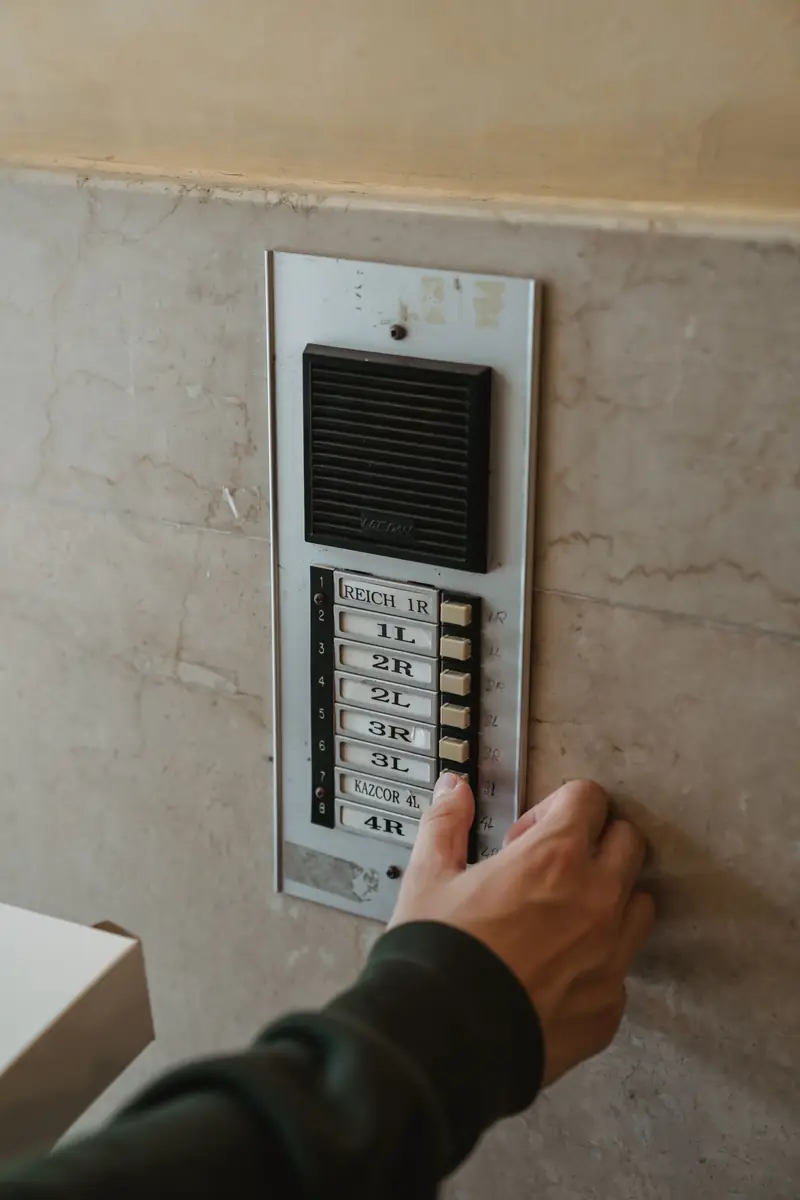
You ask about a flat and, before you have even seen it, a message arrives: "Send me a photo of both sides of your ID, your last three payslips, your tax return, your employment history and your bank statements for the last six months." You want the flat, other people are interested, so you send it all. Hardly anyone asks whether so much is needed, who receives it or where those papers end up when someone else gets the flat.
Data protection law has answers. Here we explain what a landlord or letting agency can ask you for when you rent, what they cannot, at what stage, what the Spanish Data Protection Agency (AEPD) says about copies of your DNI (the Spanish national identity card), when a debtor file can be checked, which questions are off-limits, how long your data can be kept and how to complain. Which documents prove your income if you have no payslip is covered in "Renting a Flat in Spain Without a Fixed Payslip in 2026: What You Can Be Asked for If You Are Self-Employed, on a Temporary Contract, a Student or New to Madrid or Barcelona"; this article is about the limits and how to hand over only what is needed.
The essentials in one minute
- Anyone who asks for your data to decide whether to rent to you must comply with the GDPR: only what is necessary for that purpose, telling you who they are and why they want it, and keeping it secure.
- Everything at the right time: to enquire or view, your name and a contact; proof of income, once both sides are genuinely interested; full identification and your bank account, at signing.
- ID copies: according to the AEPD, a copy is generally not needed to enter into a contract. If you are asked for one, you can cover what is not needed to identify you and you should not send it by email.
- A debtor file can only be checked under the conditions of article 20 of the LOPDGDD, and if you are turned down because of that check, you must be told.
- Partner, children, health, religion or origin are not criteria for choosing a tenant. Turning someone down on discriminatory grounds is prohibited by Law 15/2022.
- If you are not chosen, your data must be deleted once it is no longer needed. You can ask to see it or have it erased and, if there is no reply within a month, complain to the AEPD.
The rules that govern everything
When a landlord or agency collects your data to decide whom to rent to, they are processing personal data and are accountable for it. As data protection specialists explain, this also applies to a private landlord. The AEPD summarises the principles that matter here: data are collected for "specified, explicit and legitimate" purposes; only the data needed for each purpose are processed; and once the purpose has been fulfilled, the data must be deleted, blocked or anonymised. The data minimisation principle is written like this in the Regulation:
adecuados, pertinentes y limitados a lo necesario en relación con los fines para los que son tratados (adequate, relevant and limited to what is necessary in relation to the purposes for which they are processed)
Regulation (EU) 2016/679, article 5(1)(c), Spanish text
On what basis can they ask for your data? Usually article 6(1)(b) of the GDPR: processing is lawful when it is necessary for a contract or for taking steps at the request of the data subject prior to entering into one. If you are the one asking to rent, the landlord can process the data needed to assess your application. But only those.
They must also inform you. Under article 11 of the LOPDGDD, they must at least tell you who the controller is, what the data will be used for and that you can exercise your rights of access, rectification, erasure and the other GDPR rights. If someone asks for your payslips over a chat and you do not even know their full name, the most basic requirement is already missing.
When it makes sense to ask for each thing
Data minimisation is also about when and from how many people. Asking everyone who enquires about a listing for every document multiplies the data in circulation without helping anyone decide. A reasonable order:
- When you enquire: your name, a phone number or email and what is needed to see whether you fit (from when, how many people, for how long). No copies.
- At the viewing: showing your identity document, without a copy being made, is enough for them to know whom they are dealing with.
- After the viewing, if both sides are interested: proof of income and, if there is one, the guarantor's. This is where, with its conditions, a debtor file check could fit.
- At signing: the details needed to identify the parties in the contract, an address for notices and the account you will pay from.
Table: what you can be asked for, when and how to provide it
| Data or document | Can it be requested? | When | Tip |
|---|---|---|---|
| Name, phone or email | Yes | From first contact | Nothing more is needed to arrange a viewing |
| Seeing your DNI, NIE (foreigner identification number) or passport | Yes, to identify you | At the viewing or at signing | Showing it is enough; you do not have to let them photograph it |
| Copy of your DNI, NIE or passport | Generally not needed to enter into a contract, according to the AEPD | At signing at the latest | Cover the support number and the issuing office code, add a watermark and do not send it by email |
| Payslips | Yes, to assess ability to pay | After the viewing | Leave name, employer and amounts visible; cover the account and deductions such as union dues or a wage garnishment |
| Employment contract | Yes, if it helps assess stability | After the viewing | The type of contract, length of service and salary are enough |
| Income tax return (declaración de la renta) | Yes, especially without a payslip | After the viewing | Provide the pages showing income and cover family details or other people's data |
| Employment history report (vida laboral) | Can be requested, but is rarely essential if there is a payslip and contract | After the viewing | Offer it yourself if it helps show your track record |
| Bank statements | Only what is necessary: income or balance | After the viewing | Better a balance certificate or a statement with all other transactions covered |
| Guarantor's details | Yes, if a guarantor is agreed | After the viewing | They belong to someone else: they should know who receives them and why |
| Debtor file check | Only under the conditions of article 20 of the LOPDGDD | At the final stage, with the chosen candidate | If the check leads to you being turned down, you must be told |
| Bank account number | Yes, to pay or return the deposit | At signing | It is not needed to assess your application |
| Marital status, partner, children or plans to have them | Not as a selection criterion | Never | It is enough to say how many people will live there |
| Health, religion, political opinions, trade union membership, sexual orientation, racial or ethnic origin | No | Never | These are special categories of data (article 9 of the GDPR) |
Practical guidance based on the GDPR, the LOPDGDD, Law 15/2022 and the AEPD's FAQs, as of 14 November 2026. The rules do not set a closed list of documents: each piece of data must be necessary and requested when it is needed.
Copies of your ID: what the AEPD says
It is the most common request and the most sensitive, because a copy of your ID in the wrong hands can be used to impersonate you; how those frauds work is explained in "Rental scams in Spain in 2026: how they work, how to spot them and what to do if it happens to you". This is how the AEPD answers whether a copy is needed to enter into a contract:
No, generalmente no es necesario proporcionar una copia del DNI para realizar una contratación. (No, it is generally not necessary to provide a copy of your DNI to enter into a contract.)
AEPD, FAQ: "¿Es necesario proporcionar una copia del DNI para realizar una contratación?"
The Agency explains that identity can be verified in other ways, such as an electronic signature, and that some sector-specific rules, such as anti-money-laundering legislation, do require a copy. If you are asked for one, it gives two tips: when a full copy is not strictly necessary, you can hide or protect the data not needed for identification, such as the support number or the issuing office code; and if you send it electronically, you should avoid email, while the controller must provide you with a secure channel.
On 17 June 2025 the AEPD also announced that accommodation providers are not allowed to ask for a copy of a guest's DNI or passport: it would breach the data minimisation principle, and the copy contains data the rules do not require, such as the photograph, increasing the risk of identity theft. It added that sending a copy of the document does not make it possible to verify with certainty the identity of the person sending it. That position concerns accommodation, not renting, but the reasoning applies: a photo of an ID received over a chat does not prove who sent it. And unnecessary copies have consequences: as Xataka reported in September 2024, the AEPD fined a hotel €30,000 for requesting photocopies of ID cards unnecessarily.
In practice: at the viewing, showing the original is enough. At signing, the contract identifies the parties by their document number and it is reasonable to check it against the original. If they still want a copy, provide one with the unnecessary parts covered and a watermark.
Payslips, contract, tax return, employment history and statements: how much is "necessary"
To decide whether you can pay, the landlord needs to know how much you earn and how stable it is. That justifies asking for proof, but every document carries more information than needed:
- Payslips: what matters is your name, the employer, the period and the amounts. The account you are paid into adds nothing. Some deductions say a lot: union dues reveal trade union membership, a special category of data, and a wage garnishment is something you would be entitled to explain yourself. You can cover them.
- Employment contract: what matters is whether it is permanent or temporary, your length of service and your salary; not the other clauses.
- Income tax return: besides your income, it may show your spouse, your children or a disability. Provide the pages with your income and cover anything about other people or your family.
- Employment history report: it lists every company you have worked for. If there is already a payslip and a contract, it is rarely essential; offer it if it helps you show a track record.
- Bank statements: the most intrusive. Transactions show where you shop, whether you pay for a medical appointment, membership of an association or a donation. To prove income or savings, a balance certificate or a statement showing only income and balance is enough.
A useful rule for both sides: if a piece of data would not change the decision, there is no need to ask for it. And whatever is asked for should be the same for all candidates.
Guarantors and references
If a guarantor is agreed, the landlord will also need their identity and proof of income. That is a third party's data: the guarantor should know who receives it and why, and it is reasonable for them to provide it themselves or with their knowledge, with the same redactions. What a guarantor signs up to is explained in "Renting a Flat in Spain Without a Fixed Payslip in 2026: What You Can Be Asked for If You Are Self-Employed, on a Temporary Contract, a Student or New to Madrid or Barcelona".
With references from a previous landlord, it is best that you decide who is asked and warn them first. Looking through your social media has nothing to do with whether you can pay.
Debtor files: when they can be checked
There are shared files of unpaid debts, which the law calls credit information systems. Article 20 of the LOPDGDD presumes their use lawful, unless proven otherwise, only if all these conditions are met:
- The data are provided by the creditor or someone acting on its behalf.
- The debts are certain, due and payable, and not disputed before the authorities, a court or a binding dispute resolution system.
- The creditor warned the debtor, in the contract or when demanding payment, that they could be included, and in which files. The file must notify the inclusion and the debtor's rights within the following thirty days, with the data blocked in the meantime.
- The debt may only appear while it remains unpaid and for at most five years from its due date.
- Only someone who has a contractual relationship with the person involving a payment may check, or someone from whom the person has requested a contract involving financing, deferred payment or periodic billing.
- If the check leads to the contract not being signed, whoever checked must inform the person of the result.
The law gives consumer credit and mortgage credit as examples and does not mention renting. A tenancy involves periodic payments and is requested by the candidate, but we have not found an AEPD position clarifying whether it always fits, so the prudent approach is to check only at the final stage, on the candidate you are about to sign with, to warn them first and to tell them if the check means the contract is not signed. Minimisation also applies to the files themselves: in a 2018 report, the AEPD's Legal Department concluded that name and surname together with the NIF or NIE already identify the debtor, and that adding the phone number or date of birth would breach the principles of data minimisation and purpose limitation. And article 20 does not cover combining that information with data from other sources to score the debtor.
As a tenant, you can exercise your right of access with the file free of charge to find out whether you appear and why, and ask for a debt that is not yours, that you have already paid or that you are disputing to be corrected or erased. If you are a landlord worried about non-payment, see "Tenant Not Paying Rent in Spain in 2026: What Landlords Can Do, from Burofax to Eviction".
Questions that are off-limits: special categories of data and discrimination
Article 9 of the GDPR prohibits, with exceptions unrelated to choosing a tenant, processing data revealing racial or ethnic origin, political opinions, religious or philosophical beliefs, trade union membership, genetic or biometric data, health data, or data on sex life or sexual orientation. The LOPDGDD adds that, to avoid discriminatory situations, consent alone is not enough when the main purpose is to identify ideology, religion, sexual orientation or origin. Even if you answer, asking does not become legitimate.
Law 15/2022 requires those who sell, rent or act as intermediaries, listing portals and anyone offering a home to the public to respect equal treatment (article 20): they cannot refuse an offer, refuse to negotiate or deny a tenancy on discriminatory grounds, or discriminate in the terms. The grounds in article 2.1 include racial or ethnic origin, sex, religion, age, disability, sexual orientation or identity, illness, language and socio-economic status. Law 12/2023 recognises in article 6.1 the right to decent housing without suffering discrimination, exclusion, harassment or violence of any kind.
What about income, if the law mentions socio-economic status? Its article 4.2 says a difference in treatment is not discriminatory if it is objectively justified by a legitimate aim and the means used are appropriate, necessary and proportionate. Checking that the rent is affordable using the same criteria for everyone is not the same as ruling someone out because of their neighbourhood or accent without looking at whether they can pay. Where the line lies in each specific case is for the authorities or the courts to decide.
- Questions that are off-limits: whether you have a partner, whether you have or plan to have children, whether you are pregnant, where you are from, what religion you practise, whether you have an illness, how you vote or whether you belong to a union.
- What can be discussed: how many people will live there, from when and for how long, whether you have a pet, how much you earn and what guarantees you offer.
- If, in court proceedings, you allege discrimination with well-founded evidence, the other party must provide an objective and reasonable justification (article 30.1 of Law 15/2022; it does not apply in criminal cases or sanctioning procedures).
- Fines under Law 15/2022: €300 to €10,000 for minor infringements, €10,001 to €40,000 for serious ones, such as direct or indirect discrimination, and €40,001 to €500,000 for very serious ones.
How long your data can be kept if you are not chosen
The GDPR says data must be kept for no longer than is necessary for the purposes of the processing (article 5(1)(e)). If the purpose was to choose a tenant, it ends when the flat is let. The rules do not set a number of days for candidates: once the purpose is fulfilled, the data are deleted, blocked or anonymised. Keeping everyone's payslips "in case another flat comes up" means using them for something you were not told about, unless you were asked and agreed.
Blocking (article 32 of the LOPDGDD) means setting the data aside so that nobody uses them, except judges, courts, the Public Prosecutor or the competent authorities, including the AEPD, to establish liability and only during the limitation period; after that, they are destroyed. If you are chosen, your data are kept for the contract and its obligations, not for anything else.
Who is responsible: the landlord, the agency or both
Whoever decides why and how your data are used is responsible. If the landlord collects your documents and chooses, it is the landlord. If an agency selects with its own criteria and forms, it is usually the agency. If the agency acts only on the landlord's behalf, following instructions, it is usually a processor, with a contract between them. The LOPDGDD (article 70) subjects both controllers and processors to the penalty regime. Ask at the outset who the controller is: that is who you will exercise your rights against, although according to the AEPD the processor can handle requests if they have agreed so.
How to ask to see or erase your data, and how to complain
- Write to the controller by a means that leaves a record, identify yourself and request access to your data, its erasure or both. Keep a copy.
- It is free. According to the AEPD, they have one month to reply, extendable by two more months depending on complexity, and if they will not act on your request they must tell you why and that you can complain.
- As a general rule, you do not need to send a copy of your DNI to exercise these rights: according to the AEPD, only if the controller has reasonable doubts about your identity.
- If they do not reply in time or the answer does not satisfy you, complain to the AEPD through its online office or in writing, with your request and the reply, if there was one.
- If you believe you were turned down on discriminatory grounds, Law 15/2022 has its own penalty regime; consult a lawyer to choose the right route.
The AEPD takes it seriously when an estate agency does not reply. In a 2026 warning procedure (file EXP202602043), it issued a warning to an estate agency for failing to respond to a client's access request, in that case an owner who was selling, ordered it to show within three months the measures taken to comply with article 15 of the GDPR, and recalled that blocking data cannot entail a restriction of the rights the GDPR recognises.
Tips for tenants: how to send only what is needed
- Ask beforehand who will receive your documents, why and how long they will be kept.
- Cover whatever adds nothing: your ID's support number, the account on your payslips, deductions that reveal things about you, transactions on statements and family details on your tax return.
- Add a watermark to each copy with the recipient, the purpose and the date, for example: "Only for renting the flat on X street, date". If someone uses it for anything else, it will show.
- Do not send your ID by email, as the AEPD advises, or to messaging groups or anonymous profiles. Use the secure channel offered or show the originals in person.
- Be wary of anyone who asks for everything before showing you the home or asks for money to "reserve" it.
- Note who you gave what and when, and if you are not chosen, ask in writing for it to be erased.
- Keep a folder with the redacted versions ready, as explained in "How to prepare a tenant profile that landlords choose in a market with so much demand".
If you are a landlord: how to check ability to pay without asking for too much
Choosing your tenant carefully is legitimate. What protects you, including against a complaint, is being able to explain why you asked for each thing:
- Decide before advertising what you will ask for: the same documents from everyone who reaches the same stage, with objective criteria on the rent-to-income ratio and the guarantees you accept.
- Ask in stages: contact details to view, income from those who want the flat after seeing it, full identification and account at signing.
- Better to see than to keep: checking an ID against the original and looking at a payslip does not require keeping copies from everyone.
- Prefer documents that say just enough: a balance certificate instead of statements, the income pages instead of the full tax return.
- Provide a short notice on who you are, what you will use the data for, how long you will keep it and how to exercise rights.
- Receive documents through a secure channel and store them in one place. Once you have let the flat, delete the other candidates' documents.
- If you work with an agency, put in writing who decides and who keeps what. And no questions about partners, children, health, religion or origin.
How we do it at Llavely
Llavely is renting the other way round: the tenant creates a profile once, and it is landlords and agencies who invite them to view their home. The profile is filled in by the tenant, and the landlord sees the information the tenant shares in their profile, instead of receiving loose documents over chats or email every time someone asks about a listing.
Rentals are open and free in the provinces of Madrid and Barcelona, for tenants, landlords and agencies. If you are looking for a flat, create your free profile and wait for invitations. If you have a home to let, list it for free and choose whom to invite with clear criteria, the same for everyone and without asking for too much.
Frequently asked questions
Can a landlord ask for a copy of my ID to rent a flat in Spain?
According to the AEPD, a copy of your DNI is generally not needed to enter into a contract: identity can be checked in other ways, such as by showing the original. If you are asked for one, you can cover data not needed to identify you, such as the support number, add a watermark and avoid sending it by email.
Which documents can a landlord ask me for?
Those needed to identify you and check that you can pay: an identity document, proof of income such as payslips, an employment contract or a tax return and, if agreed, the guarantor's details. Under the GDPR's data minimisation principle, only what is necessary and when it is needed.
Is it legal to ask for my bank statements?
They can ask you to prove income or savings, but transactions reveal far more than necessary. A balance certificate or a statement showing only income and balance is enough.
Can a landlord check whether I am in a debtor file?
Only under the conditions of article 20 of the LOPDGDD, including a contractual relationship involving payments or a request from you for a contract with deferred payment or periodic billing; the law does not expressly mention renting. If the check leads to you being turned down, you must be told. A debt can appear for at most five years from its due date.
Can they ask whether I have children or a partner?
They should not use it as a criterion: knowing how many people will live there is enough. Law 15/2022 prohibits refusing a home offered to the public on discriminatory grounds, with fines of €10,001 to €40,000 for serious infringements.
How long can they keep my documents if I do not get the flat?
Only as long as needed to decide whom to rent to. After that, the data must be deleted, blocked or anonymised. There is no set number of days for candidates, but keeping them for other uses you were not told about does not fit with the GDPR.
How do I ask for my data to be erased, and what if they do not reply?
Write to the landlord or agency identifying yourself and request erasure. It is free and they have one month to reply, extendable by two more. If they do not reply or the answer does not satisfy you, complain to the AEPD with your request and the reply, if there was one.
Sources
- General Data Protection Regulation, Regulation (EU) 2016/679, consolidated text in Spanish: articles 5, 6 and 9 (Spanish Data Protection Agency)
- Organic Law 3/2018 of 5 December on the Protection of Personal Data and the Guarantee of Digital Rights, consolidated text: articles 9, 11, 20, 32, 70, 72 and 73 (BOE)
- Law 15/2022 of 12 July on equal treatment and non-discrimination, consolidated text: articles 2, 4, 6, 20, 30, 47 and 48 (BOE)
- Law 12/2023 of 24 May on the right to housing, consolidated text: article 6 (BOE)
- Data protection principles: purpose limitation, data minimisation and storage limitation (Spanish Data Protection Agency, consulted 14 November 2026)
- FAQs: identification with a DNI (Spanish Data Protection Agency, consulted 14 November 2026)
- Is it necessary to provide a copy of your DNI to enter into a contract? (AEPD FAQ, consulted 14 November 2026)
- What can I do if I am asked for a copy of my DNI? (AEPD FAQ, consulted 14 November 2026)
- The AEPD states that accommodation providers may not request a copy of a guest's DNI or passport (AEPD press release, 17 June 2025)
- Exercise your rights: free of charge, one-month reply deadline and complaints to the supervisory authority (Spanish Data Protection Agency, consulted 14 November 2026)
- Can I lodge a complaint about the exercise of data protection rights? (AEPD FAQ, consulted 14 November 2026)
- Decision in a warning procedure for failing to respond to an access request, file EXP202602043 (Spanish Data Protection Agency, 2026)
- Legal Department report on the data a credit information system may include, reference 197214/2018 (Spanish Data Protection Agency)
- Renting homes and data protection (Protección Data, updated 30 June 2026)
- Enough photocopying our ID everywhere: how the AEPD is asking for an end to this practice (Xataka, 12 September 2024)