Buying & selling · · 22 min read
Valuing a flat or a house in Navalcarnero in 2026: what it is worth and what the valuer looks at
€2,487/m² is the average appraised value of open-market housing in Navalcarnero (Ministry of Housing, 2nd quarter of 2026), 18.9% more than a year earlier, against an average of €3,699 in the Comunidad de Madrid according to Tinsa. We explain how the value of your flat or house is worked out, how the bank’s valuation (tasación), a market valuation for selling and the Cadastre’s reference value differ, what the valuer looks at in each type of home and what to do if the buyer’s valuation comes in below the agreed price.
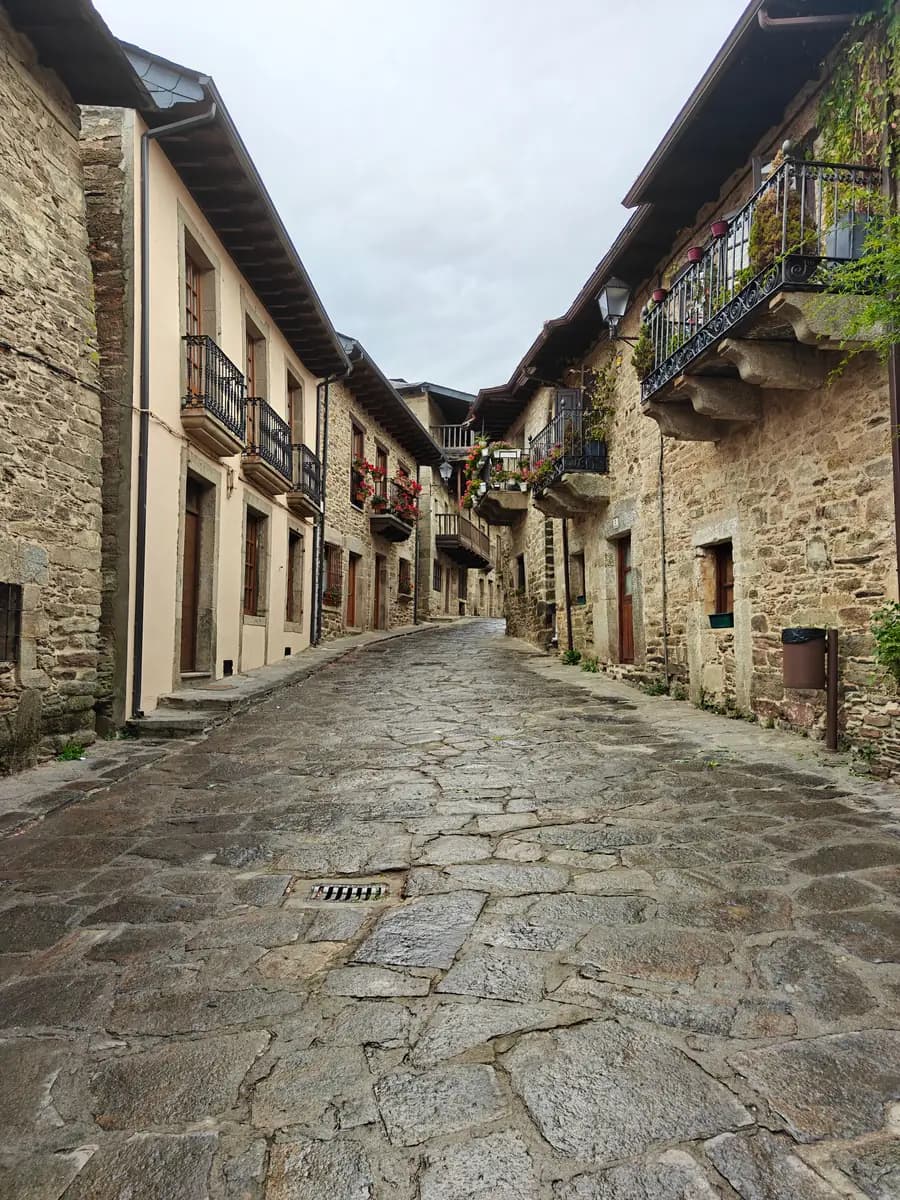
“How much is my house worth?” is the first question anyone thinking of selling in Navalcarnero asks, and there is no single answer. There is the figure an official valuer would set so that the buyer’s bank grants the mortgage, the one the Cadastre (the national property register for tax purposes) sets to charge the purchase tax, and the one a buyer is actually willing to pay today. The three are similar but not the same, and understanding why helps you set a price that sells without leaving money on the table.
In this guide, updated to 19 November 2026, we focus on value: what the Navalcarnero market is like, what reliable data exist on the price per square metre, how a valuer works with a flat in the newer districts and with a house on an estate, what pushes value up and down, an indicative worked example using comparables, and what to do if the buyer’s bank valuation comes in below the price. Who pays for a valuation, what it costs and how long it lasts we cover in “Property valuation in 2026 when buying or selling in Madrid…”; the costs of selling, in “How much it costs to sell a flat in Alcorcón in 2026…”; and what is specific to detached and semi-detached houses, in “Selling a detached or terraced house in Madrid in 2026…”.
The essentials in one minute
- Official figure: the average appraised value of open-market housing in Navalcarnero was €2,487.2 per square metre in the second quarter of 2026, 18.9% more in a year, from 120 valuations (Ministry of Housing). The third-quarter figure was due on 19 November, but the Ministry postponed it for technical reasons. The Comunidad de Madrid average is €3,699 (Tinsa, third quarter of 2026).
- An official valuation and a valuation for selling are not the same. The tasación is done by a valuation company approved by the Banco de España under Order ECO/805/2003 and is used for the mortgage; a market valuation looks for the price at which your home will sell now.
- The Cadastre’s reference value is not what your home is worth: it is the minimum base for ITP (6% in Madrid), paid by the buyer. If the price is higher, tax is paid on the price.
- The valuer measures the home, checks it matches the Land Registry and the Cadastre, looks at condition, age, energy efficiency and charges, and compares it with at least six similar homes.
- For a house, the plot, the planning status of the land and whether everything built has a licence also count. An unauthorised extension may be left out of the value or make the valuation conditional.
- If the buyer’s valuation comes in below the price, the bank lends less. The options: a bigger deposit, renegotiating, another approved valuation or another bank. What happens to the deposit (arras) depends on what you signed.
What the housing market in Navalcarnero is like
Navalcarnero, in the south-west of the Comunidad de Madrid, has a market with three very different faces, and it is worth knowing which one your home belongs to before comparing it with anything.
The first is the historic quarter. At its heart is the Plaza de Segovia, an arcaded Castilian square from the 16th and 17th centuries, home to the old town hall, already documented in 1588. The ensemble formed by the square and the church of Nuestra Señora de la Asunción was declared a Historic-Artistic Monument and later a Bien de Interés Cultural (a protected heritage site) in the Historic Ensemble category, according to the Comunidad de Madrid’s tourism website. Here you find village houses, low-rise buildings and older flats, many without a lift, alongside some refurbishments.
The second is the newer districts: blocks of flats from recent decades, many with a parking space, a storage room and sometimes a communal pool, and neighbourhoods such as El Pinar. The third is the estates of detached, terraced and semi-detached houses, where the plot weighs as much as the built floor area.
On top of this comes new housing. In 2026 the Comunidad de Madrid has handed over two Plan Vive developments in the town, 36 flats in March and 71 in April on Calle Arcángel Gabriel, and plans to reach 425 affordable rental homes in Navalcarnero, according to its press release of 21 April 2026.
The link with Madrid is by road. Along the A-5 you reach the centre of the capital in about 35 minutes, according to the Comunidad’s tourism website, and without a car the journey is made by intercity bus. Navalcarnero has no Cercanías (commuter rail): work on the railway from Móstoles stopped more than a decade ago, and in June 2026 the Ministry of Transport signed the contract for the feasibility study to bring Cercanías to the town, with a 24-month work schedule, according to Trenvista. It is a study, not a construction project: as at 19 November 2026 there is no date for the train, and a sensible buyer should not pay for it today.
What a square metre is worth in Navalcarnero: the data available
There is no single, official “Navalcarnero price”, but several statistics that measure different things. These are the ones you can use with confidence, without relying on listings:
| Source | What it measures | Figure | What it is useful for |
|---|---|---|---|
| Ministry of Housing and Urban Agenda (appraised value) | Average appraised value of open-market housing in municipalities of more than 25,000 inhabitants | Navalcarnero: €2,487.2/m², +18.9% in a year, 120 valuations (2nd quarter of 2026) | The town’s official figure and its trend |
| Tinsa, IMIE Local Markets | Average valuation in the Comunidad de Madrid | €3,699/m², +13.31% in a year (3rd quarter of 2026) | Seeing how fast the regional market is rising |
| Association of Property Registrars | Price declared in registered sales | €4,565/m² in the Comunidad de Madrid (3rd quarter of 2026, via Euronews) | Real closing price at regional level, heavily influenced by the city of Madrid |
| Tinsa, Navalcarnero valuation page (secondary reference) | Range for a typical flat (3 bedrooms, 70-90 m², 10-20 years old), with no reference date | €1,500-2,000/m² (accessed 19-11-2026) | Only as a cross-check for a standard flat |
Sources: Ministry of Housing and Urban Agenda, Appraised Housing Value Statistics, table of municipalities of more than 25,000 inhabitants (2nd quarter of 2026, published 17 September); the 3rd-quarter figure, due on 19 November 2026, was postponed for technical reasons; check the Ministry’s website. Tinsa (pages accessed 19 November 2026) and Association of Property Registrars via Euronews (6 November 2026). Regional averages include the city of Madrid and the most expensive towns in the north and west, which is why they are far above what is paid in Navalcarnero.
Two points for reading these figures. First: a town-wide average mixes flats in the old quarter, new flats and houses, and in Navalcarnero the Ministry’s figure is based on 120 valuations in a quarter, so the average can move without your flat being worth any more. Second: what sets the price of your home is not the average but what has been paid for homes like yours, in your area and recently. That is exactly what a valuer does.
Official valuation, valuation for selling and reference value: three different figures
Before looking at what the valuer checks, it helps to separate the three figures you will hear:
| Official valuation (ECO/805/2003) | Market valuation for selling | Cadastre reference value | |
|---|---|---|---|
| Who does it | A valuation company approved and supervised by the Banco de España and entered in its register | Whoever helps you sell (or you, using data on similar sales) | The Directorate General for the Cadastre, for every property |
| What it is for | So the buyer’s bank can decide how much to lend | Setting the asking price and negotiating | Minimum base for the ITP paid by the buyer of a resale home |
| How it is worked out | Visit and measurement, document checks, comparison with at least six comparables and, for a mortgage, a prudent mortgage lending value | Comparison with recent sales in the area, adjusted to today’s demand | From the prices of sales before a notary, with a factor that lowers it |
| How long it lasts | Expires six months after it is issued | As long as the market takes to move | Calculated every year |
| Who pays | The buyer who applies for the mortgage | Depends on who does it; with Llavely it is included | Nobody: you look it up on the Cadastre’s e-office |
Sources: Order ECO/805/2003, articles 4, 21, 45 and 62; Law 5/2019, article 14; Banco de España (2024); Comunidad de Madrid (2026); Constitutional Court, judgment 13/2026.
An official mortgage valuation does not look for the highest possible price, but a prudent one. Order ECO/805/2003 defines market value as the price at which the property could be sold, and mortgage lending value as the result of “a prudent valuation of the future possibility of trading the property”, without speculative elements; and for the mortgage market, the valuation of a building is its mortgage lending value (articles 4 and 45). That is why a valuation can come in somewhat below what a buyer is willing to pay in a fast-rising market.
The reference value is something else. Since 2022, when a resale home is bought, the Comunidad de Madrid charges ITP (Impuesto sobre Transmisiones Patrimoniales, property transfer tax) at 6% on the Cadastre’s reference value, or on the price if the declared price is higher. In judgment 13/2026 of 12 February, the Constitutional Court confirmed that this system is constitutional, because it taxes average values close to the market and lets the taxpayer prove a different value. As a seller it affects you indirectly: if you sell below the reference value, the buyer will pay tax on a figure higher than the price, and that goes into their sums.
What the valuer looks at in a flat and in a house
Order ECO/805/2003 requires the valuer to identify the property through an in-person visit: locate it, go inside, check the floor area, visible easements and apparent state of repair (article 7). To calculate the value they always use the floor area they check themselves; if they cannot measure it, the smaller of the Cadastre and Land Registry figures (article 5). They also ask for Land Registry and Cadastre certificates from the previous three months (article 8) and record the age, estimated useful life, state of repair and visible defects (article 71). This is what counts in each type of home:
| What is checked | In a flat | In a detached, terraced or semi-detached house |
|---|---|---|
| Floor area | Usable area (what you walk on) and built area including the share of common areas; the valuer measures it and compares it with the Land Registry and the Cadastre | Built area of each floor, basement, loft and porches, plus the plot area |
| Plot and land | Not counted separately: it is included in the building share | Size, shape, orientation, use of the garden and what the town plan allows to be built |
| Planning status | That the building and the home have a licence and are not outside the planning rules | That the plot is fully developed urban land and that extensions have a licence; if it is on land zoned for development or in an area still to be urbanised, it is valued more cautiously |
| Condition and age | Year of the building, refurbishments, lift, façade and roof | Year, condition of the roof, installations, pool and enclosures |
| Inspections | IEE (building assessment report) if the residential block is more than 50 years old; ITE (technical building inspection) where the council requires it | The IEE, which is for blocks, does not usually apply; visible defects count |
| Energy efficiency | Energy certificate rating: windows, heating, insulation | The same, with more weight: a large, poorly insulated house uses a lot |
| Charges and community | Mortgage, attachments, approved special levies (derramas) and debts to the owners’ association | Mortgage, attachments, estate fees or fees to a maintenance body |
Sources: Order ECO/805/2003, articles 5, 7, 8, 10, 11 and 71; Comunidad de Madrid (IEE, Decree 103/2016, and energy performance certificate, Royal Decree 390/2021).
Floor area causes many headaches. If the area the valuer measures exceeds the Land Registry or Cadastre figure by more than a margin (between 5% and 10%, depending on whether it is a whole building or a unit such as a flat), or if the new construction is not registered, the order requires them to check that the extra space complies with the town plan (article 5). In practice, an enclosed porch, a loft turned into a bedroom or an enlarged living room that do not appear on any document may be left out of the value.
And paperwork matters as much as square metres. If the building licence, the planning certificate or the registry documents are missing, or there are reasoned doubts about identifying the property, the valuer has to add a “condition”, and a conditional value cannot be used to grant a mortgage (articles 9, 10 and 13). Minor discrepancies with the Land Registry or the Cadastre, or a property that does not comply with the town plan, are recorded as “warnings” (article 11). For a seller the message is clear: documents in order make the sale faster and safer.
Houses and estates: the plot and unlicensed work
On Navalcarnero’s estates, pools, enclosed porches, garages turned into rooms and sheds added over the years are common. For the value of your home, it is worth checking two things before putting it on the market.
First, the Cadastre. If what has been built has not been declared, the Cadastre can add it of its own motion through a regularisation procedure, with a fee of €60 per property paid by whoever is liable for IBI (council property tax) in the year the procedure starts. Updating the Cadastre is not the same as having a licence: it only brings the description up to date.
Second, the licence. Under article 195 of the Comunidad de Madrid Land Law, as long as no more than four years have passed since work done without a licence was fully completed, the council can require the owner to apply for legalisation within two months; if the work is on land zoned as a green area or open space, there is no time limit, according to a report by the Comunidad itself. Time running out does not make the work legal for all purposes, and a buyer with a mortgage needs the valuer to be able to value what is there. If in doubt, ask the town council for a planning report before setting the price.
If your home is in the historic quarter, within the ensemble declared a Bien de Interés Cultural or in a listed building, work on the façade or refurbishments may need extra permits. For some buyers that is an asset; for others, a cost: explain it from the start.
What pushes the value of a home in Navalcarnero up and down
| Usually increases value | Usually reduces value |
|---|---|
| A lift in a building with several floors | An upper-floor flat without a lift, especially in the old quarter |
| Parking space and storage room included | No parking space in an area where parking is hard |
| Recent refurbishment with good finishes | Old installations, damp or a roof needing repair |
| Good energy rating (windows, insulation, efficient heating) | Low energy rating in a large house |
| Documents up to date: new construction registered, matching floor areas, licences | Unlicensed extensions or enclosures, or floor areas that do not match the Land Registry and the Cadastre |
| A regular, well-oriented plot on fully developed urban land | A plot in an area still to be urbanised or with planning charges |
| Well-kept common areas (pool, garden) with reasonable fees | Approved levies, owners’ association debts or an unresolved unfavourable IEE |
| Close to the A-5, schools and services | A street with heavy traffic noise or far from services |
Indicative: each factor weighs differently depending on the area and the type of home. This is not an exhaustive list.
Indicative example: how a flat’s value is reached using comparables
This is, in simplified form, how the comparison method works. Order ECO/805/2003 requires information on at least six sales or listings of comparable homes (article 21) and a justification of which variables are used to standardise them, that is, to correct the differences with the home being valued (article 22). All the figures in this example are indicative and made up to explain the method; they are not market data.
The home: a three-bedroom flat in one of Navalcarnero’s newer districts, 90 m² built, third floor with a lift, built in 2008, with a parking space and storage room, in good condition and not refurbished.
| Comparable (indicative) | Floor area | Price | €/m² | Adjustment | Standardised €/m² |
|---|---|---|---|---|---|
| A · Same neighbourhood, very similar | 88 m² | €215,000 | 2,443 | 0% | 2,443 |
| B · No parking space | 95 m² | €222,000 | 2,337 | +3% | 2,407 |
| C · Recently refurbished | 80 m² | €207,000 | 2,588 | −5% | 2,458 |
| D · First floor without a lift | 92 m² | €206,000 | 2,239 | +6% | 2,373 |
| E · Estate with a pool | 100 m² | €245,000 | 2,450 | −3% | 2,376 |
| F · Asking price, not yet sold | 85 m² | €204,000 | 2,400 | −4% | 2,304 |
Indicative figures, made up for the example. A positive adjustment means the comparable is worse than the home being valued; a negative one, that it is better. A listing that has not yet sold is discounted because the final price is usually lower.
The average of the six standardised values comes to about €2,394 per square metre, close to the town’s average appraised value, which mixes resale flats, new flats and houses. Multiplied by the flat’s 90 m², that gives about €215,500. A valuer would round it and check it against market trends; whoever helps you sell would turn it into a price range, for example €205,000 to €225,000, and a strategy: start at the top end if there is little similar supply in your area, or adjust if weeks go by without viewings.
With a house the process is similar but harder: there are fewer identical comparables, and the valuer may complete the comparison with the value of the land plus the cost of what is built, less an allowance for its age. That is why two houses on the same estate can be worth very different amounts if one has a plot twice the size or an unlicensed extension.
If the buyer’s bank valuation comes in below the price
The size of the loan is directly linked to the valuation, normally up to a maximum of 80%, according to the Banco de España. If the valuation comes in below the price you have agreed, the buyer receives less money than expected and has to cover the difference. With indicative figures: an agreed price of €225,000 and a valuation of €210,000; at 80%, the bank lends €168,000 instead of €180,000, and the buyer needs a further €12,000 of deposit.
- A bigger deposit. This is the most direct way out if the buyer has savings or family help.
- Renegotiating the price. If the valuation reflects a real problem (floor area, condition, paperwork), lowering the price somewhat can save the sale. If the gap is small, it is sometimes split.
- Another valuation or another bank. The customer can choose the approved valuer and take the report to several lenders, which must accept it as long as it has not expired, according to the Banco de España. Another bank may also lend a different percentage.
- Checking the arras (deposit agreement). If you signed arras penitenciales, the Civil Code allows the buyer to withdraw by forfeiting them or the seller by returning them doubled (article 1454). If the contract includes a condition on obtaining the mortgage, what happens depends on how it is worded. That is why the clause should be thought through before signing, not afterwards.
For the seller, the best defence is a well-argued price from the start: real comparables, floor areas that match the Land Registry and the Cadastre, licences, an energy certificate and, for a flat, the owners’ association certificate and the IEE status. With that, the buyer’s valuation rarely strays far from the price.
Documents worth having to hand before a valuation
- A recent nota simple (Land Registry extract), to see the registered floor area and any charges.
- Cadastral reference and Cadastre details (floor area and year of construction), and the reference value so the buyer knows what ITP will be based on.
- An energy performance certificate registered with the Comunidad de Madrid: it is compulsory for selling and valid for ten years, or five if the rating is G.
- For a flat: the owners’ association certificate of debts and levies, and the IEE if the building is more than 50 years old.
- For a house: licences for extensions, pool or porches, and estate details (fees, maintenance body).
How we do it at Llavely
At Llavely we sell homes throughout the Comunidad de Madrid, including Navalcarnero, and we take care of everything: you contact us and we handle the sale from start to finish. We have more than 35 years in the property sector and specialist lawyers. We review every home in under 24 hours. The valuation, photos, video, floor plan and virtual tour are included. Before showing your home we talk to each buyer to find out what they are looking for and how they would pay, so that their bank’s valuation does not arrive as last-minute news.
Our lawyers review the nota simple, charges, floor areas and planning documents, work out the corresponding taxes, draft the arras and go with you to the notary. You pay 2.5% + VAT of the price, in total, only if you sell. For buyers, buying with Llavely is free. If you want to know what your flat or house in Navalcarnero is worth, ask for your free valuation: we give you a range straight away, then we call you, see the home and fine-tune the price with comparables from your area.
Frequently asked questions
How much is a flat in Navalcarnero worth in 2026?
It depends on the area, condition and size. The most recent official figure as at 19 November 2026 is the Ministry of Housing’s: an average appraised value of open-market housing of €2,487.2 per square metre in the second quarter of 2026, 18.9% more in a year. The third-quarter figure was due on 19 November, but the Ministry postponed it for technical reasons: check its website in case it is out. For your own flat it has to be compared with recent sales of similar homes in your neighbourhood.
Why is the Comunidad de Madrid average much higher than in Navalcarnero?
Because it includes the city of Madrid and very expensive towns in the north and west. Tinsa puts the regional average at €3,699 per square metre in the third quarter of 2026, and the Registrars at €4,565.
What is the difference between a tasación and a valuation for selling?
The official tasación is done by a company approved by the Banco de España under Order ECO/805/2003, so the buyer’s bank can decide how much to lend, and it looks for a prudent value. A valuation for selling looks for the price at which your home will sell today, based on demand and recent sales in your area.
What does the valuer look at in a house?
As well as the house itself (size, condition, age, energy efficiency), the plot, the planning status of the land and whether everything built has a licence and matches the Land Registry and the Cadastre. Undeclared pools, enclosed porches or lofts may be left out of the value.
Does an unlicensed extension lower the valuation?
It can. If the measured floor area exceeds the registered or cadastral figure by more than a margin, the valuer must check it complies with the town plan; if essential documents are missing, the valuation may be made conditional, and a conditional value cannot be used for a mortgage. It is worth checking with the town council before selling.
What happens if the buyer’s bank valuation comes in below the price?
The bank lends on the valuation, normally up to 80%, so the buyer needs a bigger deposit. The options are putting in more money, renegotiating the price, another approved valuation or another bank. What happens to the arras depends on what was signed.
Is the Cadastre’s reference value what my home is worth?
No. It is the minimum base on which the buyer pays ITP, 6% in the Comunidad de Madrid. If the price is higher, tax is paid on the price. The Constitutional Court upheld this system in judgment 13/2026.
Sources
- Order ECO/805/2003 of 27 March on rules for valuing real estate and certain rights for certain financial purposes, consolidated text: articles 4, 5, 7, 8, 10, 11, 13, 21, 45, 62 and 71 (BOE, last amended 12 June 2025)
- Law 5/2019 of 15 March on real estate credit agreements, consolidated text: articles 13 and 14 (BOE)
- Table 4. Average appraised value of open-market housing in municipalities of more than 25,000 inhabitants, second quarter of 2026, Excel (Ministry of Housing and Urban Agenda, 17 September 2026)
- Constitutional Court judgment 13/2026 of 12 February on the cadastral reference value as the tax base for ITP (BOE of 19 February 2026; text on fiscal-impuestos.com, CEF)
- A valuation is not just a formality (Banco de España, Bank Customer Portal, 12 March 2024)
- Frequently asked questions: property transfer tax when buying a resale home (Comunidad de Madrid, Taxpayer services, updated 12 May 2026)
- Cadastral regularisation procedure (Directorate General for the Cadastre)
- Building Assessment Report (IEE): procedure and documents, Decree 103/2016 (Comunidad de Madrid e-office, updated 28 November 2024)
- Energy performance certificate for homes (Comunidad de Madrid, updated 4 April 2025)
- The Comunidad de Madrid hands over a new Plan Vive development in Navalcarnero, taking the town past one hundred homes (Comunidad de Madrid, 21 April 2026)
- Report on the planning status of a livestock farm, citing article 195 of Law 9/2001 on Land of the Comunidad de Madrid (Comunidad de Madrid, Directorate General for Territorial Rebalancing)
- Navalcarnero: Plaza de Segovia, historic quarter and how to get there (Visit Madrid, Comunidad de Madrid, accessed 19 November 2026)
- House prices in the Comunidad de Madrid, IMIE Local Markets, third quarter of 2026 (Tinsa, accessed 19 November 2026)
- Valuation of flats and properties in Navalcarnero (Tinsa, accessed 19 November 2026)
- Home purchases by foreigners hit a record 16% as prices reach all-time highs, with third-quarter data from the Association of Property Registrars (Euronews, 6 November 2026, updated 13 November)
- Contract signed for the feasibility study of the Cercanías extension to Navalcarnero (Trenvista, 25 June 2026)