Buying & selling · · 24 min read
How to sell a flat in Carabanchel in 2026: the market in its seven neighbourhoods, the papers, the seven steps with how long each takes, and the taxes
€3,413 per square metre: that is the average value of housing in Carabanchel according to Tinsa in the third quarter of 2026, 15% more than a year earlier. If you are going to sell your flat in Madrid’s most populous district, we walk you through it in seven steps, from valuation to the notary: what the market is like in its seven neighbourhoods, which papers the buyer will ask for, how long each stage takes and what taxes you pay in the city of Madrid, including the plusvalía (municipal capital gains tax) that changes on 1 December 2026.
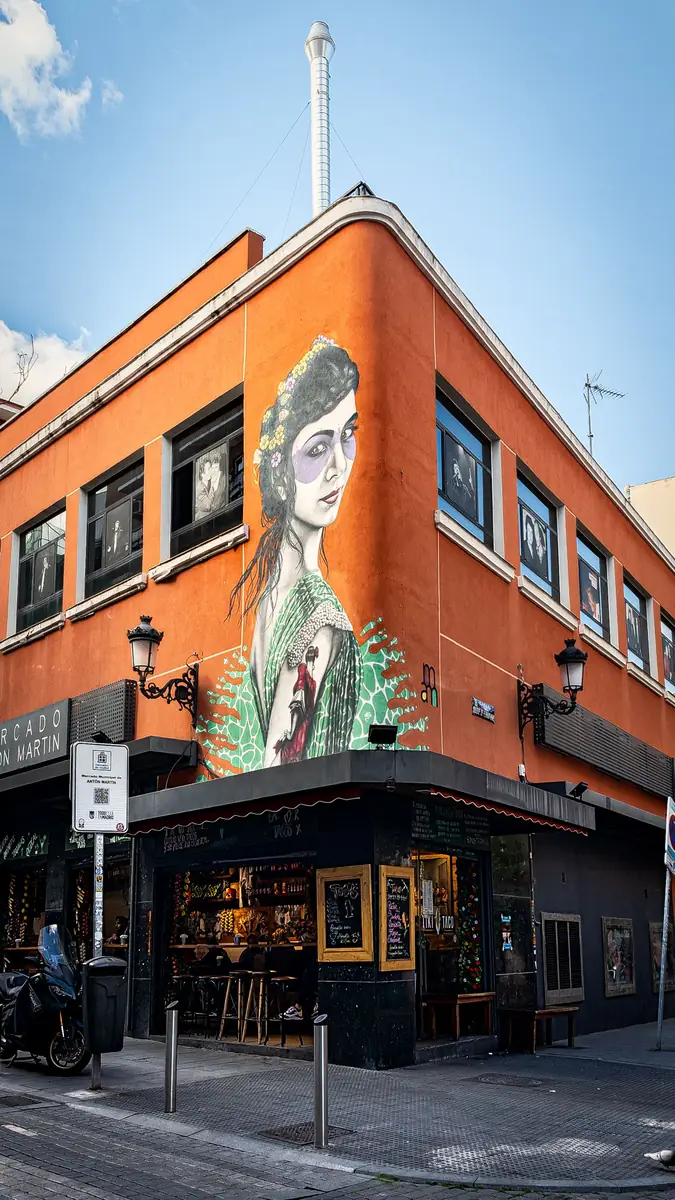
Carabanchel is not one market but several. The same district has 1950s-to-1970s brick blocks without lifts, public housing estates that the City Council has earmarked for regeneration, and the developments with swimming pools of the PAU de Carabanchel (a large planned urban extension), built this century and with many protected homes. So before putting a price on your flat, it pays to know which Carabanchel it is in and what a viewer will look at.
In this guide we go step by step: what the district’s market is like, what a buyer here asks for, the seven steps of the sale with how long each one takes, and a summary of the seller’s taxes in the city of Madrid, with an illustrative example. If you want a breakdown of every cost, we did one for a neighbouring town in “How much it costs to sell a flat in Alcorcón in 2026”; the full list of papers is in “Documents for selling a flat in Madrid in 2026”.
The essentials in one minute
- Price: according to Tinsa, housing in Carabanchel has an average value of €3,413/m² in the third quarter of 2026, up 15.01% in a year. It is an average: your floor, the lift, the light, the condition and the neighbourhood move it a lot.
- Seven steps: valuation, papers, preparation and photos, viewings, offer and arras (deposit contract), the buyer’s mortgage and the notary, and what comes afterwards (plusvalía and IRPF, personal income tax).
- Key papers: nota simple (land registry extract), latest IBI (property tax) bill, energy certificate (the label goes in the listing), certificate of debts from the community of owners (seven calendar days at most) and, in residential blocks over 50 years old, the IEE (building evaluation report). The cédula de habitabilidad (habitability certificate) is not needed in the Comunidad de Madrid.
- If your flat is protected housing, as many in the PAU de Carabanchel are, check its classification first: while protection lasts there is a maximum price and, in some cases, authorisation from the Comunidad de Madrid.
- Plusvalía in the city of Madrid: a 29% rate and whatever coefficients the law sets. From 1 December 2026 they rise for owners who have had the flat for 1 to 16 years (at 10 years, from 0.12 to 0.22) and fall from 17 years (from 20 years, from 0.40 to 0.30). It is paid within 30 working days of the deed.
- IRPF: the gain is taxed at 19% to 30% in bands. Over-65s selling their main home and people who reinvest in another main home may be exempt.
- With Llavely you pay 2.5% + VAT only if you sell: you get in touch and we handle the sale from start to finish.
What the Carabanchel market is like
Carabanchel is Madrid’s district 11 and the most populous of the 21: it had about 278,000 residents on 1 January 2026, according to the municipal register figures reported by elDiario.es in April. It grew out of the old villages of Carabanchel Alto and Carabanchel Bajo, which joined Madrid in the mid-20th century, and grew very fast in the following decades with blocks for working families. Metro lines 5, 6 and 11 run through it, and it has two large green spaces: the San Isidro park and the Quinta de Vista Alegre.
On price, Tinsa puts the average value of finished housing, new and second-hand, at €3,413/m² in the third quarter of 2026, with an annual rise of 15.01%. The Comunidad de Madrid average in the same statistics is €3,699/m², up 13.3%. In other words, Carabanchel is still below the regional average and well below the central districts, which attracts first-time buyers and families looking for more space for the same money. It is valuation data, not the price of each sale; within the district there are big differences from one street to the next, and there are no official price statistics by neighbourhood.
The seven neighbourhoods: what kind of housing each one has
The City Council divides Carabanchel into seven administrative neighbourhoods (barrios). This is a general guide to help you get your bearings; your particular building may be different:
| Neighbourhood | Main type of housing | What buyers usually look at |
|---|---|---|
| Comillas (111) | Blocks from the 1950s to the 1970s and more recent buildings, next to Madrid Río and Marqués de Vadillo | Closeness to the centre and the river; lift; condition of the building |
| Opañel (112) | Mid-20th-century blocks with local shopping streets, around metro line 6 | Lift, interior refurbishment, facing the street or an inner courtyard |
| San Isidro (113) | Blocks from various periods around the San Isidro park and hermitage | Views and orientation, noise from the May festivities, lift |
| Vista Alegre (114) | A large, dense neighbourhood with 1960s and 1970s blocks and some new buildings, next to the Quinta de Vista Alegre | Metro (line 5), lift, special levies for community works |
| Puerta Bonita (115) | 1960s and 1970s blocks and more recent developments | Price per square metre, condition of the building, energy certificate |
| Buenavista (116) | Includes much of the PAU de Carabanchel: 21st-century buildings with parking, communal areas and pools, many of them protected housing | Whether the home is still protected, community fees, parking space and storage room |
| Abrantes (117) | 1960s and 1970s social housing blocks, such as Pan Bendito, alongside more recent ones | Lift and accessibility, planned regeneration works, price |
Neighbourhoods and codes: Madrid City Council’s administrative division. General description by Llavely; the PAU and Pan Bendito according to the City Council’s 2009 Urban Planning Management Report and its Madrid Recupera plan.
The PAU de Carabanchel (in municipal documents, PAU II-6 Ensanche de Carabanchel) is a case apart. The City Council’s 2009 Urban Planning Management Report describes it as covering 356.5 hectares, with licences for 11,901 homes by the end of that year: 4,144 VPO (officially protected housing), 1,510 at precio tasado (a capped-price regime), 248 under generic protection and 5,999 free-market. The first licence was granted in September 2000. In other words, almost half of what was built was protected. Many of those homes will have come out of protection by now, but not all; we explain this below.
At the other end are the older estates and blocks. Madrid Recupera, the City Council’s urban regeneration strategy for 2018-2030, identifies four priority areas in Carabanchel: the Colonia Loyola-Virgen de la Inmaculada, Roger de Flor, the Colonia Experimental and Pan Bendito, and proposes measures for them such as installing lifts and insulating façades.
What a buyer in Carabanchel will ask you for
People buying here usually buy with a mortgage and look closely at the building, not just the flat. These are the questions you should have answered before the first viewing:
- Does it have a lift? In 1950s-to-1970s blocks, many buildings have none or added one later. If there is none, the buyer will ask whether the community has looked into it and what it would cost. If it has already been approved, say so: it is a special levy that has to be shared out.
- What condition is the building in? In the Comunidad de Madrid, residential blocks over 50 years old need the Informe de Evaluación del Edificio (IEE, building evaluation report), signed by a qualified professional, which assesses condition, accessibility and energy efficiency (Decree 103/2016). Ask the property manager for the IEE or the ITE (technical building inspection) and its result: an unfavourable report with pending works changes the offer.
- Are works or grants under way? If your building is in a regeneration area (such as those identified by Madrid Recupera) or the community has applied for grants, for example from the City Council’s Plan Rehabilita, which in 2026 has 50 million euros for accessibility, lifts, energy efficiency and conservation, ask what is still to be paid and who will pay it. Agree it in writing in the arras.
- Does it have an energy certificate? It is compulsory for selling: the label must appear in the listing and the certificate is handed to the buyer. It is valid for ten years, or five if the rating is G. In old blocks without insulation the rating is often low; that is fine, but it must be there.
- Is it protected housing? Very common in the PAU. If it is, the price is not free while protection lasts.
- How much are the community fees and are there any debts? The buyer will want to see the secretary’s certificate and the fees. In the PAU, with pools and communal areas, fees are higher than in an old block.
- The cédula de habitabilidad is not needed: the Comunidad de Madrid abolished it in 2018. If someone asks you for it, explain this.
If your flat is protected: check this before setting a price
In the PAU de Carabanchel and other public developments in the district, many homes were sold as VPO, VPPB, VPPL or precio tasado (different protected-housing regimes). According to the Comunidad de Madrid, while protection lasts you can only sell at the maximum legal price in force when you sell, and once the protection period has ended you can sell at a free price. How long it lasts depends on the rules under which the home was classified; you can see it in the cédula de calificación definitiva (final classification certificate) and in a recent nota simple.
You also need authorisation from the Comunidad if you obtained a qualified loan or grants and sell within the period set by the relevant plan; in that case you must repay the grants with legal interest and cancel or renegotiate the loan. If the home was allocated by a municipal company, check its conditions too. Full details are in “Selling a protected flat (VPO, VPPB or VPPL) in the Comunidad de Madrid in 2026”.
The seven steps to selling your flat in Carabanchel
1. Valuation: a price based on data from your area
Start with the district average, but don’t stop there. What tells you most is what has actually sold near you, in a similar building: same period, with or without a lift, same floor and condition. A third floor without a lift is not worth the same as one with a lift, even on the same street. Also look at your flat’s valor de referencia (the Cadastre’s reference value): it does not set the price, but the buyer will pay their tax on whichever is higher, the price or that value, and will take it into account. To fine-tune it, in “How much is my flat in Madrid worth? Price per m² in the 21 districts” we explain how to compare.
2. Papers: what to have ready before the listing
- Purchase or inheritance deed, and a recent nota simple from the Land Registry to check owners and charges.
- Latest IBI bill: you will use it for the plusvalía (it shows the cadastral value of the land) and the buyer will ask for it.
- Energy performance certificate, signed by a qualified professional and registered with the Comunidad de Madrid.
- Certificate of debts with the community of owners, signed by the secretary and approved by the president. The Horizontal Property Act gives a maximum of seven calendar days to issue it and, without it, the notary will not authorise the sale unless the buyer waives it.
- The building’s IEE or ITE, if it has one, and the minutes of recent meetings: approved levies, lift, works.
- If there is a mortgage outstanding, the bank’s certificate of the amount owed. If it is paid off but still registered, it is worth cancelling it at the Registry: we explain how in “Selling a flat with a mortgage in 2026”.
- If it is protected housing, the classification certificate and, if needed, the sale authorisation.
3. Preparing the home, photos and listing
Do the small repairs that change the first impression (paint, lighting, taps, sockets) and leave major works to the buyer, unless you are sure you will get the money back. We think it through in more detail in “Renovate the flat before selling or sell it for renovation?”. In Carabanchel’s older flats, good photos in natural light and a floor plan with measurements help a lot for people comparing on their phones. The listing must show the energy label.
4. Viewings: fewer, but with buyers who can pay
Before opening the door, ask how the buyer would pay: with a pre-approved mortgage, with savings or by selling another home. Group viewings together, have the energy certificate, the community fees and what you know about the building to hand, and never give keys to anyone you have not identified. This is the stage that varies most: it depends on the price, the condition and demand in your neighbourhood.
5. Offer and arras
When you accept an offer, the usual step is to sign an arras contract: the buyer pays a deposit and you both commit to signing the deed before a certain date. Put in writing the type of arras, the deadline, who pays the notary, how that year’s IBI is split and what happens with approved levies. If the buyer needs a mortgage, agree a realistic deadline. We explain all this in “Arras contracts in 2026: types, how much is paid, deadlines and what to check”.
6. The buyer’s mortgage and the notary
If the buyer applies for a mortgage, the bank will value the flat and give them the binding offer (the FEIN, European Standardised Information Sheet). Law 5/2019 requires them to have it at least ten calendar days before signing, and to see the notary no later than the day before the loan is signed. That lets you fix the date. On notary day you sign the deed, you receive the price (and, if there is a mortgage left, it is cancelled there with that money) and you hand over the keys.
7. After signing: plusvalía, IRPF and changes of account holder
You have 30 working days to file the plusvalía with Madrid City Council, even if nothing is due. The gain from the sale is declared in the IRPF for the year of the deed: if you sign in 2026, in the return filed in 2027. Tell the community about the sale and cancel or transfer the utilities. We look at this in detail below.
How long each step takes
There is no fixed time for selling a flat. What there are, though, are legal deadlines in some stages and others that depend on you and the buyer:
| Step | What it includes | How long it takes |
|---|---|---|
| 1. Valuation | A price based on data from your area and your building | You can have it from day one; at Llavely we review every property within 24 hours |
| 2. Papers | Nota simple, IBI, energy certificate, community certificate, IEE or ITE | Community certificate: no more than 7 calendar days from your request (Horizontal Property Act). Energy label: about 2 working days after registering it (Comunidad de Madrid). The rest depends on the professional and the property manager |
| 3. Preparation and listing | Repairs, photos, floor plan, listing with the label | Depends on what needs fixing; the listing cannot go out without the energy label |
| 4. Viewings and offers | Screening buyers, showing the home, negotiating | The most variable stage: it depends on price, condition and demand |
| 5. Arras | Deposit and deadline for the deed | Whatever period you agree; leave room if the buyer needs a mortgage |
| 6. Mortgage and notary | Valuation, binding offer, signing | Binding offer at least 10 calendar days before signing, and a visit to the notary no later than the day before (Law 5/2019) |
| 7. After signing | Plusvalía, IRPF, community, utilities | Plusvalía: 30 working days from the deed. IRPF: in the following year’s return |
Legal deadlines: Horizontal Property Act, article 9.1.e); Law 5/2019, articles 14 and 15; Madrid City Council plusvalía tax ordinance, article 24; Comunidad de Madrid (energy certificate). The rest is indicative.
The seller’s taxes in the city of Madrid, in brief
When you sell you pay two taxes: the plusvalía to the City Council and IRPF on the gain to the Tax Agency. The purchase tax (ITP, property transfer tax, on second-hand homes) is paid by the buyer. The full detail, with all exemptions, is in “Taxes when selling a flat in 2026: municipal plusvalía in Madrid, IRPF and exemptions”.
The plusvalía: a 29% rate and coefficients that change on 1 December
The plusvalía taxes the increase in value of the land during the years you have owned the flat. In the city of Madrid it is governed by tax ordinance no. 6. Its article 17 sets the rate at 29% and its article 10 says that the coefficients applied are those “that, for each generation period, have been established by a rule with the rank of law”. In other words, Madrid has no table of its own: it uses the one in the law in force on the day of the deed.
There are two ways of calculating it and you pay the lower one. In the objective method, the cadastral value of the land (on the IBI bill) is multiplied by the coefficient for your full years of ownership and by 29%. In the real method, the gain between the purchase and sale deeds is multiplied by the share of the land in the cadastral value and by 29%. If you sell for less than you paid, there is no tax, but you still have to file it.
What matters in 2026: article 10 of Royal Decree-law 29/2026 sets new maximum coefficients “with effect from 1 December 2026”. As Madrid applies those in the law, they change for every sale in the city signed from that day. They rise for owners who have had the flat for 1 to 16 years and fall from 17:
| Years of ownership | Deed up to 30-11-2026 | Deed from 1-12-2026 |
|---|---|---|
| Less than 1 year | 0.15 | 0.17 |
| 1 year | 0.15 | 0.16 |
| 2 years | 0.14 | 0.16 |
| 3 years | 0.14 | 0.17 |
| 4 years | 0.16 | 0.17 |
| 5 years | 0.18 | 0.19 |
| 6 years | 0.19 | 0.21 |
| 7 years | 0.20 | 0.23 |
| 8 years | 0.19 | 0.24 |
| 9 years | 0.15 | 0.25 |
| 10 years | 0.12 | 0.22 |
| 11 years | 0.10 | 0.18 |
| 12 years | 0.09 | 0.14 |
| 13 years | 0.09 | 0.12 |
| 14 years | 0.09 | 0.11 |
| 15 years | 0.09 | 0.11 |
| 16 years | 0.10 | 0.11 |
| 17 years | 0.13 | 0.11 |
| 18 years | 0.17 | 0.13 |
| 19 years | 0.23 | 0.20 |
| 20 years or more | 0.40 | 0.30 |
Sources: Royal Decree-law 29/2026, article 10 (BOE); Madrid City Council tax ordinance no. 6, articles 10 and 17. The first column is the table the law kept in place until 30 November 2026; Agencia Tributaria Madrid gives 0.14 for 3 years in 2026 as an example. Rate: 29% in all cases.
If you have owned your flat for 20 years or more, as many owners in Carabanchel’s older blocks have, signing from 1 December lowers your plusvalía. If you bought it between 1 and 16 years ago, for example in the PAU or after a recent refurbishment, it costs you more. Watch out for full years: they are counted from date to date, so a few days can move you to another row. And always compare with the real method: with a small gain it may come out cheaper.
If you inherit the deceased’s main home, article 18 of the ordinance provides a reduction of the tax depending on the cadastral value of the land, from 95% to 40%. As of 17 November 2026, the 29% rate is the one in the 2026 ordinance; if you sign in 2027, check that year’s tax ordinance.
IRPF on the gain
For IRPF, what is taxed is the gain: the sale price, minus the selling costs you pay (commission, plusvalía, energy certificate, mortgage cancellation), minus what the flat cost you including purchase costs and improvements with invoices. That gain goes into the savings tax base, with the state and Comunidad de Madrid scales added together:
| Gain (savings base) | Total rate |
|---|---|
| Up to €6,000 | 19% |
| €6,000 to €50,000 | 21% |
| €50,000 to €200,000 | 23% |
| €200,000 to €300,000 | 27% |
| Over €300,000 | 30% |
Source: Agencia Tributaria, 2025 income tax manual: state and regional scales for the savings tax base (9.5% + 9.5%, 10.5% + 10.5%, 11.5% + 11.5%, 13.5% + 13.5% and 15% + 15%).
- Over-65s: the gain from selling the main home is exempt. It counts as the main home if it is so at the time of sale or was so at any point in the previous two years.
- Reinvestment: if you reinvest the proceeds in another main home within the two years before or after the sale, the gain is exempt; if you reinvest only part, the exemption is proportional. The home sold must have been your main home for at least three years, and the exemption is claimed in the tax return.
- If you bought at a high price, between 2005 and 2008, there may be no gain and no IRPF to pay.
Illustrative example: a 70 m² flat in a 1960s block
A made-up but typical case: a 70-square-metre flat with three bedrooms and a lift installed by the community, in a 1960s block in Vista Alegre. Its owner, aged 55, bought it in 2000 for 110,000 euros and paid 7,000 euros in purchase costs. She has no mortgage and is not going to reinvest. She sells it in 2026 for 238,000 euros, about 3,400 euros per square metre, close to the average value Tinsa gives for the district. Assumed cadastral value of the land: 45,000 euros, half of the total cadastral value.
| Item | Deed up to 30-11-2026 | Deed from 1-12-2026 |
|---|---|---|
| Sale price | €238,000 | €238,000 |
| Llavely commission (2.5% + 21% VAT) | €7,199.50 | €7,199.50 |
| Energy certificate (assumed quote) | €150 | €150 |
| Plusvalía (€45,000 × 20-years-or-more coefficient × 29%) | €5,220 (coefficient 0.40) | €3,915 (coefficient 0.30) |
| Costs excluding IRPF | €12,569.50 (5.3% of the price) | €11,264.50 (4.7% of the price) |
| Gain for IRPF | €108,430.50 | €109,735.50 |
| IRPF (19%, 21% and 23% in bands) | €23,819 | €24,119 |
| What the seller keeps | €201,611 | €202,616 |
Illustrative example by Llavely (17 November 2026) using Madrid City Council tax ordinance no. 6, article 10 of Royal Decree-law 29/2026 and the Tax Agency’s savings scale. No other gains in the year and no exemptions. The real method would give a plusvalía of €18,560, so the objective method applies. IRPF and net figures rounded to the euro.
Here, signing from 1 December saves 1,305 euros of plusvalía; as the plusvalía is deducted for IRPF, the net saving is about 1,005 euros. If the same owner were 66 and it were her main home, IRPF would be zero.
Now the opposite case: someone who bought in the PAU in 2016 and sells after 10 full years of ownership. With the same land value, the plusvalía would go from 1,566 euros (coefficient 0.12) to 2,871 euros (0.22) by signing from 1 December: 1,305 euros more, partly offset in IRPF. If you are in that bracket and already have a buyer, think the date through carefully. If you are torn between December and January for other reasons, we look at it in “Selling your flat in Madrid in December 2026 or January 2027”.
How we do it at Llavely
At Llavely we sell homes throughout the Comunidad de Madrid, including in all seven neighbourhoods of Carabanchel, and we take care of everything: you get in touch and we handle the sale from start to finish. We review every property within 24 hours. Valuation, photos, video, floor plan and virtual tour are included. Before showing your home we talk to each buyer to find out what they are looking for and how they would pay, we do the viewings ourselves and you follow everything from your private seller portal on the website.
Our specialised lawyers check the nota simple, the charges and, where relevant, the home’s protection regime; they gather the community papers, including the IEE or ITE; they carry out the calculation of the corresponding taxes; they draft the arras and go with you to the notary. You pay 2.5% + VAT on the price, in total, only if you sell and on the day of the notary signing. For buyers, buying with Llavely is free. If you want to know what your flat in Carabanchel is worth, request your free valuation.
Frequently asked questions
How much is a square metre worth in Carabanchel in 2026?
According to Tinsa, housing in Carabanchel has an average value of €3,413/m² in the third quarter of 2026, 15.01% more than a year earlier. The Comunidad de Madrid average in those statistics is €3,699/m². It is an average of valuations: the lift, the floor, the condition and the neighbourhood move the price of each flat a lot.
What are the neighbourhoods of Carabanchel?
Seven administrative neighbourhoods: Comillas, Opañel, San Isidro, Vista Alegre, Puerta Bonita, Buenavista and Abrantes. Buenavista has much of the PAU de Carabanchel, with buildings from this century and many protected homes; elsewhere, blocks from the 1950s to the 1970s predominate.
What documents do I need to sell a flat in Madrid?
Deed, nota simple (land registry extract), latest IBI (property tax) bill, energy certificate, certificate of community debts and, if there is a mortgage left, the bank’s certificate of the debt. In residential buildings over 50 years old, the IEE. If the home is protected, the classification certificate and, where applicable, the sale authorisation. The habitability certificate is not needed in the Comunidad de Madrid.
Can I sell a protected flat in the PAU de Carabanchel at a free price?
Only once its protection period has ended. While it lasts, the Comunidad de Madrid sets a maximum price and, if you received grants or a qualified loan, you may need authorisation and have to repay them. Check the final classification certificate and a recent nota simple.
How much plusvalía do you pay when selling a flat in Madrid?
The cadastral value of the land times the coefficient for your years of ownership times 29%, or the real gain on the land times 29% if that is lower. From 1 December 2026 the coefficients change: they rise for 1 to 16 years of ownership (at 10 years, from 0.12 to 0.22) and fall from 17 (from 20 years, from 0.40 to 0.30). It is filed within 30 working days.
How long does it take to sell a flat in Carabanchel?
There is no fixed time: it depends mainly on price, condition and demand. There are legal deadlines in some stages, though: the community certificate within seven calendar days at most; the binding offer for the buyer’s mortgage at least ten calendar days before signing; and the plusvalía within 30 working days of the deed.
Does it matter if the building has no lift?
Yes, for the price and for who buys. If the community is considering installing one or has already approved it, say so and agree in the arras who pays the levy. Madrid City Council’s Plan Rehabilita includes grants for installing lifts.
Do I pay IRPF if I sell my flat in Carabanchel?
Yes, on the gain, at 19% to 30% in bands, in the following year’s return. You don’t pay if you are over 65 and it is your main home, or if you reinvest everything in another main home within the two years before or after; if you reinvest part, the exemption is proportional.
Sources
- Royal Decree-law 29/2026 of 6 October on urgent measures to protect the social function of housing and expand the supply of affordable housing: article 10, municipal capital gains tax coefficients from 1 December 2026, consolidated text (BOE, Official State Gazette, updated 13 November 2026)
- Tax ordinances 2026, ordinance no. 6 on the tax on the increase in value of urban land: articles 10, 17, 18 and 24 (Agencia Tributaria Madrid, Madrid City Council)
- How the plusvalía is calculated (Agencia Tributaria Madrid, Madrid City Council)
- Law 49/1960 of 21 July on horizontal property (Spanish condominium law), consolidated text: article 9.1.e) (BOE, updated 3 October 2026)
- Law 5/2019 of 15 March on real estate credit contracts, consolidated text: articles 14 and 15 (BOE)
- Tax on the savings tax base, 2025 income tax return manual (Agencia Tributaria, Spanish Tax Agency)
- Sale of the main home by people over 65, specific 2025 income tax manual (Agencia Tributaria)
- I have a protected home and want to sell it (Comunidad de Madrid, updated 5 November 2026)
- Building Evaluation Report (IEE): prior procedure and documents, Decree 103/2016 (Comunidad de Madrid e-office, updated 28 November 2024)
- Energy performance certificate for homes (Comunidad de Madrid, updated 4 April 2025)
- Madrid Recupera. Strategic Urban Regeneration Plan 2018-2030: Carabanchel district sheet (Madrid City Council)
- 2009 Management Report of the Urban Planning and Housing Department: new developments, PAU II-6 Ensanche de Carabanchel (Madrid City Council)
- The City Council opens applications for the Plan Rehabilita 2026 grants, with 50 million euros (Diario de Madrid, Madrid City Council, 2 June 2026)
- House prices in Carabanchel (Madrid), IMIE Local Markets, third quarter of 2026 (Tinsa)
- Madrid loses population and falls below 3.5 million inhabitants although births exceed deaths (elDiario.es, 30 April 2026)
- Reinvestment exemption for the main home: requirements (CaixaBank, updated 11 August 2025)