Buying & selling · · 22 min read
The nota simple and charges before buying or selling a home in Madrid in 2026: what it is, how to request it, what it costs, how to read it and what to do if a mortgage, an attachment or a tax charge appears
The nota simple (land registry extract) from the Registro de la Propiedad (Spanish Land Registry) tells you who owns a home and which charges are registered against it. We explain how to request it from the online portal of the Colegio de Registradores (the association of land registrars) or at the Registry, what it costs according to the Colegio itself and the official fee schedule in the BOE (Spain’s official gazette), how to read each section (owners, description, mortgages, attachments, preventive entries, tax charges, easements, usufructs and protected-housing restrictions), what it does not tell you (debts with the owners’ association, IBI property tax, occupation, condition of the flat), what else to ask for and what to do if a charge appears, as known on 15 November 2026.
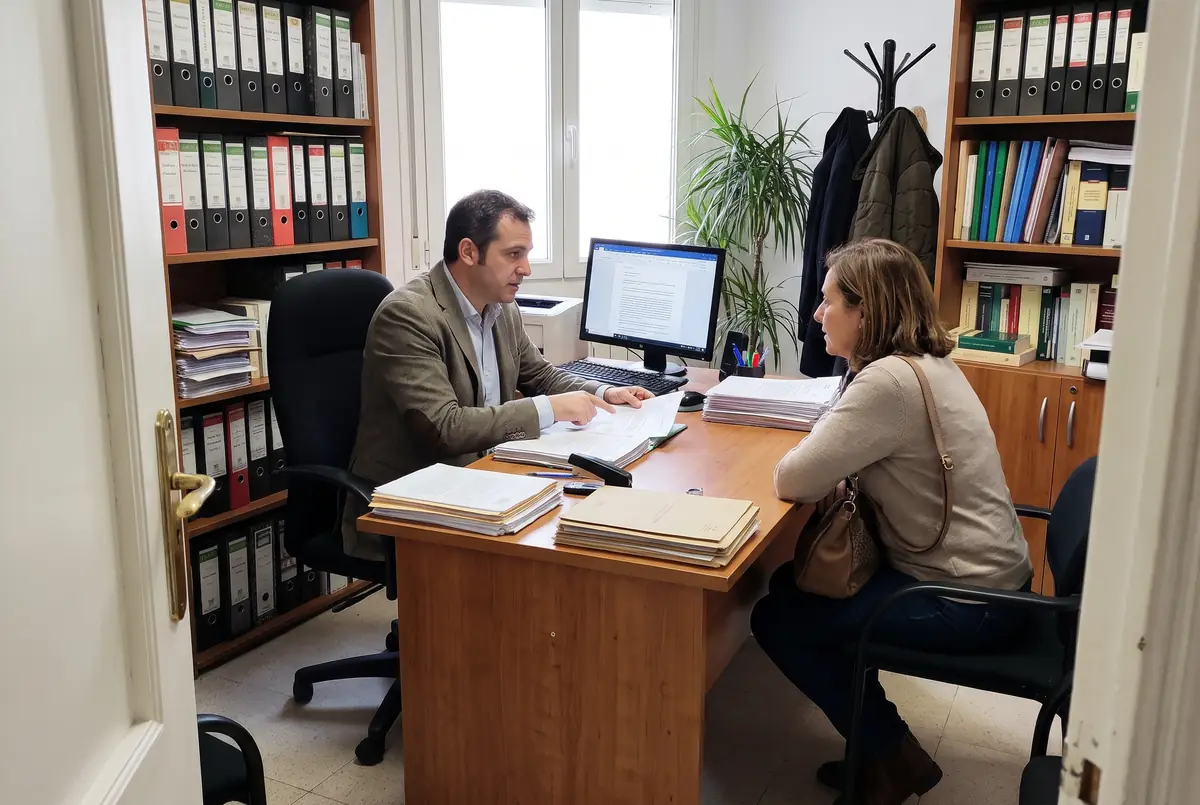
Before you pay a deposit on a flat, the first document that should pass through your hands is the nota simple. It takes minutes to request, costs a few euros and answers two key questions: is the person selling to you really the owner? And is the home free, or does it have mortgages, attachments or other registered charges? If you are selling, having it ready prevents the sale from stalling later.
Using the official information consulted on 15 November 2026, we explain how to request it, what it costs, how to read it, what it does not say and what to do if a charge appears. The full list of documents for selling is in “Documents to sell a flat in Madrid in 2026: full list, where to get them and what they cost”, and debts with the owners’ association in “Special levies and debts with the owners’ association when selling or buying a flat in Madrid in 2026”. Here we focus on the Land Registry.
The essentials in one minute
- The nota simple summarises what the Land Registry has recorded about a property: what it is like, who owns it and which charges it has. It is for information only.
- You request it at sede.registradores.org or at the Registry covering the home. You do not need to be the owner, but you must explain why you want it.
- Online it costs €9.02 per property, excluding taxes, according to the Colegio de Registradores portal.
- What matters most: that the owner on record matches the seller and what appears under charges: mortgages, attachments, tax charges, easements, usufructs or protected-housing restrictions.
- It does not say whether association fees or IBI (property tax) bills are owed, whether the home is occupied or what condition it is in: also ask for the association certificate and the latest IBI bill, and check the Catastro.
- A charge can almost always be resolved (a mortgage is cancelled at signing with part of the price; an attachment is lifted by paying the debt), but you need to know before the arras (deposit contract) and agree it in writing.
What the nota simple is and how it differs from a certificate
The Registro de la Propiedad is the public office where homes and the rights over them are recorded: who the owner is, which mortgages they carry, which attachments have been noted. Under article 221 of the Mortgage Law, the Registries are public for anyone with a known interest in finding out the status of real estate. That information can be obtained in two ways: with a nota simple or with a certificate.
La nota simple informativa tiene valor puramente informativo y no da fe del contenido de los asientos (the informative nota simple has purely informative value and does not certify the content of the entries)
Mortgage Law, article 222.5 (BOE, consolidated text)
The Mortgage Regulation spells this out in article 332: the nota simple consists of a brief extract of the entries in force relating to the property, and it must also state any prohibitions or restrictions affecting the owners or the registered rights. It does not copy the whole history, only what is in force, and the registrar is liable for errors in it.
A certificate is something else: a public document signed by the registrar. Article 225 of the Mortgage Law says that whether a property is free or encumbered can only be proven against third parties by a Registry certificate. For an ordinary sale, the nota simple is enough to get informed. A certificate is requested when something has to be proven before a court, a public authority or in a specific procedure, and under article 236 of the Mortgage Law the time to issue it may not exceed four days per property.
The law protects those who buy relying on the Registry. Under article 32 of the Mortgage Law, rights over real estate that are not registered or noted do not prejudice third parties, and article 34 protects anyone who buys in good faith and for value from a person shown in the Registry as entitled to sell, once the purchase is registered. But some debts follow the home without being registered, such as association fees or IBI: the nota is the first step, not the only one.
How to request the nota simple in 2026
The quickest route is the online portal of the Colegio de Registradores. You can also go to the Registro de la Propiedad that covers the home (Madrid city has several, each covering its own streets).
- Go to sede.registradores.org, Propiedad section, “Nota simple”. You do not need to register.
- Identify the property: with the CRU or IDUFIR (its unique registry code), with the registry details (province, municipality, Registry and property number), with the address if you know the municipality and the Registry, or on the geoportal map. The Colegio’s instructions also allow searching by cadastral reference.
- If you want to search by the owner’s name, the portal requires you to identify yourself with a digital certificate.
- State why you want it. You must give a legitimate interest (for example, “purchase of the home”), which the registrar assesses. According to the Colegio’s instructions, the owner can later find out what information was released and why.
- Pay and wait for the email. Once issued, the portal sends an email with a link to download the nota as a PDF. You can also request an English translation.
The more details you provide, the better: the portal itself recommends giving all you have to avoid the request being refused or coming back negative (meaning the property was not found). If you are selling, the easiest details are those in your purchase deed: the Registry, the property number and, if it has one, the CRU or IDUFIR.
If you go through a notary, the notary requests their own information. According to the notaries’ council, before the deed the notary requests a continuous information note from the Registry and, after signing, files the deed electronically the same day. The Mortgage Regulation provides that the Registry must reply within three working days at most, with exceptions where there are many properties or a complex history.
What the nota simple and the certificate cost
| What you request | Price | Source |
|---|---|---|
| Nota simple online, per property | €9.02 per property, taxes and withholdings not included. Illustrative example: with the standard 21% VAT, about €10.91 | Online portal of the Colegio de Registradores, November 2026 |
| English translation of the nota simple | €30, taxes not included | Online portal of the Colegio de Registradores |
| Informative nota simple or inspection of the books, per property | €3.005061, whatever the number of entries | Registrars’ fee schedule, item 4.1.f (Royal Decree 1427/1989) |
| Certificate of ownership, per property | €9.015182 | Fee schedule, item 4.1.a |
| Certificate of charges, per property | €24.040484, whatever the number of charges | Fee schedule, item 4.1.b |
| Consultation of non-protected cadastral data | Free-access service on the Catastro portal (not a certificate) | Catastro online portal |
The fee schedule amounts are those of the consolidated text of Royal Decree 1427/1989 in the BOE, excluding taxes. The online nota simple price is the one published by the Colegio’s portal.
Why two prices? The impact assessment report for the draft Royal Decree amending the fee schedule, dated 18 September 2026, explains that the online nota simple was not expressly included in the fee schedule and that the Directorate-General for Legal Certainty and Public Faith recognises €9.02 for all items. The draft proposes setting that €9.02 per property in the fee schedule. As of 15 November 2026 it is still a draft; if approved, it will be published in the BOE.
What the nota simple contains, section by section
Each Registry has its own layout, but all notas simples follow the same order. This is how to read each part:
- Details of the nota: which Registry issues it, the date and the property concerned. The nota reflects what was registered on that day.
- Description of the property: address, floor and door, surface area, boundaries, annexes (a linked storage room or parking space), the share in the building if it is under the horizontal property regime, the CRU or IDUFIR and, if recorded, the cadastral reference. It may also state whether it is coordinated with the Catastro.
- Ownership: who the owner is, in what percentage, by what title it was acquired (purchase, inheritance, gift) and when it was registered. If a married couple bought it under the community property regime (gananciales), it will appear as such.
- Charges: what weighs on the property. Mortgages (with amount and bank), preventive entries for attachments or lawsuits, tax charge notes, easements, usufructs, resolutory conditions or protected-housing restrictions. If there is nothing, it usually states that the property is free of charges.
- Pending documents: if deeds or orders have been filed with the Registry but not yet registered, the nota usually flags this at the end. This is very important: it could be an earlier sale, a new mortgage or an attachment that does not yet appear under charges.
Table: what may appear under charges, what it means and what to do
| What appears | What it means | What to do |
|---|---|---|
| Mortgage in favour of a bank | The home secures a loan. Unless cancelled, it keeps burdening the property even if it changes hands | Ask the seller for the outstanding balance and agree that it will be cancelled at signing with part of the price. The buyer can also take it over (subrogation) if the bank accepts |
| Mortgage already paid off but not cancelled in the Registry | The loan was repaid, but nobody completed the registry cancellation | The seller asks the bank for the zero-balance certificate, signs the cancellation deed and registers it. This can be done before selling or in the same transaction |
| Preventive entry of attachment (embargo) | A court, the tax agency, Social Security or a city council has attached the property for a debt of the owner | Find out how much is owed today, pay it (often with part of the price held back at the notary) and obtain the cancellation order |
| Other preventive entries (lawsuit, prohibition on disposal) | There is litigation over the property or an order preventing its sale | Do not sign arras until a lawyer has reviewed the proceedings and how it can be lifted |
| Marginal note of tax charge (afección fiscal) | The property is answerable for a tax (for example, the transfer tax on the previous purchase or inheritance tax) if it turns out not to have been paid correctly | Ask for proof of the self-assessment. If the period has passed, request its cancellation |
| Easement (servidumbre) | A right of another property or a company over yours: right of way, light and views, an installation | Read exactly what it allows. It is not usually cancelled with the sale: you buy the property with it |
| Usufruct | Another person has the right to use the home or collect its rents, usually for life | To buy the whole home, both the usufructuary and the bare owner must sign |
| Protected housing (VPO or VPP) | There are limits on maximum price, use or sale, or pre-emption and buy-back rights for the authorities | Check with the Comunidad de Madrid whether it is still protected and what authorisation is needed |
| Resolutory condition for deferred price | In a previous sale part of the price remained unpaid, and if unpaid the sale could be cancelled | Ask for proof of payment and its registry cancellation before signing |
| Free of charges | Nothing registered burdens the property | Even so, ask for the papers the nota does not cover: association, IBI, Catastro and condition of the home |
Guidance table. Each entry has its own dates and amounts: read them with a lawyer or the notary before signing.
What the nota simple does not tell you
The nota simple only reports what is registered. Some things weigh on a home and do not appear in it:
- Debts with the owners’ association. Under article 9.1.e of the Horizontal Property Law, the buyer answers with the home itself for the fees falling due in the current year and the three previous years. They are not registered: they are proven with the association secretary’s certificate.
- Unpaid IBI bills. Article 64 of the Local Finances Law says that when the owner changes, the property remains bound to pay the full tax due, and requires notaries to request information and warn of outstanding debts.
- Whether the home is occupied or rented. The nota does not say who lives in the flat. An unregistered lease can have effects for the buyer. We cover this in “Selling a rented flat with a tenant in 2026: pre-emption rights, price and options” and “Selling an occupied flat in Madrid in 2026”.
- The condition of the flat and the building (damp, ITE or IEE building inspections, approved special levies), or whether the works carried out have a licence.
- Whether the surface area is real. The registry area, the Catastro area and what you measure at home may not match. According to the Catastro, when a property is coordinated its location, boundaries and area are presumed correct.
- What has not yet reached the Registry: an attachment just ordered or a deed signed yesterday. That is why the notary requests the information again before signing.
What else to ask for besides the nota simple
| Document | What it is for | Who provides it |
|---|---|---|
| Certificate of debts with the owners’ association | To know whether the seller is up to date with common charges. Without it, the notary will not authorise the deed unless the buyer expressly waives it | The association secretary, approved by the president, within a maximum of seven calendar days |
| Latest IBI bill and proof of payment | To see the cadastral reference and check that no bills are outstanding | The seller; the city council, through its taxpayer portal |
| Catastro consultation | To check the cadastral reference, location and non-protected data of the property. The owner and cadastral value are protected data | Catastro online portal (free access to non-protected data) |
| Registry certificate | To officially prove ownership or charges when needed before a court, an authority or a third party | The Registro de la Propiedad |
| Zero-balance certificate | To prove a mortgage is paid off so it can be cancelled | The bank, free of charge |
| Energy performance certificate | Mandatory to sell and to advertise the home | A qualified technician; registered with the Comunidad de Madrid |
| Protected-housing documentation | To know whether it is still protected, its maximum price and whether authorisation is needed | Comunidad de Madrid |
The Comunidad de Madrid includes all of this among the information you can ask for before buying and, if there is a mortgage, recommends putting in writing how it will be cancelled and who pays the costs. The notaries’ council gives the same advice.
How to read it without missing anything
- Compare the owner with the seller. Name, ID number and percentage. If there are several owners, all must sign (or someone with sufficient power of attorney). If the home is community property, both spouses sign.
- Check the property is the one you visited: address, floor, door, annexes (storage room, garage) and area. A garage not listed as an annex may be a separate property with its own nota.
- Look at the date of the nota. Ask for a recent one before signing the arras. A nota from months ago tells you nothing about what has been registered since.
- Read all charges with their dates and amounts. A mortgage may be paid off and still registered; an old attachment may have expired.
- Look for the pending documents section. If something has been filed and not registered, ask what it is before going any further.
- Note any restrictions (protected housing, prohibition on disposal, usufruct): they change who can sell and at what price.
- Cross-check with the Catastro and the IBI bill: same cadastral reference and similar area.
If a charge appears: what to do in each case
A charge need not stop the sale. What stops it is discovering it late. The sensible approach is to know what it is, how much it costs to lift, who does it and when, and to put it in writing in the arras contract. We explain this in “Arras deposit contract in 2026: types, how much is paid, deadlines and what to check before signing”.
Mortgage the seller is still paying. This is the most common case. The seller asks the bank for the exact payoff amount on the signing date; at the notary, part of the price goes straight to the bank and the rest to the seller. The cancellation is then signed and registered. If the buyer wants to take over the seller’s mortgage (subrogation), the bank must agree. We go into detail in “Selling a flat with a mortgage in 2026: cancelling it at the notary, subrogation, fees and costs in Madrid”.
Mortgage paid off but not cancelled. According to the Banco de España, the bank must issue the zero-balance certificate free of charge; with it, the cancellation deed is signed before the notary of your choice (the bank cannot charge for the signing or for travelling there), the stamp duty form (actos jurídicos documentados) is filed, which is exempt from payment, and it is registered at the Registry, which charges according to the mortgage amount. For very old mortgages, article 82 of the Mortgage Law allows cancelling them without the bank once the limitation period under civil law has passed and, during the following year, the Registry shows no renewal, interruption or enforcement.
Attachment. First find out how much is owed today: the amount noted may not be current. Article 83 of the Mortgage Law says that what is noted by court order is only cancelled by an enforceable court decision; if the attachment is from the tax agency, Social Security or a city council, that authority issues the cancellation order. In practice, the seller pays the debt (often with part of the price, held back at the notary until the release order arrives) or pays it before signing. If the entry is more than four years old and has not been extended, it may have expired: the Mortgage Regulation provides that, when a certificate is requested, expired entries and mortgages are cancelled by marginal note before it is issued. Even so, it is prudent for the cancellation to be recorded before signing.
Tax charge. Article 5 of the Transfer Tax Law says that transferred assets remain bound to pay the taxes on those transfers, whoever holds them, and that a third party is not protected by registry good faith when the charge is expressly recorded in the Registry. According to an analysis published in Almacén de Derecho on 19 October 2026, the regulations for that tax and for inheritance tax provide that the note is cancelled five years after its date, but it is not always cancelled automatically and may keep appearing in the nota simple. If you see it, ask for proof that the tax was paid; if the period has passed, its cancellation can be requested. The consumer organisation OCU recommended in May 2026 checking it especially when buying an inherited home.
Easement or usufruct. These are not debts that are paid and disappear. An easement for a right of way or an installation usually stays with the property: consider whether it matters to you. A usufruct changes what you buy: if the usufructuary does not sign, you acquire bare ownership and cannot live in the home while it lasts.
Protected housing. If the nota records a protection regime, check with the Comunidad de Madrid whether it is still in force, what the maximum price is and whether authorisation or declassification is needed before selling. It is a separate topic, which we cover in “Selling a protected flat (VPO, VPPB or VPPL) in the Madrid region in 2026”.
If you are selling: what to have ready before advertising the flat
- A recent nota simple for the home and, if they are separate properties, for the storage room or garage.
- If the nota shows a mortgage you have already repaid, the bank’s zero-balance certificate and, better still, the cancellation already registered.
- If a mortgage remains, the approximate outstanding amount.
- If an attachment or tax charge appears, the documents on the debt or payment to explain to the buyer how it will be resolved.
- Your purchase, inheritance or gift deed, with the registry details.
- The latest IBI bill and the association debt certificate, which the notary will ask for at signing.
- The energy performance certificate and, if it is protected housing, what the Comunidad de Madrid says about its regime.
How we do it at Llavely
At Llavely we sell homes in the Madrid region and we handle everything: you contact us and we take care of the rest. We review every property in under 24 hours, and the valuation, photos, video, floor plan and virtual tour are included. Before showing your home we talk to every buyer, to understand what they are looking for and how they would pay.
Our specialist lawyers request and read the nota simple from day one, along with the association certificate, the IBI and the Catastro. If a mortgage, an attachment or a tax charge appears, we explain what it is and how it is resolved, so the buyer knows from the start and it is set out in writing in the arras and the deed. They prepare the calculation of the corresponding taxes and accompany you to the notary. You pay 2.5% + VAT of the price, only if the home is sold. If you want to know what your home is worth, ask for your free valuation.
Frequently asked questions
What is a nota simple from the Spanish Land Registry?
A summary of what the Registry has recorded about a property: description, owner and charges in force. Under the Mortgage Law it has purely informative value; to prove something officially you need a certificate.
How much does a nota simple cost in 2026?
Online, on the Colegio de Registradores portal, €9.02 per property excluding taxes (with 21% VAT, about €10.91, as an illustrative example). The fee schedule in the BOE sets €3.005061 for the informative nota simple.
Can I request the nota simple of a flat that is not mine?
Yes, by giving a legitimate interest, such as considering buying it, which the registrar assesses. To search by the owner’s name you need a digital certificate.
How long does the nota simple take to arrive?
The Colegio’s portal sets no deadline: once issued, it sends an email with a link to the PDF. If the notary requests it, the Mortgage Regulation provides a maximum of three working days, with exceptions.
Does the nota simple show debts with the owners’ association or IBI?
No. Association debts are checked with the secretary’s certificate and IBI with the latest bill and proof of payment. Both debts can affect the home even when it changes hands.
Can you buy a flat with an attachment on it?
Yes, if the attachment is lifted: the seller pays the debt, often with part of the price held back at the notary, and the authority that ordered it issues the cancellation. Agree in writing how it will be resolved before paying a deposit.
What does “afección fiscal” mean in a nota simple?
That the property answers for a tax from a previous transaction, such as a purchase or an inheritance, if it was not paid correctly. Ask for proof of payment. The note is cancelled five years after its date, although it sometimes keeps appearing until someone requests it.
What is the difference between the nota simple and a registry certificate?
The nota simple informs; the certificate, signed by the registrar, is the only way to prove charges against third parties (Mortgage Law, article 225). For an ordinary sale, the nota simple is enough.
Sources
- Decree of 8 February 1946 approving the new official wording of the Mortgage Law, consolidated text: articles 32, 34, 82, 83, 86, 221, 222, 225 and 236 (BOE, latest update published on 3 January 2025)
- Decree of 14 February 1947 approving the Mortgage Regulation, consolidated text: articles 332, 353 and 354 a) (BOE)
- Royal Decree 1427/1989 of 17 November approving the Fee Schedule of Land Registrars, consolidated text: item 4, formal publicity (BOE)
- Regulatory impact assessment report for the draft Royal Decree amending the Fee Schedule of Land Registrars (Ministry of the Presidency, Justice and Relations with the Cortes, 18 September 2026)
- Land Registry: nota simple, how to request it and price (online portal of the Colegio de Registradores de España)
- Instructions for use of the Land Registry publicity service (Colegio de Registradores de España)
- Homes and property: what to check when buying a home (Consejo General del Notariado, notaries’ council)
- Law 49/1960 of 21 July on horizontal property, consolidated text: article 9.1.e (BOE, latest update published on 3 October 2026)
- Royal Legislative Decree 2/2004 of 5 March, consolidated Local Finances Law, consolidated text: article 64 (BOE, latest update published on 7 October 2026)
- Royal Legislative Decree 1/1993 of 24 September, consolidated Transfer Tax and Stamp Duty Law, consolidated text: article 5 (BOE, latest update published on 21 March 2026)
- Frequently asked questions on Catastro-Registry coordination (Catastro portal, Directorate-General for the Cadastre)
- Free-access services of the Catastro online portal (Directorate-General for the Cadastre)
- What information must you be given before buying a home? (Comunidad de Madrid, Consumer Affairs, updated on 27 July 2026)
- Registry cancellation of the mortgage (Bank Customer Portal, Banco de España)
- Expired tax charge notes: a minimal reform of the Mortgage Regulation (Almacén de Derecho, 19 October 2026)
- Buying an inherited home? Watch out for this warning (OCU, 14 May 2026)