Buying & selling · · 22 min read
Property valuation (tasación) in 2026 when buying or selling in Madrid: who pays, how long it lasts, what happens if it comes in below the price and the latest appraised value
If you buy with a mortgage, the bank does not rely on the price you agree: it has the home valued and lends on that figure. As of 3 November 2026, we explain what a tasación (official mortgage valuation) is, how it differs from the price and from the Catastro (land survey) reference value, who orders and pays for it, how long it takes and how long it lasts, what happens if it comes in below the price agreed in the arras (deposit contract), how to prepare for the valuer’s visit and the average appraised value of homes in the Madrid region according to the latest official data.
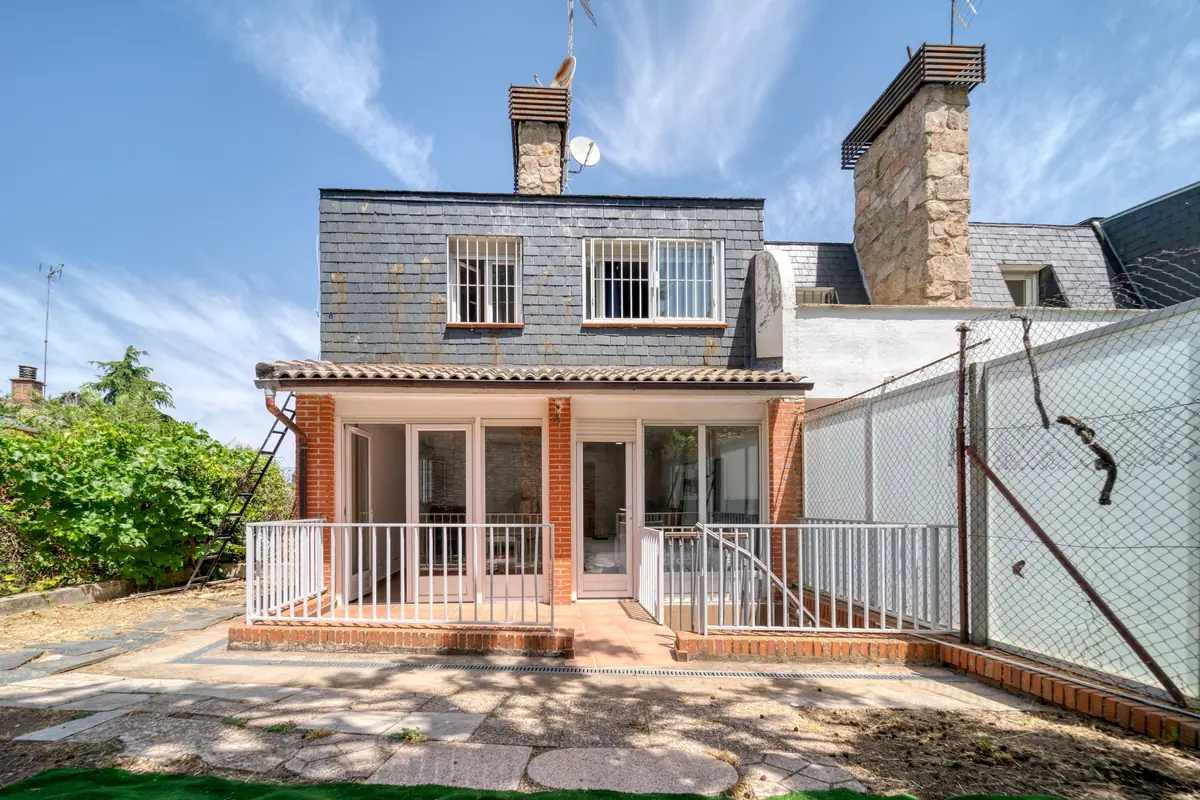
When you buy a home with a mortgage, there is a moment when the deal no longer depends only on you and the seller: the valuation. A professional from an approved valuation company visits the property, measures it, compares it with others in the area and signs off a figure. The bank uses that figure to decide how much to lend you. If the valuation matches the price, everything goes ahead. If it comes in lower, you may need more savings than you planned, and that affects what you signed in the arras.
If you are buying, this guide helps you work out how much you will be lent and protect yourself in the arras. If you are selling, it explains what the buyer’s valuer will look at and which papers to have ready. At the end you will find the latest official appraised value for Madrid and what to look for in the next release.
The essentials in one minute
- The tasación is the value given to the home by an approved valuation company that is independent of the bank. The bank lends on that value, not on what you pay.
- Since Ley 5/2019 (the Spanish mortgage credit law), the valuation is paid by whoever applies for the mortgage. The bank pays the notary, the land registry and the agency (gestoría) for the mortgage.
- You can order the valuation yourself and take it to the bank: it must accept it if it comes from an approved valuer and has not expired, and it cannot charge you for checking it.
- The report expires six months after it is issued. If the purchase is delayed, you may need to have it updated.
- Banks usually lend at most 80% of the home’s value, and many work it out on the lower of the price and the valuation. If the valuation comes in low, you make up the difference.
- If you sign the arras before you have the valuation and the mortgage, agree a realistic deadline and what happens if the bank does not lend you what you expected.
- Latest official figure: an average appraised value of €4,089.6/m² in the Madrid region in the second quarter of 2026. The third-quarter figure is due, according to the official calendar, on 19 November 2026.
What a valuation is and what it is for
A valuation is a report in which a professional estimates the value of a property using rules set by law. When it is for a mortgage, those rules are the ones in Orden ECO/805/2003, last amended by Orden ECM/599/2025. The Banco de España puts it like this: a valuation is “an independent valuation that provides an objective price for the property”. For the bank, the home is its security if one day you stop paying.
Article 13 of Ley 5/2019 requires the home being mortgaged to have “an adequate valuation” before the loan is signed, carried out by a valuation company, a bank’s valuation service or an approved professional, independent of the bank and of the credit intermediary. Valuation companies are approved and supervised by the Banco de España.
A high valuation does not guarantee you a mortgage. Article 11 of the same law says that the assessment of your creditworthiness “shall not be based predominantly on the value of the security”. The bank looks above all at your income, your debts and your ability to repay. The valuation sets the ceiling on what it can lend you; your profile decides whether it does.
Price, valuation and reference value: three different figures
Three values coexist in a sale and are often confused. They do not have to match, and each one is used for something different:
| Value | Who sets it | What it is for | Worth knowing |
|---|---|---|---|
| Sale price | Buyer and seller, when they agree | It is what is paid in the deed | Depends on the negotiation, on urgency and on the homes competing in the area |
| Valuation (valor de tasación) | An approved valuation company, under Orden ECO/805/2003 | Basis for working out how much the bank lends | Expires after six months; the bank lends a percentage of it |
| Reference value (valor de referencia) | The Directorate General of the Catastro, every year | Minimum tax base for ITP (property transfer tax) and for inheritance and gift tax | Calculated from the prices of sales signed before a notary and, according to the Catastro, “will not exceed market value” |
Sources: Banco de España; Orden ECO/805/2003; Catastro frequently asked questions. The reference value does not affect the cadastral value or IBI (council property tax).
For the tax paid by the buyer of a resale home, the tax authorities do not look at the bank’s valuation: they take as the base the declared price or the Catastro reference value, if that is higher. You can look it up on the Catastro’s online portal (Sede Electrónica) with the cadastral reference. We explain it in “Madrid IBI Property Tax 2027 and the Catastro Reference Value: What Changes for Homeowners on 1 January 2027”, and the taxes on the purchase in “Costs of buying a home in the Madrid region in 2026: taxes, notary, land registry and public aid”.
Who orders the valuation and who pays for it
Ley 5/2019 made the split clear. Its article 14 says: “The costs of valuing the property shall be borne by the borrower”. In other words, you pay for the valuation if you apply for the mortgage. In return, according to the Banco de España, the bank covers the notary, the land registry, the taxes and the agency for the mortgage.
Paying for it yourself has an advantage: you can choose. The Banco de España points out that lenders must accept a valuation provided by the customer if it is certified by an approved valuer and has not expired. The bank can carry out whatever checks it wants, but it cannot charge you for them. If your loan is refused, it must return the original report so you can use it at another lender while it is still valid. The obligation to accept valuations provided by the customer is now set out in Real Decreto-ley 24/2021, which replaced the old mortgage market law.
In practice there are two ways to do it:
- Let the bank order it. This is the most common route: the bank asks a company it works with for the valuation and charges you for it.
- Order it yourself from an approved company. This lets you compare offers from several banks with the same report. First ask the bank whether it has any objection to that company, and ask for the report to be issued in your name, as the mortgage applicant.
What about the seller? They do not have to value their home to sell it. They can order a valuation if they want a reference, but the report that counts for the mortgage is the one requested by the buyer or their bank. What the seller does have to do is let the valuer in and have the papers the valuer needs to hand.
How much it costs and how long it takes
There is no official fee. The Spanish consumer organisation OCU notes that “fees are free”, and the Banco de España explains that the cost depends, among other things, on the size of the home. The sensible thing is to ask two or three approved companies for a quote and ask what is included: the visit, the full report and whether they charge for an update if the report expires.
As for timing, the rules set one limit: the report cannot be issued more than two months after the valuer’s last visit (Orden ECO/805/2003, article 62). How long it really takes depends on the company, on how easy it is to arrange the visit and on having your papers ready.
The valuation is just one step in the mortgage timetable. So that time does not run out on you with the arras, bear in mind these deadlines in Ley 5/2019:
| Step | What happens | Legal deadline |
|---|---|---|
| Valuation | The valuer visits and the report is issued | The report is issued at most two months after the last visit and expires after six months |
| Binding offer (FEIN) | The bank gives you the sheet with the terms and the other documents | At least 10 calendar days before signing (article 14) |
| Visit to the notary | The notary explains the loan to you and draws up a record (acta) | No later than the day before signing (article 15) |
| Signing | Deed of sale and mortgage deed, usually on the same day | On the date agreed in the arras |
Sources: Ley 5/2019, articles 14 and 15 (BOE, consolidated text as of 7 October 2026); Orden ECO/805/2003, article 62.
How long it lasts: six months of validity
A valuation report is not valid for ever. Orden ECO/805/2003 says that reports and certificates “shall necessarily expire six months” after they are issued, and the Banco de España repeats this on its customer website. After that, the bank cannot use it for the mortgage and it will have to be updated or a new one ordered.
- Watch the issue date: that is the one that counts, not the date of the visit.
- If you sign arras with a long deadline, for example because you are waiting to sell your own home, check whether the valuation will still be valid on the signing day.
- If the bank refuses the mortgage, ask for the original report: you can take it to another bank while it has not expired.
How much the bank lends: 80% and the lower of the two values
To buy your main home, the bank will normally lend at most 80% of the value. The Banco de España explains that the loan amount is linked to the valuation, normally “up to a maximum of 80%”. The other 20%, plus taxes and costs, comes out of your savings. There are exceptions, such as publicly guaranteed schemes for young people, which we cover in “Mi Primera Vivienda 2026 in Madrid: 100% Mortgages up to Age 50 on Homes up to €425,000 – Requirements, Banks and How Much You Still Need to Save”.
There is an important detail: many banks do not work out the 80% on the valuation, but on the lower of the price and the valuation. Openbank, for example, says so on its website: “we finance the lower of these two values: the purchase price or the official valuation of the home”. That is why a valuation above the price does not get you a bigger loan, while one below it does get you a smaller one. Each bank has its own policy: ask yours beforehand how it calculates.
With an agreed price of 400,000 euros and a bank that lends 80% of the lower of the two values, the numbers look like this:
| Case | Price | Valuation | Maximum loan (80% of the lower) | What you put in, before taxes and costs |
|---|---|---|---|---|
| The valuation matches the price | €400,000 | €400,000 | €320,000 | €80,000 |
| The valuation comes in lower | €400,000 | €380,000 | €304,000 | €96,000 |
| The valuation comes in higher | €400,000 | €420,000 | €320,000 | €80,000 |
Illustrative example calculated by Llavely. It is not an offer from any bank: the percentage and the basis of calculation depend on each lender and on your creditworthiness. Taxes and purchase costs come on top of what you put in.
Banco de España data show that most mortgages stay below that 80%: in the second quarter of 2026, the average loan-to-value ratio on new lending was 63.7%, and only 9.6% of new loans exceeded 80%.
What happens if the valuation comes in below the price
It is not unusual when prices are rising fast: the valuer uses comparables and prudent criteria, while the price is set by negotiation. If it happens to you, these are your options:
- Check the report. Check the floor area, the floor level, the condition, the extras (parking space and storage room) and that the comparables really are similar. If there is a mistake, ask for it to be corrected.
- Put in more savings. This is the most direct way out if you can afford it: in the example above, 16,000 euros more.
- Talk to the seller. The valuation is an argument for renegotiating the price, but the seller does not have to lower it.
- Try another bank. If your valuation is still valid, you can take it to another lender; some apply different percentages or have products for particular profiles.
- Ask for another valuation. It is possible, but it costs money and will not necessarily give a higher figure.
If you are selling, a low valuation for the buyer does not bind you to anything, but it may make the sale fall through if the buyer had no margin. That is why, before signing the arras, it is worth knowing how the buyer will pay and how much savings they have. We go into more detail in “When a Flat Sale Falls Through Over the Mortgage in Spain: Why It Happens and How to Sell to Buyers Who Can Pay”.
The valuation and the arras
In most purchases the arras are signed before the valuation and the bank’s offer are in. With arras penitenciales, the most common kind, if the buyer pulls out they lose what they paid, and if the seller pulls out they pay it back twice over. If the buyer cannot get the mortgage because the valuation came in low and the contract says nothing about it, they may lose the deposit.
Some ideas to protect yourself, whether you are buying or selling:
- Agree a deadline for the deed that leaves time to value the home, receive the binding offer with its 10 days and go to the notary. In a rush, any delay puts the arras at risk.
- If you are buying with a mortgage, consider asking for a clause saying what happens if the bank does not grant the expected financing: up to what amount, by when and how the deposit is returned. For the seller, the more specific it is, the better.
- If you can, get the valuation and the bank’s pre-approval before signing the arras, or at least before handing over a large deposit.
- If you are selling, ask the buyer to tell you how they will finance the purchase. A buyer whose mortgage has already been looked at offers more certainty than one who has not yet spoken to the bank.
You will find the types of arras, the usual amounts and what to check in “The Arras Contract in Spain in 2026: Deposit Types, How Much to Pay, Deadlines and What to Check Before Signing”.
How to prepare for the valuer’s visit
The valuer will come to the home. According to the Banco de España, they must visit the property, measure every room, take photos, attach examples of real transactions in the area and check that there are no planning irregularities. If you are the seller, the visit is made by the valuer sent by the buyer or their bank, and your role is to make it easy. These are the documents the rules require (Orden ECO/805/2003, article 8):
- A nota simple (land registry summary) or certificate from the Land Registry showing ownership and charges, no more than three months old.
- The descriptive and graphic cadastral information, downloaded from the Catastro’s online portal.
- The registered energy performance certificate, if the building is finished. Orden ECM/599/2025 has required it since 2025. If you do not have one yet, we explain how to get it in “Energy Performance Certificate to Sell a Flat in Madrid in 2026: Who Issues It, What It Costs, How Long It Takes and What Happens Without One”.
- Depending on the case, other papers: licences or the declaration of new building (obra nueva) for houses or extensions, the classification certificate if it is subsidised housing, the tenancy agreement if it is let and the owners’ association statutes if there are any.
And for the day of the visit:
- Give access to everything: every room, the terrace, the parking space and the storage room. What the valuer does not see, they cannot value.
- Have to hand the floor area shown in the deed and in the Catastro. If they do not match the real one, explain why; the rules require the valuer to justify which floor area was used.
- If you have renovated the kitchen, the bathrooms or the wiring and plumbing, say so and show what proves it.
- If there is building work without a licence or undeclared, it is better to know beforehand: the valuer checks this and it may affect the value or the mortgage.
What changed in the valuation rules in 2025
Orden ECM/599/2025, published in the BOE (Spain’s official gazette) on 12 June 2025 and in force two months later, amended Orden ECO/805/2003. These are the changes most noticeable in a home valuation:
- The report must include data on at least six comparable properties, with their source and whether the valuer visited them, and justify the weight given to each.
- Usable floor area no longer includes the area taken up by outdoor spaces, and if a floor area other than the verified usable area is used, this must be justified.
- For finished buildings, the registered energy performance certificate must be included.
- If the person signing the report is not the one who visited the home, the report must identify the professional who made the visit, and signatures are electronic.
- Valuations using automated models are only allowed for fairly homogeneous properties, with requirements to be set out by the Banco de España.
- A sustainability principle is added: where relevant, environmental and climate risks are taken into account.
The latest official figure: what homes are valued at in Madrid
The Ministry of Housing and Urban Agenda publishes appraised-value statistics every quarter, using reports from the valuation companies in the AEV (Spanish Association for Value Analysis). The latest figure published, for the second quarter of 2026, came out on 17 September. The Madrid region was again the area with the highest appraised value and exceeded 4,000 euros per square metre for the second quarter in a row.
| Area | Average appraised value of open-market housing | Change over a year | Source |
|---|---|---|---|
| Madrid region, Q2 2026 | €4,089.6/m² | +12.6% (province of Madrid) | Ministry of Housing, via EFE and Europa Press (17-9-2026); change, Banco de España (29-10-2026) |
| Madrid region, Q1 2026 | €4,047.5/m² | +16.4% | Quarterly housing bulletin of the Community of Madrid, with Ministry data (July 2026) |
| Spain, total, Q2 2026 | €2,355/m² | +12.5% | Ministry of Housing; Banco de España (29-10-2026) |
| Spain, up to 5 years old | €2,736.6/m² | +12.1% | Ministry of Housing, via EFE (17-9-2026) |
| Spain, more than 5 years old | €2,342.5/m² | +12.5% | Ministry of Housing, via EFE (17-9-2026) |
The change for the province of Madrid is the one reported by the Banco de España; the Madrid region has a single province.
In Spain, the appraised value rose 1.7% on the first quarter, and the second-quarter statistics were based on 177,112 home valuations, according to Europa Press. The AEV, for its part, counted more than 372,000 full home valuations in the first half of 2026, 5% more than a year earlier, and close to 260,000 mortgage valuations of homes.
Does this figure tell you what your home is worth? As a first reference, yes; as a price, no. It is an average of what the valuations in each area said during the quarter, and within the region there are huge differences between towns, neighbourhoods and buildings. You will find them town by town in “House prices in the towns of the Madrid region in 2026: price per m² in Pozuelo, Alcobendas, Las Rozas, Getafe, Móstoles and 22 more, according to the Ministry”.
What to look for on 19 November
According to the Ministry of Housing’s statistics calendar, the appraised value for the third quarter of 2026 will be published on Thursday 19 November 2026, ten days after this article. When it comes out, look at this:
- Whether the Madrid region stays above €4,000/m² and how much it has changed from the €4,089.6 of the second quarter.
- Whether the annual rise slows or speeds up compared with the 12.6% of the second quarter. In Spain, the annual rise went from 13.9% in the first quarter to 12.5% in the second.
- The table of towns with more than 25,000 inhabitants, to see your area.
How we do it at Llavely
At Llavely we sell homes throughout the Madrid region and take care of everything: you contact us and we handle the sale from start to finish. We have more than 35 years in the property sector and specialist lawyers, and we review every home in less than 24 hours. The valuation, photos, video, floor plan and virtual tour are included. Our valuation is not an approved tasación: it is used to set a realistic asking price with comparable homes, also bearing in mind what the buyer’s valuer will say later.
Before showing your home we talk to every buyer to find out what they are looking for and how they would pay for it and, if they need a mortgage, whether their financing fits the price. We check their ID before the viewing. We prepare the documents the buyer’s valuer asks for (nota simple, cadastral information, energy certificate and, if needed, licences) and make the visit easy. Our specialist lawyers check charges and debts, carry out the calculation of the corresponding taxes, draw up the arras with deadlines that allow for the valuation and the mortgage, review the deed and go with you in person to the notary. If the buyer needs a mortgage, we put them in touch, free of charge, with a mortgage intermediary. All payments are made by ordinary bank transfer or OMF (orden de movimiento de fondos, an interbank funds transfer order), never in cash.
You pay 2.5% + VAT of the price, in total, only if you sell and on the day of the notary signing. For buyers, buying with Llavely is free. We do not promise you deadlines or prices: the valuation is done by an independent company and the mortgage is decided by the bank. If you want to know what your home is worth, ask for your free valuation: we give you a range straight away and then we call you, see the home and fine-tune the price.
Frequently asked questions
Who pays for a home valuation in Spain in 2026?
Whoever applies for the mortgage, usually the buyer. Article 14 of Ley 5/2019 says so: “The costs of valuing the property shall be borne by the borrower”. The bank pays the notary, the land registry, the agency and the taxes on the mortgage.
Can I take a valuation I ordered myself to the bank?
Yes. According to the Banco de España, lenders must accept a valuation provided by the customer if it is certified by an approved valuer and has not expired. The bank can check it, but it cannot charge you for doing so.
How long is a valuation valid?
Six months from the date the report is issued, under article 62 of Orden ECO/805/2003. After that, it has to be updated or a new one done.
How much does it cost to value a flat?
There is no official fee: fees are free and the cost depends, among other things, on the size and type of home. Ask several approved companies for a quote and ask what is included.
What happens if the valuation comes in below the purchase price?
The bank will lend you less, because many calculate the percentage on the lower of the price and the valuation. You can check the report for mistakes, put in more savings, renegotiate with the seller, try another bank or ask for another valuation, which will not necessarily come in higher.
If the valuation comes in above the price, will I be lent more?
Normally not. If the bank works on the lower of the two values, the maximum loan is calculated on the price. Ask your bank how it does it.
Is the valuation the same as the Catastro reference value?
No. The valuation is done by an approved company for the mortgage. The reference value is set by the Catastro every year using the prices of sales before a notary and serves as the minimum base for ITP (property transfer tax) and for inheritance and gift tax.
When is the next official appraised-value figure published?
According to the calendar of the Ministry of Housing and Urban Agenda, the figure for the third quarter of 2026 will be published on 19 November 2026. The latest one published, for the second quarter, gave an average of €4,089.6/m² in the Madrid region.
Sources
- Ley 5/2019 of 15 March regulating real estate credit agreements, consolidated text (BOE, updated 7 October 2026)
- Real Decreto-ley 24/2021 of 2 November transposing European Union directives on covered bonds and other matters (BOE)
- Orden ECO/805/2003 of 27 March on valuation rules for real estate and certain rights for certain financial purposes, consolidated text (BOE, last amended 12 June 2025)
- Orden ECM/599/2025 of 10 June amending Orden ECO/805/2003 (BOE no. 141, 12 June 2025)
- A valuation is not just a formality (Banco de España, Bank Customer Portal, 12 March 2024)
- Valuation for granting mortgage loans and credit: good practice criteria (Banco de España, 22 March 2023)
- Costs associated with a mortgage (Banco de España, Bank Customer Portal)
- Summary indicators. 1.5 Property market indicators (Banco de España, 29 October 2026)
- Statistics release calendar 2026 (Ministry of Housing and Urban Agenda, consulted on 3 November 2026)
- Quarterly housing bulletin, second quarter of 2026 (Community of Madrid, Directorate General for the Economy and Industry, July 2026)
- Frequently asked questions: reference value (Directorate General of the Catastro)
- Residential valuations grow 5% in the first half of the year and exceed 372,000 transactions (Spanish Association for Value Analysis, 6 October 2026)
- Housing reaches a high of 2,355 euros per square metre after rising 12.5% (Público with EFE, 17 September 2026)
- Housing rises 12.5% in the second quarter and reaches 2,355 euros per square metre (PressDigital with Europa Press, 17 September 2026)
- House prices in Spain by region: what a square metre costs (Rankia, 26 September 2026, updated 13 October)
- Mortgage on the valuation or on the purchase price (Openbank)