Buying & selling · · 27 min read
Selling the bare ownership of your home and staying on in 2026: lifetime usufruct, what it is worth by age, taxes in Madrid and how it differs from a life annuity and a reverse mortgage
You can sell your home without having to leave it: you sell the bare ownership (nuda propiedad), keep the usufruct (usufructo) and go on living there, or let it out, for the rest of your life. As of 4 November 2026, we explain what bare ownership, a lifetime usufruct and a fixed-term usufruct are, how they differ from a life annuity (renta vitalicia) and a reverse mortgage (hipoteca inversa), how they are valued by age with a table of examples, who pays the IBI (council property tax), community fees and works after the sale, which taxes the seller and the buyer pay in the Madrid region, what happens when the usufruct ends and how to protect yourself if one day you want to move into a care home.
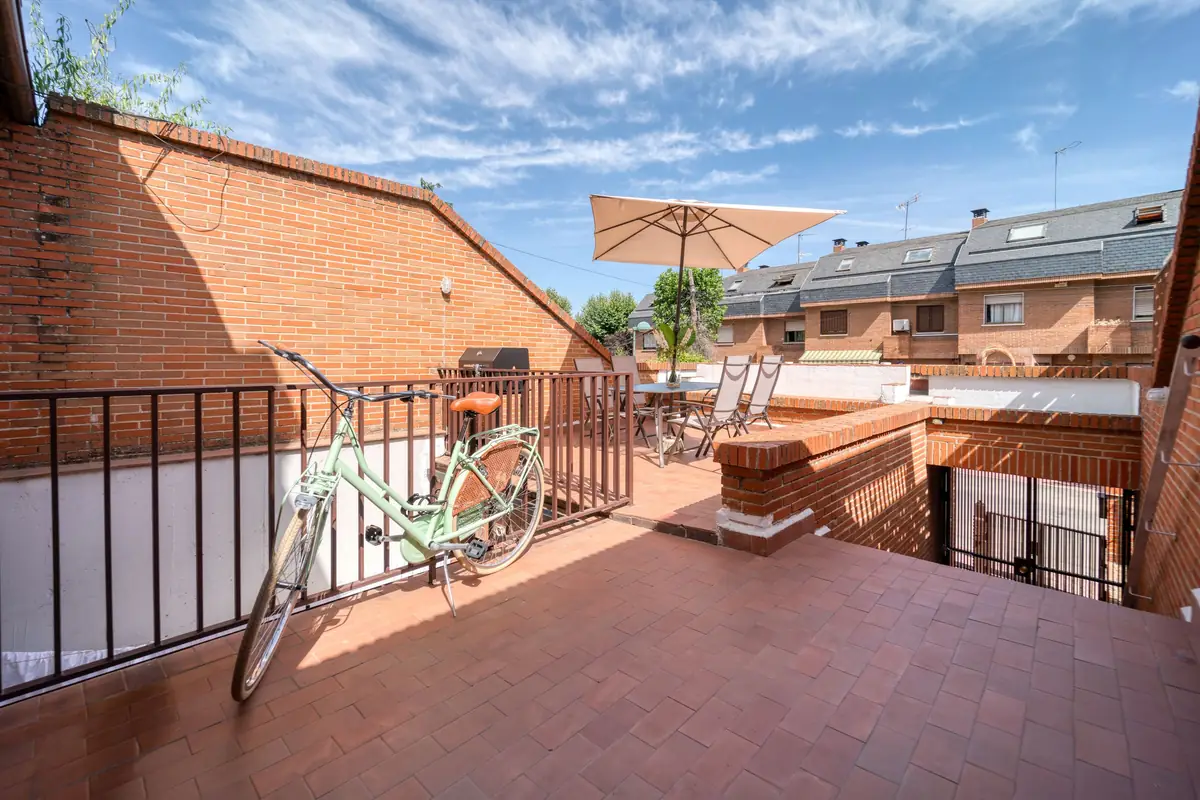
Many older people have almost all their wealth tied up in the home they live in, and their pension does not always stretch far enough. For that situation there is an old and little-known formula: selling only the bare ownership. The buyer becomes the owner, but cannot use the home while the seller is alive, because the seller keeps the usufruct: the right to live there or to let it out. When the usufruct ends, normally on the death of the usufructuary, the buyer gets full ownership.
The deal has clear advantages, but also small print: how much you really get, who pays each cost, which taxes apply and what happens if, in a few years, the home becomes too big. We go through it step by step, with the rules of the Spanish Civil Code and the taxes in the Madrid region, also from the buyer’s side. The general detail of the taxes on a sale is in “Taxes When Selling a Flat in Spain in 2026: Plusvalía Municipal in Madrid, Income Tax (IRPF) and Exemptions”.
The essentials in one minute
- Bare ownership is ownership “stripped bare”: being the owner without being able to use the home. Usufruct is the right to use and enjoy it, by living there or letting it out. Together they make up full ownership (pleno dominio).
- If you sell the bare ownership and keep a lifetime usufruct, you stay in your home for life. When the usufructuary dies, the buyer obtains full ownership.
- The tax value of a lifetime usufruct is 89 minus the usufructuary’s age, as a percentage, with a minimum of 10% and a maximum of 70%. At 75, the usufruct is worth 14% and the bare ownership 86%.
- The market price is usually lower than that tax value: in a test published by the OCU in June 2024, the best offer was 57% of the tax value of the bare ownership.
- The usufructuary pays the IBI and ordinary repairs; extraordinary repairs are for the owner. Whatever the law does not settle is best written into the deed.
- If you are over 65 and it is your main home, the gain may be exempt from IRPF. The plusvalía municipal (municipal land value tax) has no such exemption. In Madrid the buyer pays 6% ITP on the value of the bare ownership, and a further assessment when the usufruct ends.
Bare ownership, usufruct and full ownership: what each one is
The Civil Code defines usufruct in article 467: it gives the right to enjoy someone else’s property with the obligation to preserve its form and substance. Article 480 spells it out: the usufructuary may use the property personally, let it to someone else and dispose of the right of usufruct.
Bare ownership is what is left of ownership once the usufruct is taken away. The Spanish Tax Agency defines it as the right to enjoy the property fully when the usufruct ends; meanwhile, the bare owner has the power to dispose of it, but not to use or enjoy the home. Article 489 of the Civil Code is clear: the owner may sell the property, but not alter its form or substance, or do anything to it that harms the usufructuary.
There are two kinds of usufruct. A lifetime usufruct lasts for the usufructuary’s whole life. A fixed-term usufruct lasts for a set period, for example ten years. Under article 513 of the Civil Code, the usufruct ends, among other causes, on the death of the usufructuary, when the term expires, when usufruct and ownership come together in the same person or when the usufructuary renounces it. It can be granted to several people at once or one after another (article 469), for example to a married couple.
The Notariado (General Council of Notaries) explains that, in a sale of bare ownership, the seller keeps the right to go on living in the home or to let it out until death, and that it can be done with a main home or with a second home.
Bare ownership, life annuity and reverse mortgage: how they differ
All three formulas turn your home into money without leaving it, but they work in very different ways. In a life annuity, under article 1802 of the Civil Code, a capital in movable or immovable property is handed over, and its ownership is transferred straight away, in exchange for the debtor paying an annual pension or income for the life of one or more people. With a reverse mortgage, on the other hand, you sell nothing: according to the Banco de España, it is a loan that lets people aged 65 and over obtain cash from the value of their home without having to sell it or leave it.
| Sale of bare ownership with usufruct | Life annuity | Reverse mortgage | |
|---|---|---|---|
| Are you still the owner? | No. You keep the usufruct; the property belongs to the buyer | No. Ownership passes to whoever undertakes to pay the annuity | Yes. It is a loan secured by a mortgage on your home |
| Do you still live in the home? | Yes, for life if the usufruct is lifelong, or you can let it out | It depends on what is agreed; if combined with a usufruct, yes | Yes |
| How are you paid? | The price of the bare ownership, normally on signing; another form of payment can also be agreed | A periodic pension while the person on whose life it is set up is alive | Payments advanced by the lender, normally monthly according to the Banco de España |
| What happens on death? | The buyer obtains full ownership | The annuity stops; the home already belonged to the debtor | The heirs can pay off the debt and keep the home; if not, the lender enforces the mortgage |
| Main risk | Getting less than expected and losing flexibility if your plans change | That the debtor stops paying: non-payment alone does not let you take the home back (Civil Code, art. 1805) | The debt grows over time and the heirs pay it if they want the home |
| Main rules | Civil Code, arts. 467 to 522 | Civil Code, arts. 1802 to 1808 | Law 41/2007, first additional provision |
An indicative summary based on the rules cited and on information from the Banco de España and the Notariado. Each contract may contain different terms.
The life annuity carries a warning worth reading slowly. Article 1805 of the Civil Code says:
Failure to pay the pensions that have fallen due does not entitle the recipient of the life annuity to demand repayment of the capital or to take possession again of the property transferred; they shall only be entitled to claim in court payment of the arrears and security for future payments.
Spanish Civil Code, article 1805 (our translation)
That is why, if you are thinking of exchanging your home for an annuity, the guarantees agreed in the deed before the notary matter as much as the amount of the annuity. The reverse mortgage is regulated by Law 41/2007. According to the Banco de España, the debt only becomes payable when the borrower dies or, if the contract provides for it, the last of the beneficiaries, and the applicant and the beneficiaries must be 65 or over, or be dependent, or have a disability of 33% or more. According to the Spanish Tax Agency, the amounts that people over 65 receive from a reverse mortgage on their main home are not taxed in IRPF if the transaction complies with financial regulation.
What the bare ownership is worth: the legal rules and a table of examples
For tax purposes, the value of the usufruct and of the bare ownership is not left to each person’s judgement: it is set by article 26 of the Inheritance and Gift Tax Act, with the same rule as article 10.5 of the consolidated Property Transfer Tax (ITP) Act. There are three rules:
- Lifetime usufruct: it is worth 70% of the total value of the property when the usufructuary is under 20, and that percentage falls by 1% for each additional year of age, to a minimum of 10%. The Spanish Tax Agency sums it up in a practical rule: subtract the usufructuary’s age from 89.
- Fixed-term usufruct: it is worth 2% of the total value for each year it lasts, up to a maximum of 70%.
- Bare ownership: it is worth the difference between the total value and the value of the usufruct. If the usufruct is both lifelong and fixed-term, the rule that gives the bare ownership the lower value applies.
With those rules, this is the split for a €300,000 home depending on the age of the person keeping the usufruct. The last column is what the buyer would pay in ITP at 6% on the value of the bare ownership, as an example only:
| Usufruct kept by the seller | Value of the usufruct | Value of the bare ownership | Buyer’s ITP at 6% (example) |
|---|---|---|---|
| Lifetime, age 65 | 24% = €72,000 | 76% = €228,000 | €13,680 |
| Lifetime, age 70 | 19% = €57,000 | 81% = €243,000 | €14,580 |
| Lifetime, age 75 | 14% = €42,000 | 86% = €258,000 | €15,480 |
| Lifetime, age 80 or over | 10% (minimum) = €30,000 | 90% = €270,000 | €16,200 |
| Fixed-term, 10 years | 20% = €60,000 | 80% = €240,000 | €14,400 |
| Fixed-term, 15 years | 30% = €90,000 | 70% = €210,000 | €12,600 |
| Lifetime and fixed-term at once: age 75 and at most 10 years | The rule that gives the bare ownership the lower value applies: the fixed-term one, 20% | 80% = €240,000 | €14,400 |
Examples calculated by Llavely with the rules of article 26 of the Inheritance and Gift Tax Act and article 10.5 of the consolidated ITP Act, on a total value of €300,000. They are not market prices. For ITP, the starting point is the Catastro (land survey) reference value, or the declared value if higher.
Two important warnings. First: these rules are for tax purposes, not for setting the price. Whoever buys bare ownership pays today for something they will not be able to use for years, and discounts that waiting time. The OCU checked this in a test it published in June 2024, asking five companies that carry out these transactions for offers: the best was 57% of the tax value of the bare ownership, and the organisation warns that you are very likely to receive much lower offers. So compare, and do not accept the first offer.
Second: if the usufruct is for two people, for example a married couple, the valuation has its own rules and is best calculated by a professional. Before negotiating, be clear about the market value of the whole home; how a valuation works is explained in “Property valuation (tasación) in 2026 when buying or selling in Madrid: who pays, how long it lasts, what happens if it comes in below the price and the latest appraised value”.
Who pays what after the sale
Once the sale is signed, two holders share the same home: the usufructuary, who lives there, and the bare owner, who owns it. The Civil Code shares out the costs like this:
Payment of annual charges and taxes, and of those considered encumbrances on the fruits, shall be borne by the usufructuary for as long as the usufruct lasts.
Spanish Civil Code, article 504 (our translation)
| Cost | Who pays | Where it is |
|---|---|---|
| IBI and other annual charges and taxes | The usufructuary, while the usufruct lasts | Civil Code, art. 504 |
| Ordinary repairs: those required by normal use and essential to preserve the home | The usufructuary. If they are not done after a request, the owner may do them at the usufructuary’s expense | Civil Code, art. 500 |
| Extraordinary repairs | The owner. The usufructuary must tell the owner if they are urgent | Civil Code, art. 501 |
| If the owner pays for extraordinary repairs | The owner may charge the usufructuary the legal interest on the amount invested while the usufruct lasts | Civil Code, art. 502 |
| Taxes levied directly on the capital | The owner | Civil Code, art. 505 |
| Works and improvements the owner wants to carry out | The owner pays, and only if they do not reduce the value of the usufruct or harm the usufructuary | Civil Code, art. 503 |
| Community of owners fees | Towards the community, the Horizontal Property Act refers to the owner; between the two of you, whatever you agree in writing | Horizontal Property Act, art. 9.1.e |
| Special levies (derramas) for extraordinary works or improvements to the building | There is no single rule: it depends on whether the work is ordinary or extraordinary. Best agreed in the deed | Civil Code, arts. 500 to 503; Horizontal Property Act, art. 15.1 |
| Building insurance | Whatever you agree. The Civil Code sets out what happens if both of you or only one take it out | Civil Code, art. 518 |
Summary of the articles cited. The deed can set out the split in detail, and it should.
On the community of owners: the Horizontal Property Act requires each owner to contribute, according to their share, to the general costs of the building, and its article 15.1 says that, if the home is subject to a usufruct, attendance and voting at the owners’ meeting belong to the bare owner, who is deemed to be represented by the usufructuary unless stated otherwise; for extraordinary works and improvements, the delegation must be express. The sensible thing is for the deed to say who pays the fees, who pays the levies and who attends the meetings.
There are two more rules that are useful for the seller. Article 497 obliges the usufructuary to look after the home with the care of a diligent person, in other words with normal diligence. And although article 491 obliges the usufructuary to draw up an inventory and to provide a bond before starting to enjoy the property, article 492 says the bond does not apply to a seller who has kept the usufruct of the property sold.
Seller’s taxes: IRPF and plusvalía municipal
For the tax authorities, selling the bare ownership is a sale like any other: the seller declares in IRPF the capital gain or loss, which is essentially the difference between what they receive and what the part being sold cost them. The gain goes into the savings tax base. The usufruct you keep is not taxed at that point, because you do not transfer it. If you are under 65, working out the purchase cost that corresponds to the part sold is one of the things to check with an adviser.
If you are over 65, there is good news. Article 33.4.b of the IRPF Act exempts the gain on the transfer of a main home by people over 65, and also by people in a situation of severe or major dependency. The Spanish Tax Agency says so expressly in its IRPF 2025 leaflet for people over 65:
The exemption also applies if the bare ownership is transferred and the lifetime usufruct over the home is retained.
Spanish Tax Agency, “Conoce la normativa IRPF 2025 para mayores de 65 años”, March 2026 (our translation)
The Renta 2025 practical manual adds the requirements: the home must have been your main residence for a continuous period of at least three years and, during that time, you must have held full ownership, even if shared, for example with your partner. You are considered to be selling your main home if it is your main home at the time of sale or was so until any day in the previous two years.
Watch out for a consequence of that same approach. The Spanish Tax Agency explains, citing a 2018 Supreme Court judgment, that when full ownership of a home is already split between bare owner and usufructuary, neither of them can apply this exemption when transferring their part, even if it is their main home. In other words: you get the exemption when you sell the bare ownership while holding full ownership; if years later you also sell the usufruct, that second sale would not benefit from it.
If the home is not your main home, for example a second home, there is another route for people over 65: according to the Spanish Tax Agency, the gain on the sale of any asset is exempt if the total amount obtained is used within six months to set up an insured life annuity in your favour, with an overall maximum of €240,000 per taxpayer and subject to the requirements laid down by law.
The plusvalía municipal is another matter: it does not have the over-65 exemption, as the OCU points out. It is paid by the seller, under article 106 of the Local Finance Act, unless the seller is an individual not resident in Spain, in which case the buyer acts as substitute. When a right such as bare ownership is transferred, Royal Decree-law 26/2021 says the calculation is made on the part of the land value that this right represents, valued under the ITP rules: in other words, with the same age-based percentages as the table above. If there is no increase in the value of the land, the transaction is not taxable, although it must be declared and the purchase and sale deeds provided. Each town hall sets the rate in its tax by-law and the coefficients are updated by law, so calculate with the table in force on the day of the deed; Madrid City Council has an estimating calculator on its website.
Buyer’s taxes: ITP now and a further assessment when the usufruct ends
Whoever buys bare ownership from a private individual pays ITP (property transfer tax). In the Madrid region, the general rate for property and for creating and assigning rights in rem over it is 6%. The tax base is the value of the bare ownership calculated with the percentages in the table, starting from the Catastro reference value or the declared value if higher. It is filed on form 600 within 30 working days of signing, according to the Community of Madrid.
What many people do not know is that there is a second assessment. The Community of Madrid explains that, when the usufruct ends, the ownership is “consolidated” and the bare owner must pay tax on the value of the right that comes into their estate; if the usufruct was created for consideration and ends on the death of the usufructuary or on expiry of the term, the tax is ITP on onerous transfers, using the value of the property at the time of consolidation. The Spanish Tax Agency sums it up in the same way: in transfers for consideration, the bare owner is charged an assessment on the value of the usufruct that comes into their estate.
The Community of Madrid itself gives an example: a seven-year fixed-term usufruct over a property then worth €100,000 was valued at 14%; on consolidation, with the property valued at €200,000, the tax base was €28,000. If you buy bare ownership, ask for the calculation of the taxes that apply to include this second assessment and how it applies to your case, so you know the total cost from the outset. In IRPF, on the other hand, the Spanish Tax Agency states that the bare owner is not taxed on the consolidation, and that the death of the usufructuary does not give rise to a capital gain or loss.
In the meantime, the buyer does not pay the IBI, because it is an annual tax that falls on the usufructuary, but does pay for extraordinary repairs. And the buyer can sell the bare ownership to someone else if needed: the usufruct stays the same, because the new owner buys it subject to that burden.
What happens if you want to move into a care home, let the property or change your plans
Someone who sells at 72 may need care at 85. These are the main options:
- Let the home. Article 480 of the Civil Code allows the usufructuary to use the property personally, let it to someone else and dispose of the right of usufruct. The rent is yours and you declare it in IRPF. But bear in mind that the contracts you sign as usufructuary end when the usufruct ends, something your tenant should know. And article 498 makes you liable for damage caused, through fault or negligence, by the person who takes your place.
- Sell or assign the usufruct to the bare owner. Usufruct and ownership come together in the same person and the usufruct ends (article 513). For the Spanish Tax Agency, the usufructuary has a capital gain or loss in IRPF and cannot apply the over-65 exemption, for the reason explained above; the bare owner is taxed according to the transaction under which they acquired the bare ownership.
- Renounce the usufruct. This also ends it. The Spanish Tax Agency states that the usufructuary has a capital gain or loss in IRPF and that the bare owner is taxed on the higher of the gift and the assessment pending from the split of ownership. It is not a cost-free gesture: work it out first.
- Sell the whole home together with the bare owner. If you both agree, each of you sells your part to a third party in the same deed and the price is shared according to what corresponds to each right. Each of you is taxed on your own part.
If you are already thinking about a possible care home, the deed can set out what would happen in that case. Talking it over with the buyer before signing avoids problems later.
Risks and how to protect yourself
- Sign a public deed before a notary, with the price, the method of payment, the type of usufruct, in whose favour and the terms on costs, insurance and the community.
- Register the sale and the usufruct at the Land Registry. As the Colegio de Registradores (Association of Land Registrars) explains, registering a property ensures its protection, and the Registry reports encumbrances such as a usufruct and how long the usufructuary may use the home.
- Get paid safely. The simplest way is to receive the price on signing, by bank transfer or by a means the notary can check. If you defer part of the payment or exchange it for an annuity, agree guarantees in writing and ask the notary which are possible in your case, because non-payment of a life annuity alone does not let you recover the home.
- Know the value of the whole home before negotiating and compare offers. The tax rules in the table are a reference, not a price.
- Put in writing who pays each cost: IBI, community fees, special levies, works and building insurance, so you both know what is insured and by whom.
- Talk to your family. If you sell the bare ownership, the home will no longer form part of your estate. The OCU points to this as the main drawback for children.
- Be wary of haste. Nobody should ask you to sign on the spot or to hand over money or original documents before the notary. You can bring a lawyer you trust.
If you want to buy bare ownership
Buying bare ownership makes sense for someone who does not need the home now and thinks long term: you pay less than for full ownership, but you do not know when you will be able to use the home. If the usufruct is lifelong, it may be a long time. Before signing, check the nota simple (Land Registry extract), make sure the seller holds full ownership, look at the condition of the home, because extraordinary repairs will be yours, and work out the total cost: price, ITP, notary, registry and the second assessment on consolidation. And remember that you will share decisions on works, insurance and the community for years: put everything in writing.
How we work at Llavely
At Llavely we sell homes throughout the Madrid region and take care of everything: you contact us and we handle the sale from start to finish, including when what you are selling is the bare ownership and you keep the usufruct. We have more than 35 years in the property sector and specialist lawyers, and we review every home in under 24 hours. The valuation, photos, video, floor plan and virtual tour are included. We give you the market value of the whole home and explain what part corresponds to the bare ownership according to your age, so you can negotiate with the facts.
Before showing your home, we talk to each buyer to find out what they are looking for, whether they understand what buying bare ownership means and how they would pay, and we check their ID before the viewing. We carry out the viewings and prepare the sale documents. Our specialist lawyers review the nota simple, encumbrances and debts, calculate the taxes that apply to you and explain the buyer’s taxes to them, including the future assessment on the usufruct; they draft the arras (deposit contract) and the usufruct clauses, such as the split of costs, insurance or what happens if one day you want to let the home or move into a care home; they coordinate the notary, review the deed and go with you in person to sign. All payments are made by ordinary bank transfer or OMF (orden de movimiento de fondos, an interbank funds transfer order), never in cash.
You pay 2.5% + VAT of the price, in total, only if you sell and on the day of the notary signing. For buyers, buying with Llavely is free. We do not promise timescales or prices: the price of bare ownership depends on age, the home and what is agreed. If you want to know what your home is worth, ask for your free valuation: we give you a range straight away, then call you, see the home and fine-tune the price.
Frequently asked questions
What does selling the bare ownership of a home mean?
It means selling the ownership of the home while keeping the usufruct, that is, the right to go on living there or to let it out. The buyer pays now and becomes the owner, but cannot use the home until the usufruct ends, normally on the death of the usufructuary if it is lifelong. It is signed as a deed before a notary and should be registered at the Land Registry.
How much will I get for the bare ownership of my home?
It depends on the value of the home, your age and the negotiation. For tax purposes, a lifetime usufruct is worth 89 minus your age, as a percentage, with a minimum of 10%; the bare ownership is the rest. At 75, the bare ownership is worth 86% of the total for tax purposes. But the market price is usually lower: in a test published by the OCU in June 2024, the best offer was 57% of that tax value.
Do people over 65 pay tax when selling the bare ownership?
In IRPF, the gain is exempt if it is your main home, you have lived there for at least three continuous years with full ownership and you keep a lifetime usufruct: the Spanish Tax Agency says so in its IRPF 2025 leaflet for people over 65. The plusvalía municipal is still payable, because it has no such exemption.
Who pays the IBI and community fees if I sell the bare ownership?
The usufructuary pays the IBI, because article 504 of the Civil Code assigns annual charges and taxes to them. Ordinary repairs are for the usufructuary and extraordinary ones for the owner. Towards the community, the Horizontal Property Act refers to the owner; between the two of you, it is best to write into the deed who pays the fees and the special levies.
Can I let the home if I have sold the bare ownership?
Yes. Article 480 of the Civil Code allows the usufructuary to let the property, and the Notariado points out that the seller can go on living in the home or let it out until death. The rent is yours and is declared in IRPF, but the contracts you sign end when the usufruct ends.
What happens when the usufructuary dies?
The usufruct ends and the bare owner obtains full ownership. If they bought the bare ownership, in the Madrid region they pay ITP on the value of the usufruct that comes into their estate, with the percentage used when it was created and the value of the home at that time. In IRPF, according to the Spanish Tax Agency, they are not taxed on the consolidation.
Which is better, selling the bare ownership or a reverse mortgage?
It depends on what you want. With bare ownership you sell and receive a price, normally in one go, and the home will no longer go to your heirs. With a reverse mortgage you remain the owner and receive payments from a loan that is repaid on death: your heirs can pay off the debt and keep the home, or the lender enforces the mortgage. It is a decision to take with advice and with your family.
How much tax does the buyer of bare ownership pay in Madrid?
They pay ITP at 6%, the general rate in the Madrid region, on the value of the bare ownership. For example, for a €300,000 home with a 75-year-old usufructuary, the bare ownership is worth €258,000 for tax purposes and the ITP would be €15,480. In addition, when the usufruct ends, they will pay a further ITP assessment on the value of the usufruct that is consolidated.
Sources
- Law 29/1987 of 18 December on Inheritance and Gift Tax, consolidated text: article 26 (BOE, consulted on 4 November 2026)
- Royal Legislative Decree 1/1993 of 24 September, consolidated Property Transfer Tax and Stamp Duty Act, consolidated text: article 10.5 (BOE, last amended on 21 March 2026)
- Royal Decree-law 26/2021 of 8 November adapting the consolidated Local Finance Act to Constitutional Court case law on the municipal land value tax (BOE no. 268, 9 November 2021)
- IRPF 2025 rules for people over 65 (Spanish Tax Agency, March 2026)
- Renta 2025 practical manual: exempt capital gains (Spanish Tax Agency)
- Renta 2025 practical manual: end of usufruct and consolidation of ownership (Spanish Tax Agency)
- Onerous property transfers: rates, tax base, usufruct and consolidation of ownership (Community of Madrid, updated on 23 April 2026)
- Do you know how a reverse mortgage works? (Banco de España, Bank Customer Portal, 28 November 2023)
- What does a sale of bare ownership involve? (General Council of Notaries)
- Renta 2025 practical manual: usufruct and split ownership, concept and definitions (Spanish Tax Agency)
- Do you know what the Land Registry is? Basic guide (Association of Land Registrars)
- Spanish Civil Code, book II, title VI: Usufruct, use and habitation, articles 467 to 529 (civil-mercantil.com, CEF)
- Spanish Civil Code, book IV, title XII: Aleatory contracts, life annuity, articles 1802 to 1808 (civil-mercantil.com, CEF)
- Royal Legislative Decree 2/2004, consolidated Local Finance Act: article 106, taxpayers of the municipal land value tax (SuperContable)
- Horizontal Property Act, articles 9 and 15 (notariosyregistradores.com)
- What if I sell the bare ownership of my home? (OCU, 18 June 2024)