Buying & selling · · 21 min read
Selling a detached, semi-detached or terraced house in Madrid in 2026: price, plot, Catastro, undeclared building work, licences, pool, well and housing estate
Selling a house is not like selling a flat: the plot counts as well as the built area, the Catastro (land survey) and the Land Registry must match what is really there, and the pool, the well or the housing estate fee all come into play. As of 2 November 2026, using official data, we explain how to price a detached, semi-detached or terraced house in the Madrid region, what to do about undeclared extensions, which papers to gather, what changes in tax and how to show the house.
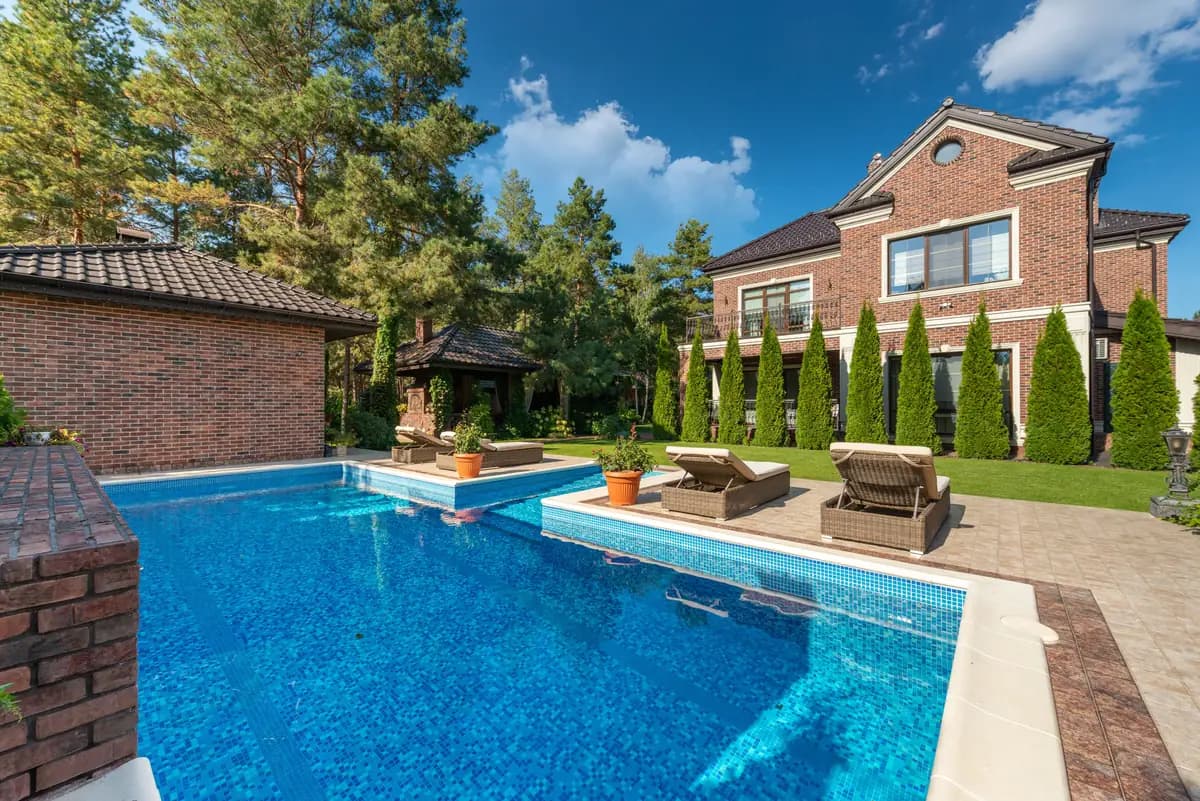
If you are selling a detached, semi-detached or terraced house in the Madrid region, much of what applies to a flat applies to you too: the nota simple (land registry extract), the energy certificate, the arras (deposit contract), the notary and the taxes. But a house has its own issues. You are selling a building and a piece of land, often with a garden, pool, garage or loft, and many houses have had work done over the years. What usually complicates these sales is not finding a buyer but the paperwork: the Catastro, the Land Registry and the real house not saying the same thing.
Here we focus on what changes compared with a flat. The full process is in “How to sell a flat in Madrid in 2026: documents, price, deposit contract, taxes and timings”, and the general list of papers in “Documents Needed to Sell a Flat in Madrid in 2026: Full Checklist, Where to Get Them and What They Cost”.
The essentials in one minute
- A house is valued for its land and its building. Compare it with similar houses nearby, not with the price per square metre of flats.
- Before advertising it, check that the nota simple, the Catastro and the real house match: plot, built area, pool, porches and loft.
- Undeclared work is fixed in three places: the Catastro (form 900D), the Land Registry (a deed declaring the new building or extension) and the town hall. Declaring it to the Catastro does not make it legal.
- In the Madrid region, the town hall generally has six years from the completion of unlicensed work to act (fifteen on protected non-developable land). After that it can be registered, but with restrictions.
- Gather the building licence, the first-occupancy licence (or its responsible declaration) and the final completion certificate. The habitability certificate (cédula de habitabilidad) has not existed in the region since 2018.
- If there is a well, a septic tank or an estate maintenance body, get their papers ready.
- The buyer pays ITP (property transfer tax) on the price or on the Catastro reference value, whichever is higher. You pay income tax (IRPF) and the plusvalía municipal (local land value tax), which for a house depends heavily on the land.
What makes selling a house different
A single-family home occupies a building on its own: a detached house on its plot, a semi-detached house sharing one wall, or a terraced house in a row. If a terraced house belongs to a community with a shared pool and garden, it also has features of a flat, such as community fees and the community's certificate of debts.
Fewer houses than flats are sold. According to the Land Registrars' property statistics for the second quarter of 2026, in the Madrid region 88.01% of registered home sales were of multi-dwelling buildings, that is, flats; across Spain, houses accounted for 21.03%. There are fewer houses to compare with, and buyers tend to decide more slowly and ask more technical questions.
How to price a house
For a flat, the price per square metre in the area is a fair guide. For a house it is much less useful, because two things are valued: the plot, with its size, shape, orientation and what it allows you to build, and the house, with its area, condition, layout and extras. Two houses of the same size on the same street can be worth very different amounts if one has a 300 m² plot and the other 1,000.
Averages mislead. According to the General Council of Notaries, in August 2026 houses sold in Spain at an average of €1,408 per square metre, up 6.5% on a year earlier, and flats at €2,361, up 17.6%. The official statistics by municipality that we analyse in “House prices in the towns of the Madrid region in 2026: price per m² in Pozuelo, Alcobendas, Las Rozas, Getafe, Móstoles and 22 more, according to the Ministry” do not separate flats and houses: they help you place your area, not price a house. What works is comparing with similar houses nearby and adjusting for what sets them apart:
| Factor | What the buyer looks at | How to prepare |
|---|---|---|
| Plot | Size, shape, orientation, slope, type of land and whether you can extend | The area according to the Land Registry and the Catastro and, if needed, a planning report from the town hall |
| Built area | Square metres per floor, basement and loft, and whether they are declared | Use the figure in the papers; if there are more real square metres, explain it |
| Condition | Roof, façade, damp, installations and windows | Invoices for renovations and inspections; if you know of a defect, say so |
| Pool and extras | Pool and filter system, irrigation, porches, garage | That they appear in the Catastro, and what they cost to maintain |
| Housing estate | Fees, services and shared areas | Certificate of being up to date with payments and the amount of the fee |
For guidance only. The weight of each factor depends on the area and the type of house.
Also check your house's Catastro reference value. It is not the sale price or the cadastral value used for IBI (local property tax), but the Madrid region applies it to the ITP on houses, and the tax is calculated on the higher of the two: the declared price or the reference value. If you ask for less than that value, your buyer will pay ITP on the reference value. We explain it in “Madrid IBI Property Tax 2027 and the Catastro Reference Value: What Changes for Homeowners on 1 January 2027”.
Catastro, Land Registry and reality: make them match
A house has three descriptions. The Land Registry's, in the nota simple: owner, charges, plot area and what was declared as built in a deed. The Catastro's, in the descriptive and graphic cadastral certificate and on the IBI bill: land, built area by use, pool and year. And the real house. In houses with years and building work behind them, they often do not match. The most common cases:
- An extension (a bedroom, a floor, a garage turned into a living room) not declared to the Catastro or the Land Registry.
- A porch enclosed with glass, which goes from open space to habitable floor area.
- A loft or basement used as a bedroom that appears as a storage room, or does not appear at all.
- A pool, a gazebo or a shed missing from the Catastro.
- A plot with a different area in the Land Registry and the Catastro, or boundaries that do not match the fence.
Since Law 13/2015, the Land Registry and the Catastro have been coordinated. According to the Ministry of Justice, the Registry states whether the property is coordinated and since when, and once it is, its location, boundaries and area are presumed accurate. If it is not, the description is corrected through the Mortgage Act procedures, which notify the neighbours; according to the rulings summarised by the Ministry, this is not needed where the difference does not exceed 10% of the registered area, unless the registrar identifies affected neighbours.
Check it early: request a nota simple, download the cadastral certificate and compare them with an accurate floor plan of the house. If something does not add up, it is better to know before setting the price and signing the arras.
If there is undeclared work: Catastro, Land Registry and town hall
At the Catastro. It is an administrative register with tax effects. New buildings, extensions, renovations or refurbishments, demolitions and changes of use are declared with form 900D (Order HAC/1293/2018). If the Catastro detects them itself, it can open a regularisation procedure: the change takes effect from the day after the work and a fee of €60 per property is charged. More square metres or a pool raise the cadastral value, and that shows in the IBI.
At the Land Registry. Buildings are registered with a deed declaring the new building or extension, with the licence and the final completion certificate. If the work is old and measures to restore planning legality can no longer be taken, article 28.4 of the national Land Act allows it to be registered with a certificate from the town hall or a technical expert stating when it was completed, plus a notarial record or the descriptive and graphic cadastral certificate. The registrar checks that no planning enforcement case is noted against the property and notifies the town hall of the registration.
At the town hall. This is the most delicate part. Article 195 of the Madrid Land Act allows action against unlicensed work as long as six years have not passed since it was fully completed, or fifteen on protected non-developable land (periods extended by the Madrid region’s Law 7/2024); on roads, green zones or open spaces there is no limit (article 200). Once that period has passed, according to a report by the regional government itself, work that does not comply with the planning rules is left in a situation “equivalent to that of absolute non-conformity” (fuera de ordenación absoluta): only minor repairs are allowed, not consolidation work or increases in volume.
If the regularisation is not finished when a buyer appears, hide nothing: describe the house as it is, say what is declared and what is not, and put it in writing. If the buyer applies for a mortgage, their bank's valuation will also review the house's paperwork.
Licences, first occupancy and type of land
The buyer or their lawyer may also ask for the municipal papers:
- The building licence for the house and for any extensions.
- The first-occupancy licence or, for houses completed after the 2020 reform, the responsible declaration of first occupancy.
- The final completion certificate from the site management team and, if there is one, the building logbook.
Since Law 1/2020, which amended the Madrid Land Act, first occupancy of newly built buildings is processed with a responsible declaration (declaración responsable, a sworn statement filed with the town hall), as are extensions or renovations that do not substantially alter the volume, envelope or structure and need no project, and plot fencing. Work requiring a project still needs a licence. The habitability certificate no longer exists: the regional government abolished it in June 2018 so as not to duplicate the first-occupancy licence.
Also check the type of land. The house will usually be on urban land, in a town centre or on a housing estate, but there are also houses on non-developable land, known as rural land, where building and legalising is much harder. In that case, or if the estate's infrastructure is unfinished, ask the town hall for a planning report on the plot before setting the price.
What about the ITE (technical building inspection) or the IEE (building assessment report)? Madrid regional Decree 103/2016 requires the IEE for multi-dwelling residential buildings over 50 years old, for owners applying for public aid for conservation, accessibility or energy-efficiency work, and in the cases each town hall sets. It does not expressly mention houses: ask your town hall whether its bylaw covers your home.
Pool, well, septic tank and other installations
These raise the most questions at viewings. Prepare the following:
- Pool: that it appears in the Catastro, the condition of the basin and filter system, what it costs to maintain and whether it has a fence or cover. If it is shared, who manages it and what is paid.
- Well: in the Madrid region the authority for groundwater is the Tagus River Basin Authority (Confederación Hidrográfica del Tajo), which authorises the construction of wells, grants concessions for irrigation or supply and registers abstractions of less than 7,000 cubic metres a year. Find your well's paperwork and ask what is needed for the change of holder.
- Septic tank or treatment plant: if the house is not connected to the sewer, explain what system it has, how often it is emptied and what papers it has, and ask your town hall what it requires.
- Heating and hot water: type (gas, heating oil, propane, heat pump, biomass), age of the boiler and latest inspections.
- Solar panels, roof and gutters: whether the panels are included in the sale and when the roof was last checked.
Housing estates: fees, maintenance bodies, IBI and local charges
On many estates in the region, the upkeep of streets, lighting or green areas is paid for by an entidad urbanística de conservación, a maintenance body made up of the owners. It is not a homeowners' community: membership is compulsory for plot owners and, when you sell, the buyer takes your place. For example, the statutes of a maintenance body in Móstoles published in the Official Gazette of the Community of Madrid (BOCM) state that transferring a plot “will necessarily entail the subrogation” of the buyer, require the sale to be notified within fifteen days and allow the town hall to collect unpaid fees through enforcement proceedings. Each body has its own statutes: check yours.
Before advertising the house, ask the maintenance body, or the administrator if there is a homeowners' community, for a certificate showing you are up to date and the amount of the fee. Keep the latest IBI bill and local charges, such as the waste collection fee, to hand, and agree in the arras how the IBI for the year of sale will be split.
Checklist before advertising your house
| What to check | Where to look or ask | Why it matters for a house |
|---|---|---|
| Ownership, charges and declared building | Nota simple from the Land Registry | Shows which building is registered and whether the property is coordinated with the Catastro |
| Cadastral description and reference value | Catastro e-office | Area, pool and the value that will count in the buyer's ITP |
| Undeclared work | Nota simple and Catastro against an accurate plan by a technical expert | Regularised at the Catastro (900D), the Land Registry and the town hall |
| Licences | Your own papers or the municipal archive | Building licence, first occupancy and final completion certificate |
| Planning status | Town hall (planning report) | Type of land, open cases and scope for extending |
| Energy certificate | Certified assessor and the Madrid regional register | Compulsory before advertising; the rating goes in the advert |
| Well | Tagus River Basin Authority | Authorisation or registration, and change of holder |
| Drainage | Town hall | If there is no sewer, what system the house has and with what papers |
| Fees | Maintenance body or administrator | Certificate of being up to date |
| IBI and mortgage | Town hall bill and bank certificate | Splitting the IBI in the arras and cancelling the mortgage at the notary |
No timescales or prices: they depend on each town hall, technical expert and registry. Ask for a date and a quote before commissioning anything.
Taxes: what changes for a house
The taxes are the same as for a flat, but some weigh differently. Tax bands and exemptions are in “Taxes When Selling a Flat in Spain in 2026: Plusvalía Municipal in Madrid, Income Tax (IRPF) and Exemptions”.
Income tax (IRPF). You pay on the gain: what you get from the sale, minus your selling costs, minus what the house cost you. According to the Spanish Tax Agency, that acquisition value includes the price, the costs and taxes of the purchase and the cost of investments and improvements. In a house, improvements can add up to a lot, so keep invoices and permits. An example: if you bought in 2006 for €300,000 with €25,000 in costs, extended for €40,000 with an invoice and sell in 2026 for €520,000 with €15,000 in costs, the gain is €140,000; without proof of the extension, it would be €180,000.
Plusvalía municipal. It taxes the increase in value of the land, not the building. Under the objective method, the base is the cadastral value of the land multiplied by a coefficient depending on how many years you have owned the house; you can also ask for it to be calculated on the actual gain on the land, and whichever option is more favourable to you applies. If there is no gain, nothing is paid, but you have to prove it. In a house with a plot, the land can be a larger share of the cadastral value than in a flat: check it on your IBI bill.
The buyer's ITP. The buyer pays it, but it affects the negotiation. In the Madrid region it is generally 6% on the price or the reference value, whichever is higher: €24,000 on a €400,000 house. There is already a 4% rate for the main home of large families meeting the requirements. And in October the regional government announced a 4% rate for under-40s buying a resale main home for up to €450,000, to be included in the 2027 budget: as of 2 November 2026 it does not yet apply. We explain it in “Madrid Cuts Property Transfer Tax (ITP) to 4% for Under-40s from 1 January 2027: Requirements, Savings and What Happens If You Buy in December”. Before setting the price, ask for the calculation of the taxes due in your case.
Who buys a house and when
People looking for a house are usually looking for space: more bedrooms, a garden, somewhere to work from home. Often they have to sell their flat first or need a large mortgage, and they come back for a second viewing with a relative or a technical expert. Having the paperwork ready and knowing from the start how each buyer intends to pay helps a lot. Gardens and pools look their best in spring and early summer, but waiting has a cost (IBI, fees, upkeep) and nobody can promise you the market will be better. If you sell in autumn or winter, take photos on bright days and, if you show spring photos of the garden, say when they were taken.
How to show a house
- Photos of every room and the outside (façade, garden, pool, porch, garage, views), in natural light and with no tricks that make spaces look bigger or hide defects.
- A plan of each floor with its area and a plan of the plot showing the house.
- Video and a virtual tour to walk through the house and plot before visiting: the people who come to a viewing already know it suits them.
- A fact sheet with built and plot area according to the papers, year, energy certificate, IBI, fees, heating and what is included in the sale.
- At the viewing, start outside and have the papers for the pool, well or septic tank to hand.
And get the energy certificate before advertising: it is compulsory for a house too and its rating goes in the advert. We explain it in “Energy Performance Certificate to Sell a Flat in Madrid in 2026: Who Issues It, What It Costs, How Long It Takes and What Happens Without One”.
How we do it at Llavely
At Llavely we sell homes throughout the Madrid region, including detached, semi-detached and terraced houses, and take care of everything: you contact us and we handle the sale from start to finish. We have more than 35 years in the property sector and specialised lawyers, and we review every home in less than 24 hours. The valuation, photos, video, floor plan and virtual tour are included, for the garden and plot too. Before showing your home, we talk to every buyer to find out what they are looking for and how they would pay, and we check their ID before the viewing. We carry out the viewings and you follow everything from your private seller portal.
Our specialised lawyers review the nota simple, the cadastral certificate, charges and debts, tell you whether anything should be regularised before selling, work out the taxes due, draft the arras, review the deed and go with you in person to the notary. If the buyer needs a mortgage, we put them in touch, free of charge, with a mortgage intermediary. All payments are made by ordinary bank transfer or OMF (orden de movimiento de fondos, a bank-to-bank funds transfer order), never in cash. You pay 2.5% + VAT of the price, in total, only if you sell and on the day of signing at the notary. For buyers, buying with Llavely is free.
We make no promises about timescales or prices: every house and every plot is different. What we can do is help you set a realistic price using comparable houses, have the papers ready before the first viewing and organise the sale with clear dates. If you want to know what your home is worth, ask for your free valuation: we give you a range straight away, then call you, visit the house and fine-tune the price.
Frequently asked questions
How is the price of a detached or terraced house worked out?
The plot (size, shape, orientation, type of land) and the house (area, condition, layout, pool and extras) are valued and compared with similar houses in the area. The average price per square metre of flats is no use: according to notaries, in August 2026 houses sold in Spain at an average of €1,408/m² and flats at €2,361.
Can I sell a house with an undeclared extension or pool?
Yes, but it is best to regularise it or at least explain it in writing. It is declared to the Catastro with form 900D; if the Catastro detects it, it regularises it for a fee of €60 per property. At the Land Registry it is registered with a deed declaring the new building or extension. Planning legality is for the town hall to decide.
What if the Catastro and the Land Registry show different areas?
You need to see which reflects reality and correct the other: the Catastro with a cadastral declaration, the Registry through the Mortgage Act procedures. According to the rulings summarised by the Ministry of Justice, for differences of up to 10% of the registered area that procedure is not usually needed.
Do I need a habitability certificate to sell a house in Madrid?
No. The Madrid region abolished it in 2018. What buyers usually ask for is the first-occupancy licence or, for houses completed since the 2020 reform, the responsible declaration. If you cannot find it, ask your town hall's archive for a copy.
Does a house need an ITE or IEE inspection?
Decree 103/2016 requires the IEE for multi-dwelling buildings over 50 years old, for owners applying for aid for building work and in the cases each town hall sets. It does not expressly mention houses, so it depends on your municipality's bylaw.
What taxes do I pay when selling a house?
The same as for a flat: income tax (IRPF) on the gain and the plusvalía municipal. Prove improvements such as an extension or a pool with invoices, because they reduce the gain. The plusvalía depends on the cadastral value of the land, which can weigh more in a house with a plot. The buyer pays ITP.
What is an entidad urbanística de conservación?
The owners' body that maintains streets, lighting or green areas on some estates. Membership is compulsory and the buyer takes your place. Ask for a certificate showing you are up to date and check the statutes: some require the sale to be notified within a set period.
What should I do if the house has a well?
Find its authorisation or registration. In the Madrid region this is handled by the Tagus River Basin Authority, which registers abstractions of less than 7,000 cubic metres a year. Ask what is needed for the change of holder and tell the buyer from the start.
Sources
- Land Registry Property Statistics, second quarter of 2026 (Spanish Association of Land Registrars, August 2026)
- Property transfer tax (Community of Madrid, taxpayer service, updated 23 April 2026)
- Cadastral regularisation procedure (Directorate General of the Catastro)
- Order HAC/1293/2018 of 19 November approving cadastral declaration form 900D (BOE)
- Coordination between the Land Registry and the Catastro (Ministry of Justice)
- Resolution of 12 February 2025 of the Directorate General for Legal Certainty and Public Faith, quoting article 28.4 of the Land Act (BOE no. 51, 28 February 2025)
- Law 1/2020 of 8 October amending Law 9/2001 on Land in the Community of Madrid (BOE no. 56, 6 March 2021)
- Report on the planning status of a livestock farm: article 195 of the Land Act (Community of Madrid, Directorate General for Territorial Rebalancing)
- The Community of Madrid abolishes the habitability certificate to remove duplication (Community of Madrid, 26 June 2018)
- Decree 103/2016 of 24 October regulating the building assessment report in the Community of Madrid (BOCM no. 257, 26 October 2016)
- Monitoring the quality and uses of groundwater (Community of Madrid, updated 25 March 2026)
- Statutes of the maintenance body of the Prado Regordoño industrial estate, Móstoles (BOCM, 30 April 2015)
- Capital gain on the transfer of real estate (Spanish Tax Agency)
- Royal Decree-law on the tax on the increase in value of urban land (Ministry of Finance, press release, 8 November 2021)
- Home sales fall 9.8% and prices rise 12.8%, according to notaries (La Crónica del Henares, 29 October 2026)
- Tax cuts for under-40s buying new or resale homes in the Madrid region (ESdiario, 5 October 2026)
- Law 7/2024 of 26 December of the Madrid region on measures for balanced development in environmental and land-planning matters, amending articles 195 and 200 of the Land Act (BOE no. 68, 20 March 2025)